When I established my blog… this blog [byntha.com]… when I started using social media around the 2010s, one of the things I really wanted was to see more Black, African, Malawian women — people that looked like me — in the spaces that I wanted to get into.
I quickly realized that the representation just wasn’t there… or, at least, it wasn’t too visible.
It is one of the reasons why, through the years, as my work has gotten busier, as I have had less and less time, I have still made time, and I have still committed to being visible because I still remember what it means to the young Black girl in Malawi that needed to see someone occupying the spaces that she hoped she could occupy.
And through the years, this blog came to grow into Ntha Foundation, which later grew and pivoted into the Kwathu Kollective. And now we have pivoted further into deep tech with Q2 Systems. These are the entities, that you continue to award me for, and I am eternally grateful.
Delve into Business and International Development with Nthanda Manduwi
I am reading John Cassidy’s Capitalism and Its Critics.
The book is giving me a historical bridge between economic theory and the world that produced it. It has somehow succeeded at taking me back to being a student of economics, and connecting theory, yet again, to practise.
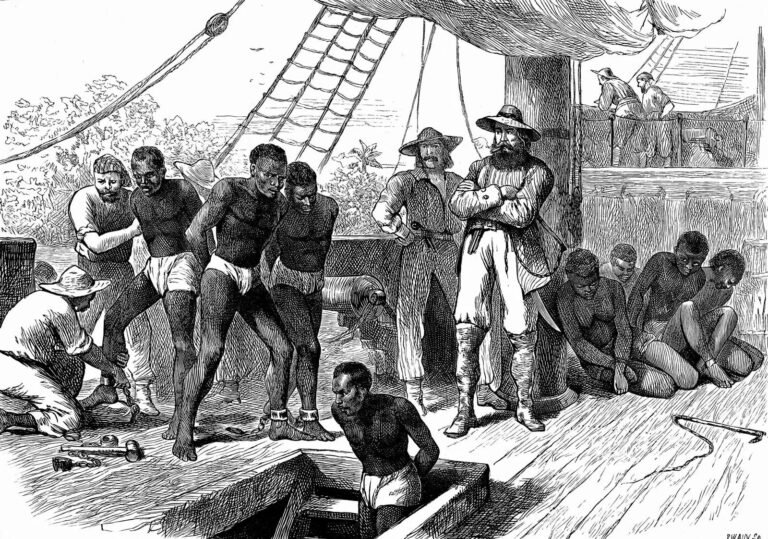
The historical narrative primarily begins around 1770, marking the dawn of the Industrial Revolution. It moves through merchant capitalism, colonial companies, slavery, wage labour, factories, industrialization, crises, technology, empire, dependency theory, globalization, and all the way to present day artificial intelligence.
Perhaps my favorite part [biases considered]: the book includes women like Anna Wheeler, Flora Tristan, Rosa Luxemburg, Joan Robinson, and Silvia Federici. Cassidy specifically discusses female factory workers and Federici’s argument that unpaid domestic labour is essential to reproducing the capitalist workforce.
African economies inherited systems shaped by extraction, fragmented production, weak industrial bases, imported curricula, interrupted political continuity, and young populations trying to enter a global economy already shaped by others.
These conditions in present day still influence how African countries produce, trade, educate, govern, and imagine development.
Rethinking economics in Africa therefore requires more than just policy adjustment. It requires a deeper rethinking of how Africans are taught to understand value, production, labour, history, power, institutions, and the global order. The classroom, the farm, the factory, the port, the household, the ministry, the market, and the university all belong in the same conversation.
Economics is often introduced as the study of scarcity and choice. That definition has its place, but it narrows the field too quickly.
Economics is the system through which societies organize value: who owns resources, who works, who is paid, what is produced, what is imported, what is exported, who captures profit, what the state protects, what households reproduce, and how a country sits inside the global order.
Seen this way, economics becomes foundational knowledge. Every university student should encounter it, whether they are studying engineering, tourism, education, public health, agriculture, technology, arts, law, public administration, or business.
Every profession operates inside economic systems. Every sector creates, captures, distributes, or loses value. A university education should prepare students to understand those systems with historical, institutional, and practical clarity.
Africa needs people who can model policy and understand dignity. People who can read balance sheets and still care about the village. People who can build industries without reproducing extraction. People who can govern systems without forgetting humans.
That, to me, is the real work.
Listen to the full podcast, or read the full article via my blog byntha.com
Thanks for listening to the Lessons Conversation! Subscribe for free to receive new posts directly in your mailbox!
This is a public episode. If you would like to discuss this with other subscribers or get access to bonus episodes, visit podcast.lessonsconversation.com
Through my journey with entrepreneurship, I’ve seen myself go from being a basic content creator, to working with some of the biggest hotel chains in Malawi, to establishing a nonprofit that has trained thousands of young people in Malawi and beyond, to establishing companies and systems that continue to serve millions of people across continents.
And now, having done my MBA and completed my MSc in Entrepreneurship, I see the world as much deeper, I understand that we need to create even more essential technologies for the people that need them the most.
For a long time, as I grew, my limitations mentally were still around what entrepreneurship as a woman was supposed to look like. I was just a social media content creator. I built non-profits [first]. In my mind, that was somehow, still, what a woman could do.
And now I find myself pushing into spaces of engineering: managing teams of incredible scientists, building systems, and stepping into rooms I never even imagined I would belong in.
I read an article that a friend had shared with me a few months ago by Rizine Mzikamanda, talking about imposter syndrome, and he, in his own wonderful words referred to me as some shape or form of 𝘧𝘦𝘢𝘳𝘭𝘦𝘴𝘴. I paused for a while… shocked really, when I read it, because he had placed my name in context with Michael Jordan, Lionel Messi, and Steve Jobs.
This award hits different because:
1. it finds me newly finding my footing in Detroit. Q2 Systems as a company is just 1.5 years old;
2. We are [still] pre-product [albeit piloting some good MVPs] and prerevenue. DeepTech is HARD!;
3. We are building Q2 in extremely male-dominated fields, and it is never lost on me when I am the only woman in the room [we are continuously fixing that through the Kwathu Kollective]; and
4. It is my first time building businesses in foreign lands and I am, contrary to what I may show, still VERY scared.
I think it is important for me to word that in this moment: that I am scared. Very scared.
Entrepreneurship is a journey of endless fear. It is ever my joy, to do the scary stuff, and it is an even greater joy, to have the slight chance at sharing some of those fears with you.
And I hope that the girls and boys that come after us, by seeing us, know that they can go further.
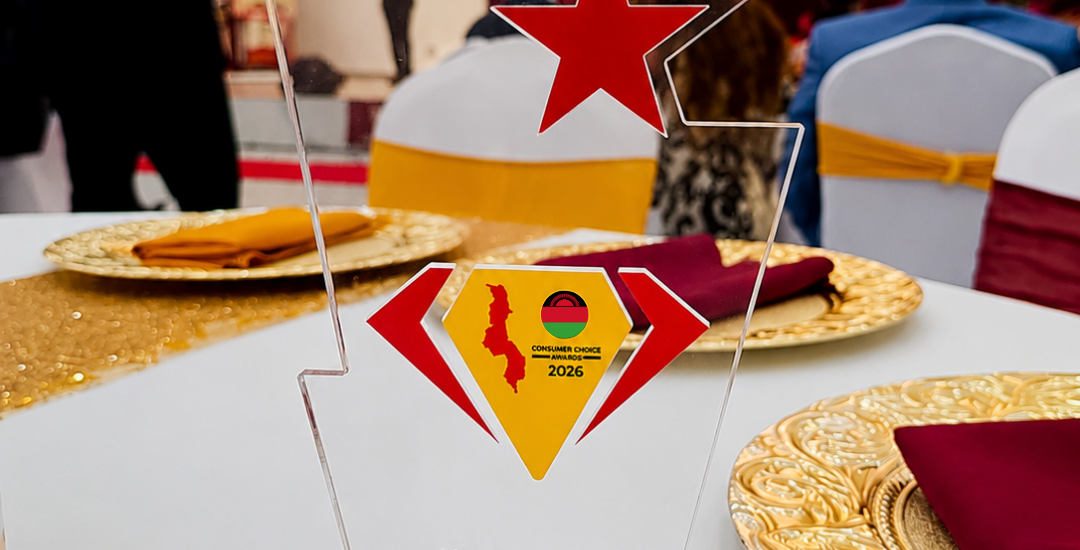
Thank you so much for voting for me as the Most Inspiring Business Female Leader at the 2026 Consumer Choice Awards.
I dedicate this award to my late mother: I am all that I am today because I was born of her: Africa’s first inland female marine captain.
I grew up in her light, and it was through seeing her visible to me and everyone around us that I understood that I could be and do anything. She inspired me enough, to be able to inspire an entire nation.
This award, to me, is for every little Black… Africa… Malawian girl… and boy… that has dreams, that wants to achieve everything, that wants to be more than the world that they see.
I hope that by sharing my little light, you draw just a little bit of inspiration to be light, too.
If you’d like to go deeper into my journey — from Malawi, through the United Nations to Microsoft, you can find it in my books.
P.S. for 2026, you can get any of my books via Kindle for only $2.99.
This offer is valid till the end of the year.
Links to purchase are as below:



Nthanda Manduwi is a Malawian storyteller, entrepreneur, digital transformation advocate, and community builder driven by the mission to empower Africa’s economic landscape through innovation and technology.