
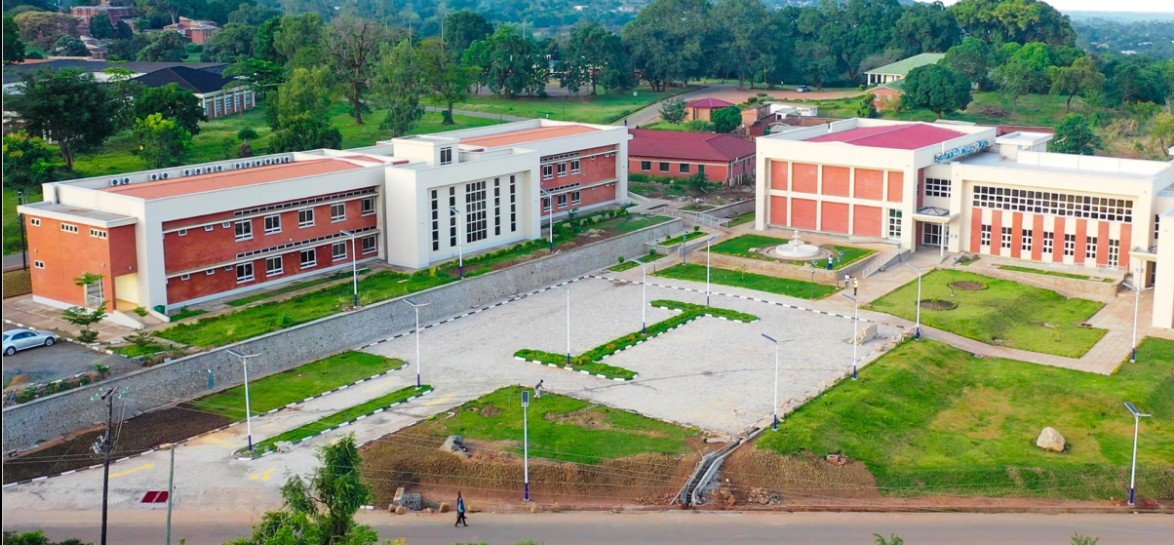
African economies inherited systems shaped by extraction, fragmented production, weak industrial bases, imported curricula, interrupted political continuity, and young populations trying to enter a global economy already shaped by others. These conditions still influence how African countries produce, trade, educate, govern, and imagine development.
Rethinking economics in Africa therefore requires more than just policy adjustment. It requires a deeper rethinking of how Africans are taught to understand value, production, labour, history, power, institutions, and the global order. The classroom, the farm, the factory, the port, the household, the ministry, the market, and the university all belong in the same conversation.
Economics is often introduced as the study of scarcity and choice. That definition has its place, but it narrows the field too quickly. Economics is the system through which societies organize value: who owns resources, who works, who is paid, what is produced, what is imported, what is exported, who captures profit, what the state protects, what households reproduce, and how a country sits inside the global order.
Seen this way, economics becomes foundational knowledge. Every university student should encounter it, whether they are studying engineering, tourism, education, public health, agriculture, technology, arts, law, public administration, or business. Every profession operates inside economic systems. Every sector creates, captures, distributes, or loses value. A university education should prepare students to understand those systems with historical, institutional, and practical clarity.
I am listening to John Cassidy’s Capitalism and Its Critics. The book is giving me a historical bridge between economic theory and the world that produced it. The historical narrative primarily begins around 1770, marking the dawn of the Industrial Revolution. It moves through merchant capitalism, colonial companies, slavery, wage labour, factories, industrialization, crises, technology, empire, dependency theory, globalization, and artificial intelligence.
Perhaps my favorite part [biases considered]: the book includes women like Anna Wheeler, Flora Tristan, Rosa Luxemburg, Joan Robinson, and Silvia Federici. Cassidy specifically discusses female factory workers and Federici’s argument that unpaid domestic labour is essential to reproducing the capitalist workforce.
I studied economics in Malawi as part of my undergraduate studies [2012 – 2016]. I learned microeconomics, macroeconomics, Keynesian economics, graphs, models, incentives, markets, demand, supply, trade, and policy language. Those tools still matter. They gave me structure and vocabulary.
Years later, after moving to the United States with the UN in 2022 and later doing my MBA at Michigan State University, I am encountering the same discipline with a different kind of historical hunger. Cassidy’s book is helping me place the models back into the world. I learned the graph before fully understanding the history that produced it.
The realization feels personal, but I suspect it is shared by many African students. We were taught the technical architecture of economics while too much of the historical architecture remained assumed, implied, or left for independent discovery.
Before I came to the United States, I was very intentional about my personal brand. Aside from my fulltime job with the Revenue Authority as a Tax Collector, I was a Digital Content Creator. I was quite conscious of what I shared, what left my phone, what entered the public record of my life. I was trying to become someone, and I understood that media was part of that becoming. I wanted my digital presence to reflect where I was going, not just where I had been.
In some ways, I think I became her.
I worked hard to shape that life. I worked hard to build that credibility. I worked hard to become legible in rooms that were not designed with people like me in mind.
Now I am entering a different phase. I am not only curating what I put out. I am curating what I take in. I am newly enjoying listening to audiobooks.
It took me a while to build the habit. For a long time, books needed to be physical for me to feel like I was truly reading them. I wanted the object. The pages. The ability to underline, pause, argue with the author, and feel myself moving through the material. Audiobooks felt too passive at first, as though I was cheating.
These days, an audiobook can sit in my ears while I move through the day. It can replace music. It can interrupt the instinct to doom scroll. It can turn a walk, a drive, a cleaning session, or a random gap in the day into a small classroom. Not always perfectly. My brain still wanders. My phone still seduces. Instagram is still a demon with good UX. But something is shifting. I consider that I am rebuilding my intellectual diet.
The past few years have been full. I moved to the United States with the UN in 2022. I later started my MBA. During the MBA, my days were packed from morning to evening with classes, assignments, leadership roles, business catch-up, digital media work, and the constant administrative work of staying alive in a new country. There was very little quiet. There was very little spaciousness. There was not much time to sit with a big book and let it slowly rearrange my understanding of the world.
As I now retrace my old habits, and read Capitalism and Its Critics, I keep going back to my Economics foundations and thinking:
Oh.
That is why that graph exists.
That is what was happening in the world.
That is the fight behind the theory.
That is the grief behind the model.
That is the power struggle behind the policy tool.
That is the history!
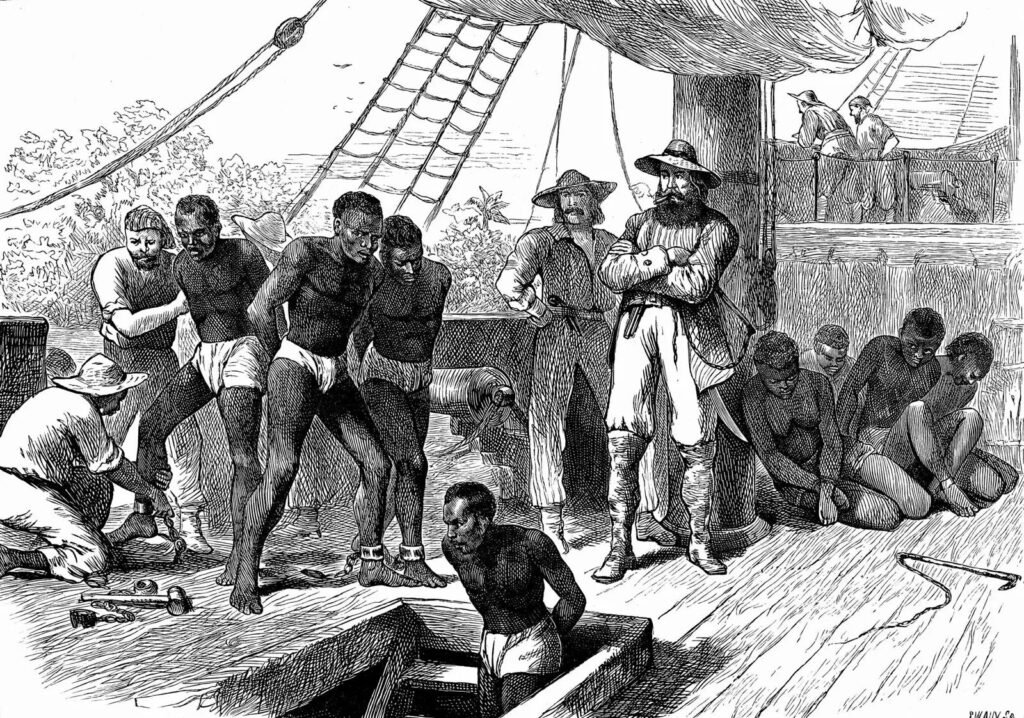
In March 2026, the UN General Assembly adopted a resolution describing the trafficking of enslaved Africans and racialized chattel enslavement of Africans as “the gravest crime against humanity.”
Delve into Business and International Development with Nthanda Manduwi
Systems Don’t Have to Be Broken to Produce Bad Outcomes
I contemplated not publishing an episode this week [I explain why in the podcast], and then ended up recording my longest episode yet.
And to make up for publishing a little late the past two weeks, I am publishing this a day early. You’re welcome, or I am sorry?
I woke up to a message from a friend sharing a video of President William Ruto demanding Veto power for African nations at the 80th United Nations General Assembly [I happened to be in attendance], and I jumped out of bed and got to writing about my favorite beverage: tea! I also got to pen about slave trade, and colonization, and war [I know, what does any of this have to do with Hibiscus tea??!]
This week’s episode explores one of the central ideas behind the third book in the Lessons Book series – Systemic Nonsense: what if many of the frustrations we experience in institutions are not accidents or failures, but predictable outcomes of how those systems were designed?
It often feels like bureaucracy feels so resistant to change, and that reforms often produce more process than progress. It also seems that good intentions so rarely translate into meaningful outcomes. If you’ve pondered on these thoughts before, then these conversations are for you.
This Week’s Book
📖 Systemic Nonsense [Book 3]
This week only, from 27–31 July, the Kindle edition of Systemic Nonsense is available free as part of its Founders Edition launch.
Systemic Nonsense explores several ideas on international development in much greater depth. It asks a simple question:
What if the system isn’t failing? What if it’s doing exactly what it was designed to do?
Whether you listen, read, or dive into the book, I hope it leaves you asking better questions about the systems we inherit—and the ones we choose to build next.
How to Read
To receive your free Kindle copy:
* Click the Amazon link below.
* Select the Kindle edition while the promotion is active.
* Add it to your Kindle library.
You do not need a Kindle device. The free Kindle app works on iPhone, Android, tablets, Macs, and PCs, allowing you to build your digital library wherever you read.
Helpful Links
📚 Read this week’s book for free [search on Amazon or in Kindle for the book that is free for the week, and feel free to purchase the others]:http://amazon.com/dp/B0FQNJ61SB
📰 Subscribe to The Lessons Conversation:
Africa paperback pre-orders:https://forms.office.com/r/RMRMKTNd1M
Enjoyed listening to the Lessons Conversation? This post is public so feel free to share it.
This is a public episode. If you would like to discuss this with other subscribers or get access to bonus episodes, visit podcast.lessonsconversation.com
![Book 3: Systemic Nonsense [lessonsbooks.com]](https://byntha.com/wp-content/uploads/2026/07/podcast-episode-image-5a3bbb435029c89d668c5fa2682893ef-768x768.jpg)
#LessonsWeekly
[Listen to the Podcast for Context, or Keep Reading Below]
- Economics is the organization of value: Economics is not only scarcity, graphs, and policy tools. It is the system through which societies decide who owns, who works, who earns, what is produced, what is imported, what is exported, and who captures value.
- Theory without history becomes abstraction: Economic models make more sense when students understand the labour, empire, crisis, gender, extraction, technology, and political struggle behind them.
- African education needs generational translation: Students cannot be expected to automatically connect historical literature to present realities. Curricula must deliberately bridge the distance between inherited theory and contemporary African life.
- Reading is intellectual infrastructure: Books, audiobooks, libraries, and deep reading cultures are not luxuries. They are part of how societies build memory, judgment, imagination, and serious citizens.
- Reading culture requires historical belonging: Young Africans are more likely to read deeply when books allow them to encounter Africa as a producer of civilization, thought, trade, institutions, and imagination, rather than mainly as a site of injury.
- Imported curricula must be interrogated, not discarded blindly: The answer is not to reject everything inherited from Western education. The answer is to examine what those systems reveal, what they hide, and how they must be adapted to African realities.
- Africa’s problem is not intelligence, but weakened learning infrastructure: Racist explanations of African underdevelopment must be rejected. The deeper issue is historical disruption, poor access, weak reading cultures, under-resourced schools, and systems not designed for deep capability-building.
- Extraction cannot remain the economic wiring: Economies built around moving raw materials and value outward will continue to reproduce dependence. African countries must move from extraction to value creation.
- Production must become the centre of economic imagination: The question is not only what Africa can sell. It is what Africa can produce, improve, maintain, export, and learn from.
- Foreign investment should become apprenticeship: Investment is not transformative simply because money arrives. It becomes transformative when workers, firms, suppliers, institutions, and industries become more capable.
- Continuity does not require dictatorship: Africa does not need to abandon democracy to build long-term plans. It needs institutions that protect national missions from being erased every electoral cycle.
- Models should be studied, not worshipped: Mauritius, Singapore, Vietnam, and Cambodia offer lessons, not templates. The task is not imitation, but disciplined learning.
- The next Singapore will not be African, and that is the point: Africa’s goal should not be to copy another country’s miracle. It should be to understand its own constraints and build a doctrine suited to its own realities.
- Africa needs a Developmental Learning State: A serious development model must organize schools, sectors, investors, technologies, assets, and generations around learning, production, continuity, and value creation.
- AfCFTA must become production infrastructure: Continental integration should not only move goods across borders. It should create regional value chains, shared standards, financing systems, logistics networks, and production scale.
- AI can accelerate African authorship: AI should not replace African writers, teachers, historians, or thinkers. Used well, it can help structure, translate, archive, publish, and distribute African knowledge faster.
- African history must recover continuity: Slavery and colonialism disrupted African societies, but they did not create African history. Education should teach the worlds that existed before disruption, the violence that interrupted them, and the futures now being built.
- Africa needs authorship as restoration: Writing African histories, biographies, textbooks, novels, archives, and audiobooks is part of rebuilding intellectual continuity. A society that writes itself gives future generations a fuller inheritance.
- Development requires best minds and best hearts: Technical competence without moral seriousness becomes extraction with better spreadsheets. Good intentions without systems thinking become performance. Africa needs both.
Africa’s economic challenges are layered. Postcolonial extraction remains one of the strongest patterns. Many economies were organized around moving raw materials, labour, and value outward. Minerals left. Crops left. People were moved. Land was reorganized. Infrastructure served outward movement more than internal integration.
Fragmented production systems intensified that inheritance. Colonial borders often interrupted older trade routes, social worlds, and regional production possibilities. Railways, roads, and ports were frequently designed to connect extraction zones to external markets, rather than to connect African economies to one another.
Weak production bases followed. Many African countries continue to depend on primary exports while importing most high-value goods. This shapes foreign exchange, industrial ambition, education priorities, public policy, and even the social imagination of what a country believes it can make.
Imported curricula sit inside that same structure. African students often learn economic models without enough historical connection to capitalism, empire, labour, gender, extraction, colonial companies, financial crises, technology, and African realities. The result is a form of learning where students can pass the model before they fully understand the world that produced it.
Interrupted continuity adds another layer. Elections change leadership, as they should. Yet national development requires memory. Economic transformation takes longer than a political term. When every administration arrives with a new plan, a new slogan, a new logo, and a need to erase what came before, the state struggles to accumulate institutional knowledge.
Alongside all this is Africa’s young population, entering a global economy whose rules, technologies, institutions, and production systems were largely shaped elsewhere. Youth can become a demographic advantage, but only when education, production, institutions, and capital are organized around serious capability-building.
Economics becomes clearer when it is understood as the organization of value. A society’s economy is visible in what it rewards, what it ignores, what it extracts, what it protects, what it imports, what it exports, and what it teaches its people to produce.
Labour markets are about more than jobs. They reveal how a society values time, skill, care, discipline, mobility, and survival. Trade is about more than imports and exports. It reveals where a country sits in the chain of value. Production is about more than output. It reveals what a society knows how to make, maintain, improve, and scale.
Ownership determines who benefits from value once it is created. The state determines which systems are protected, financed, regulated, neglected, or surrendered. Households reproduce the labour force through care work, emotional labour, food, rest, education, health, and social stability, much of it still carried by women and often treated as background to the formal economy.
Once economics is taught this way, the discipline becomes much harder to separate from history. The graph is never only a graph. It is a simplified representation of social arrangements, political choices, institutional power, and historical struggle.
Having pursued three degrees: two in Malawian Universities, and one in a U.S. midwest R1 University, I think I can speak fluently on this topic.
Many African students have been taught economics through models, graphs, and theories without enough deliberate historical translation. The curriculum often assumes that students will independently connect the background through library work, wider reading, and personal intellectual curiosity.
That assumption works best for students already trained into reading culture. It works less well for students who arrive at university after years of under-resourced schools, limited libraries, exam-oriented learning, and little exposure to books as part of ordinary life.
The issue is learning infrastructure.
I insist that Africa does not have an intelligence deficit. Africa has had weakened learning infrastructure.
A student cannot be expected to become a deep reader at university if reading was never made ordinary in childhood. A student cannot be expected to connect capitalism to empire, gender, labour, technology, and African production systems if the curriculum presents these as separate worlds. A student cannot be expected to rethink the economy if the education system trains them mainly to reproduce models.
The generational disconnect also matters. Professors trained in earlier decades may have encountered certain histories, texts, and debates as part of a world closer to their own formation. Students learning in the 2010s and 2020s often meet the same theories at a greater historical distance. The bridge has to be built deliberately.
African education needs stronger connections between theory and history, economy and society, models and lived systems. Economics and history should become foundational courses for all university students.
A student should not graduate from university without understanding how labour, production, trade, the state, colonialism, debt, technology, gender, and global markets shape the world they are entering. Engineers need this knowledge because infrastructure sits inside economic systems. Public health students need it because health systems are financed, governed, and distributed through economic choices. Artists need it because culture has markets, labour, ownership, and value chains. Lawyers need it because property, contracts, regulation, and rights shape economic life.
A foundational economics course should help students ask better questions. Who captures value in this sector? What is being imported that could be produced or maintained locally? What skills are missing? What institutional arrangements shape incentives? What histories explain present dependency? What forms of labour remain invisible? What would it take for this sector to become a learning system?
This is education for development, not only education for employment.
Reading is public infrastructure for thought. Books train attention. They carry memory. They build argument. They create intellectual inheritance. Audiobooks, e-books, physical books, school libraries, public libraries, reading circles, and accessible archives all belong in the architecture of development.
A summary can tell you what a book says. It cannot reproduce what the book does to your mind.
A serious book carries sequencing, context, evidence, contradiction, biography, atmosphere, and accumulated reasoning. It slows the mind down long enough for complexity to enter. In societies trying to rebuild economic imagination, that kind of attention is not ornamental. It is developmental.
African education systems need to make reading normal much earlier. Universities cannot carry the full burden of intellectual formation if the habit was never built in primary and secondary school. A student who has grown up around books arrives differently. They have more stamina for difficulty. They have more reference points. They have more confidence entering unfamiliar ideas.
A serious reading culture also requires historical belonging. Many African students encounter world history as a record in which Africa appears through interruption: slavery, colonization, extraction, underdevelopment, famine, aid, conflict, and debt. Those histories must be studied with care, because they shaped the world we inherited. Yet a curriculum that introduces Africa mainly through injury can make reading feel like an encounter with humiliation.
This is one reason the question of reading cannot be separated from the question of authorship. Young Africans need access to histories that place Africa inside the world as a producer of civilization, ideas, trade, political systems, agriculture, art, metallurgy, architecture, law, spirituality, and economic organization. They need to encounter the Kingdom of Mapungubwe, Great Zimbabwe, the Mali Empire, the Kingdom of Kongo, the Swahili Coast, Nubia, Axum, Benin, Mutapa, Luba, Lunda, Buganda, Maravi, and many other worlds as part of a continuous African inheritance.
The story of Africa did not begin with the slave ship or the colonial office. Those forces violently disrupted African histories that already existed. The work now is to recover, write, teach, translate, and circulate those histories with seriousness.
This does not require avoidance of slavery, colonialism, racism, or decolonization. It requires sequence. Young Africans should understand who we were, how our systems worked, how our societies changed, how external violence disrupted them, how African people resisted, adapted, survived, and rebuilt, and how we can now construct the next chapter with fuller historical memory.
Much of the history taught as “world history” has followed the continuity of Europe’s own self-understanding. Greece, Rome, Christianity, monarchy, empire, industrialization, capitalism, socialism, fascism, liberal democracy, globalization, and technology appear as connected chapters in a long civilizational argument. Africa often enters that narrative as labour, land, resource, victim, or problem.
African reading culture will deepen when African students can enter history as inheritors, not only as subjects of harm. Books can restore that continuity. Archives can restore that continuity. Audiobooks, translations, public libraries, school libraries, biographies, novels, films, and curricula can restore that continuity.
The next phase of African knowledge production should therefore move in two directions at once. It should continue documenting the violence that shaped the modern world, while also recovering the African worlds that existed before that violence became the dominant frame. It should teach disruption without making disruption the whole story.
AI creates a new opening here. It can help organize archives, map historical timelines, support translation, structure manuscripts, generate reading guides, produce audiobooks, and make scattered knowledge more accessible. The intellectual responsibility remains human. The opportunity is to accelerate the recovery and circulation of African memory.
A continent cannot build a reading culture around books in which its children only meet themselves as conquered people. Reading becomes more powerful when it gives young people a past large enough to think from and a future serious enough to build toward.
I suppose I can speak on this as a [former] content creator.
Content moves quickly. Books build slowly. Content circulates through feeds, platforms, clips, posts, and commentary. Books preserve arguments in a form that can be returned to, taught, contested, translated, archived, and inherited.
Africa needs more books, more essays, more biographies, more histories, more textbooks, more novels, more audiobooks, more archives, more translations, and more public-interest publishing. The continent has stories, thinkers, builders, failures, experiments, institutions, economic histories, and social transformations that deserve serious documentation.
Knowledge production is part of sovereignty. A society that does not write itself clearly will be explained by others. A society that does not preserve its own memory will keep rediscovering old questions as if they are new.
The next generation of African economists, engineers, artists, lawyers, public servants, entrepreneurs, and teachers needs more than content. They need intellectual inheritance.
Artificial intelligence creates a new opportunity for African knowledge production. Used carefully, it can help structure books, organize archives, translate ideas, build curricula, support teachers, produce audiobooks, and reduce the friction of documentation.
AI should not replace African authorship. It should accelerate it.
The danger is outsourcing thought. The opportunity is accelerating African knowledge production. A writer can use AI to map a book, organize themes, test structure, identify gaps, and move from scattered notes to a coherent skeleton faster. The soul of the work still has to come from the author. The judgment, memory, ethics, lived experience, and intellectual risk remain human responsibilities.
For Africa, this matters because centuries of historical disruption left gaps in documentation, publication, access, and circulation. AI cannot repair that history on its own. It can help reduce some of the friction involved in writing, archiving, translating, teaching, and distributing African knowledge now.
Malawi offers a clear example of inherited economic wiring. Tobacco has long occupied a central place in the export imagination. The logic is familiar: grow this, sell it outward, earn foreign exchange, and import what the country wants.
Phones.
Vehicles.
Medical equipment.
Machines.
Software.
Industrial inputs.
Lifestyle goods.
The question is what value Malawi creates in the world that allows it to command these goods, technologies, systems, and lifestyles without permanent dependence. Tobacco can generate foreign exchange, but it cannot remain the horizon of national economic imagination.
A country needs to ask what it can produce, process, maintain, repair, design, export, and learn from. That question opens a wider field than export earnings alone. It asks about skills, institutions, infrastructure, standards, ownership, financing, technology, and markets.
The economic challenge is therefore linked to education. If students are trained to see the economy as a set of inherited sectors, they may manage the existing system more efficiently. If they are trained to see value chains, production gaps, regional markets, and learning systems, they can begin to redesign it.
A sector becomes transformative when it teaches a country how to build capabilities beyond the immediate activity. Agriculture can teach processing, logistics, storage, finance, biotechnology, packaging, standards, and export discipline. Tourism can teach service quality, infrastructure, storytelling, conservation, digital marketing, transport, and urban planning. Energy can teach engineering, maintenance, finance, regulation, and industrial planning.
Lake Malawi is a useful example.
Michigan’s Great Lakes economy is not simply about the presence of water. It includes cargo movement, ports, maintenance, vessels, training, insurance, logistics, regulation, tourism, environmental monitoring, and regional trade. Water becomes an economic system when institutions, infrastructure, skills, and firms are built around it.
Lake Malawi could be treated with the same seriousness. Maritime transport, fisheries, aquaculture, cold chains, boat repair, marine engineering, tourism circuits, safety systems, port infrastructure, environmental monitoring, regional trade with Mozambique and Tanzania, and a maritime academy all belong in the possible economic map.
This is the kind of thinking African education systems should cultivate. Students should be trained to look at a national asset and ask what value chains, institutions, skills, technologies, and markets could grow around it.
Countries offer lessons, not templates. Mauritius, Singapore, Vietnam, China, and Cambodia each illuminate a different part of the development question.
Mauritius is useful because it shows movement from inherited crop dependence toward diversification. The lesson is to keep the colonial crop from becoming national destiny. For countries such as Malawi, tobacco can be understood as transition finance, while the long-term imagination shifts toward broader production and service capabilities.
Singapore is useful because it built a doctrine around its constraints. Its small size, strategic location, disciplined bureaucracy, logistics capability, human-capital investment, and long-term planning created a particular development path. Its political control also deserves sober analysis. The lesson is doctrine, not imitation. Singapore became Singapore because it understood its constraints and built around them with discipline.
Vietnam is useful because it shows how global firms can become classrooms. Foreign investment can create jobs while also building manufacturing capability, supplier discipline, standards, logistics, and export readiness. Investment becomes more valuable when it strengthens what local firms, workers, institutions, and industries know how to do.
China is useful because it treated production as national learning. Foreign firms brought standards, technologies, systems, and market access. China absorbed, adapted, scaled, and eventually competed. Globalization became a classroom because the state, firms, workers, and suppliers learned through production.
Cambodia is personal for me. I first travelled outside Malawi to Cambodia in 2017. That trip became the beginning of my international development journey. I want to return around the ten-year anniversary and see what a decade of visible development has made possible. I have heard Phnom Penh described in ways that surprised me, even as having the feel of Cape Town. That kind of comparison makes me curious about what changes when growth becomes visible in roads, buildings, services, urban confidence, and public imagination. Cambodia has its own challenges, but it offers a useful question: what can a decade of intentional movement make visible?
The lesson across these cases is disciplined learning. Africa’s task is to study models carefully, extract principles, understand context, and build doctrine suited to African realities.
Africa needs a Developmental Learning State.
A Developmental Learning State organizes every asset, school, sector, partnership, investor, technology, and generation around learning, production, continuity, and value creation.
It begins with reading and historical consciousness from early childhood. Children should encounter books, stories, histories, debates, and serious questions early enough for reading to become ordinary.
It treats economics and history as foundational university courses for all students. A graduate should understand value creation, production, labour, trade, debt, the state, technology, gender, colonialism, and global markets.
It places production at the centre of economic imagination. The guiding question becomes: what can we produce, improve, maintain, export, and learn from?
It turns sectors into learning systems. Every major asset should be mapped into value chains, institutions, skills, financing, standards, technologies, and regional markets.
It treats global firms as classrooms. Investment should build local capability through supplier development, technical training, management systems, production standards, and institutional learning.
It protects continuity while preserving democracy. This is not an anti-democracy argument. It is an anti-amnesia argument. Elections should change leadership. They should not erase national memory.
It takes continental scale seriously. The African Continental Free Trade Area should become production infrastructure, not only trade policy. Africa needs regional value chains, shared standards, cross-border logistics, financing systems, and coordinated production strategies.
It uses AI to support African authorship. Writing, archiving, translation, curriculum design, storytelling, and audiobook production can all move faster when technology is used with judgment.
It brings together best minds and best hearts. Technical competence gives development structure. Moral seriousness gives it direction. Africa needs both.
Decolonization explains how we got here. It does not, by itself, tell us what to build next.
The next phase requires construction. New curricula. New production systems. New public libraries. New economic imagination. New industrial missions. New continental value chains. New ways of teaching students to understand value.
Historical critique remains necessary because inherited systems continue to shape present realities. Construction becomes necessary because young Africans cannot live forever inside critique. They need institutions, sectors, books, firms, classrooms, technologies, and states that teach them how to build.
Rethinking economics therefore becomes a generational project. It asks how African students are taught to read, remember, produce, govern, and imagine value. It asks how countries move from inherited extraction to deliberate production. It asks how education can form citizens who understand systems deeply enough to redesign them.
Rethinking economics begins with refusing to accept the system as neutral.
It means asking what we were taught, why we were taught it, what history was missing, what value we are creating, what assets we have misunderstood, what models we have worshipped, and what future we are willing to build.
It means gathering not only the best minds, but the best hearts.
Best minds alone can become technocracy.
Best hearts alone can become sentiment.
Africa needs people who can model policy and understand dignity. People who can read balance sheets and still care about the village. People who can build industries without reproducing extraction. People who can govern systems without forgetting humans.
That, to me, is the real work.
The transformation occurred because China spent decades treating production as learning and globalization as an opportunity to accumulate capability. The question for Africa is not whether we can become China. The question is whether we can become equally serious about learning.
If you’d like to go deeper into my journey — from Malawi, through the United Nations and Microsoft to now building my own companies in Detroit, you can find it in my books.



Nthanda Manduwi is a Malawian storyteller, entrepreneur, digital transformation advocate, and community builder driven by the mission to empower Africa’s economic landscape through innovation and technology.