When I established my blog… this blog [byntha.com]… when I started using social media around the 2010s, one of the things I really wanted was to see more Black, African, Malawian women — people that looked like me — in the spaces that I wanted to get into.
I quickly realized that the representation just wasn’t there… or, at least, it wasn’t too visible.
It is one of the reasons why, through the years, as my work has gotten busier, as I have had less and less time, I have still made time, and I have still committed to being visible because I still remember what it means to the young Black girl in Malawi that needed to see someone occupying the spaces that she hoped she could occupy.
And through the years, this blog came to grow into Ntha Foundation, which later grew and pivoted into the Kwathu Kollective. And now we have pivoted further into deep tech with Q2 Systems. These are the entities, that you continue to award me for, and I am eternally grateful.
Delve into Business and International Development with Nthanda Manduwi
Systems Don’t Have to Be Broken to Produce Bad Outcomes
I contemplated not publishing an episode this week [I explain why in the podcast], and then ended up recording my longest episode yet.
And to make up for publishing a little late the past two weeks, I am publishing this a day early. You’re welcome, or I am sorry?
I woke up to a message from a friend sharing a video of President William Ruto demanding Veto power for African nations at the 80th United Nations General Assembly [I happened to be in attendance], and I jumped out of bed and got to writing about my favorite beverage: tea! I also got to pen about slave trade, and colonization, and war [I know, what does any of this have to do with Hibiscus tea??!]
This week’s episode explores one of the central ideas behind the third book in the Lessons Book series – Systemic Nonsense: what if many of the frustrations we experience in institutions are not accidents or failures, but predictable outcomes of how those systems were designed?
It often feels like bureaucracy feels so resistant to change, and that reforms often produce more process than progress. It also seems that good intentions so rarely translate into meaningful outcomes. If you’ve pondered on these thoughts before, then these conversations are for you.
This Week’s Book
📖 Systemic Nonsense [Book 3]
This week only, from 27–31 July, the Kindle edition of Systemic Nonsense is available free as part of its Founders Edition launch.
Systemic Nonsense explores several ideas on international development in much greater depth. It asks a simple question:
What if the system isn’t failing? What if it’s doing exactly what it was designed to do?
Whether you listen, read, or dive into the book, I hope it leaves you asking better questions about the systems we inherit—and the ones we choose to build next.
How to Read
To receive your free Kindle copy:
* Click the Amazon link below.
* Select the Kindle edition while the promotion is active.
* Add it to your Kindle library.
You do not need a Kindle device. The free Kindle app works on iPhone, Android, tablets, Macs, and PCs, allowing you to build your digital library wherever you read.
Helpful Links
📚 Read this week’s book for free [search on Amazon or in Kindle for the book that is free for the week, and feel free to purchase the others]:http://amazon.com/dp/B0FQNJ61SB
📰 Subscribe to The Lessons Conversation:
Africa paperback pre-orders:https://forms.office.com/r/RMRMKTNd1M
Enjoyed listening to the Lessons Conversation? This post is public so feel free to share it.
This is a public episode. If you would like to discuss this with other subscribers or get access to bonus episodes, visit podcast.lessonsconversation.com
![Book 3: Systemic Nonsense [lessonsbooks.com]](https://byntha.com/wp-content/uploads/2026/07/podcast-episode-image-5a3bbb435029c89d668c5fa2682893ef-768x768.jpg)
Through my journey with entrepreneurship, I’ve seen myself go from being a basic content creator, to working with some of the biggest hotel chains in Malawi, to establishing a nonprofit that has trained thousands of young people in Malawi and beyond, to establishing companies and systems that continue to serve millions of people across continents.
And now, having done my MBA and completed my MSc in Entrepreneurship, I see the world as much deeper, I understand that we need to create even more essential technologies for the people that need them the most.
For a long time, as I grew, my limitations mentally were still around what entrepreneurship as a woman was supposed to look like. I was just a social media content creator. I built non-profits [first]. In my mind, that was somehow, still, what a woman could do.
And now I find myself pushing into spaces of engineering: managing teams of incredible scientists, building systems, and stepping into rooms I never even imagined I would belong in.
I read an article that a friend had shared with me a few months ago by Rizine Mzikamanda, talking about imposter syndrome, and he, in his own wonderful words referred to me as some shape or form of 𝘧𝘦𝘢𝘳𝘭𝘦𝘴𝘴. I paused for a while… shocked really, when I read it, because he had placed my name in context with Michael Jordan, Lionel Messi, and Steve Jobs.
This award hits different because:
1. it finds me newly finding my footing in Detroit. Q2 Systems as a company is just 1.5 years old;
2. We are [still] pre-product [albeit piloting some good MVPs] and prerevenue. DeepTech is HARD!;
3. We are building Q2 in extremely male-dominated fields, and it is never lost on me when I am the only woman in the room [we are continuously fixing that through the Kwathu Kollective]; and
4. It is my first time building businesses in foreign lands and I am, contrary to what I may show, still VERY scared.
I think it is important for me to word that in this moment: that I am scared. Very scared.
Entrepreneurship is a journey of endless fear. It is ever my joy, to do the scary stuff, and it is an even greater joy, to have the slight chance at sharing some of those fears with you.
And I hope that the girls and boys that come after us, by seeing us, know that they can go further.
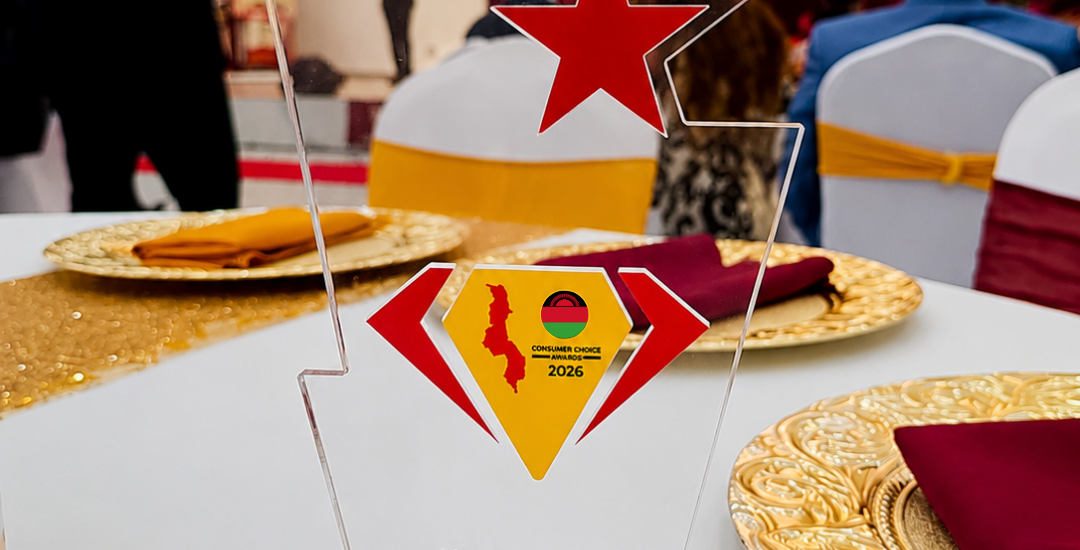
Thank you so much for voting for me as the Most Inspiring Business Female Leader at the 2026 Consumer Choice Awards.
I dedicate this award to my late mother: I am all that I am today because I was born of her: Africa’s first inland female marine captain.
I grew up in her light, and it was through seeing her visible to me and everyone around us that I understood that I could be and do anything. She inspired me enough, to be able to inspire an entire nation.
This award, to me, is for every little Black… Africa… Malawian girl… and boy… that has dreams, that wants to achieve everything, that wants to be more than the world that they see.
I hope that by sharing my little light, you draw just a little bit of inspiration to be light, too.
If you’d like to go deeper into my journey — from Malawi, through the United Nations to Microsoft, you can find it in my books.
P.S. for 2026, you can get any of my books via Kindle for only $2.99.
This offer is valid till the end of the year.
Links to purchase are as below:



Nthanda Manduwi is a Malawian storyteller, entrepreneur, digital transformation advocate, and community builder driven by the mission to empower Africa’s economic landscape through innovation and technology.