
Last year when I began my MBA (years from when I was first fascinated with money), finance hit me with a reality check. My first-semester finance course was difficult, stretching me beyond my comfort zone. I found myself wrestling with concepts like discounted cash flows, net present value, and the intricacies of investment decisions. I found myself (better) understanding money.

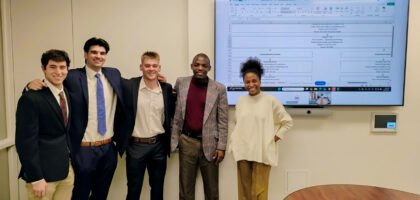
My MBA team and I had the opportunity to take part in the Marshmallow challenge, and our team won by a mile, with a 28-inch structure that was completed with almost 8 minutes still on the clock (we had 20 minutes to do this), and stood strong until the end. But beyond the win, what fascinated me most was the decision-making process that determined success or failure.
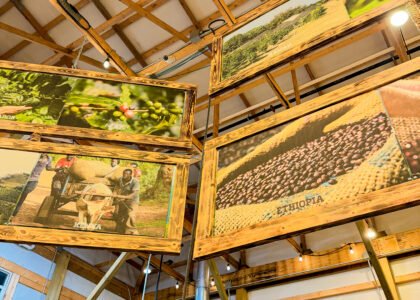
For years, the #BuyMalawi initiative has been positioned as a patriotic act—something we do to “support Malawian businesses.” But the problem is, we never really explained why supporting Malawian businesses is essential—not just for those businesses, but for our economy, our jobs, and our financial future.

It is not very long ago that I was hired by the United Nations, to work with a significant number of colleagues on the UNDP’s National Evaluation Capacities (NEC) Conference. I was hired as an Evaluation Analyst, and I worked for two years as a knowledge and events liaison; coordinating events in Turin (Italy) and Manhattan (New York). A huge chunk of my work then was doing what AI is doing for me now. I was, to my supervisor, what AI is to me now. This brings me to a realisation: the future of work is here.

As a Malawian woman, a Black woman living in the United States, the 2024 U.S. presidential election has been an emotional whirlwind. Watching Vice President Kamala Harris step into history has been both inspiring and deeply draining. Her leadership, poise, and resilience stand as a testament to the progress we have made, yet the vitriol she has endured underscores how much further we (still) need to go.

For 2025, I made the decision to spend little to no time on social media. Making that decision brought me the awareness that I spend nearly no time on social media. I came to the realisation that I actually only use social media to post about my businesses and professional milestones; after which I log off. With that realisation also came time–a lot of time to spend with me. I spent most of my winterbreak reflecting, and writing. In reflecting, I arrived at a rather particular thought; one that I see to always return to: We are, Mostly, Nothing.

When I graduated with my master’s degree in October 2024, one particular moment stayed with me—a call to action from H.E. President Dr. Lazarus McCarthy Chakwera, that challenged my perspective on what it means to truly engage with the world around me. Standing before us, he spoke not of grades or accolades but of a skill he believed was sorely lacking: conscientiousness.

I’ve had the privilege of crossing paths with some of the most passionate and driven individuals across Africa. Teachers, entrepreneurs, and community leaders who, against all odds, feel called to uplift their communities. Their stories inspire me deeply, but I’ve come to recognize a recurring pattern – one that I feel compelled to talk about.

This shift was inevitable: going forward (as life gets fuller), I’ll be curating the 𝗕𝘆 𝗡𝘁𝗵𝗮 𝗡𝗲𝘄𝘀𝗹𝗲𝘁𝘁𝗲𝗿 now monthly — bringing together reflections on 𝘣𝘶𝘴𝘪𝘯𝘦𝘴𝘴, 𝘪𝘯𝘯𝘰𝘷𝘢𝘵𝘪𝘰𝘯, 𝘭𝘦𝘢𝘥𝘦𝘳𝘴𝘩𝘪𝘱, and 𝘱𝘦𝘳𝘴𝘰𝘯𝘢𝘭 𝘨𝘳𝘰𝘸𝘵𝘩 in one accessible space.

As I close out 2024, a year that has been both exhilarating and transformative, I find myself reflecting on a concept that has surfaced repeatedly in my thoughts and conversations—social debt. For much of my life and career, I have carried this weight with pride, honoring my obligations to family, friends, and my broader community. As I step into 2025, I am making a conscious choice to recalibrate.


Nthanda Manduwi is a Malawian storyteller, entrepreneur, digital transformation advocate, and community builder driven by the mission to empower Africa’s economic landscape through innovation and technology.