By Nthanda Manduwi
17 November 2026 | Detroit, Michigan
About a year ago, I lost a pitch competition at Michigan State University. It was the first pitch competition I had ever lost, and I remember being entirely broken by the feedback provided by one of the judges. The comment consisted of a single word: Why?
I had spent considerable time developing what I believed was a compelling technological proposition around Q2 Systems, a company I had founded in January of that year. My ideas involved immersive simulation, artificial intelligence, robotics, and the possibility of developing more intelligent and increasingly autonomous production systems.
I had undertaken substantial research, considered different applications, and developed what I thought was a persuasive argument about where technological advancement was taking us. I understood that the vision was ambitious, but I had become so familiar with its underlying logic that the connections between the different technologies appeared relatively straightforward to me.
The judge, asked simply:
I had spent so much time thinking about the very question the judge appeared to be asking.
I knew why I was interested in these technologies. I understood the limitations of existing production systems, the possibilities emerging from advances in computing, and the opportunities I believed might eventually develop as increasingly capable machines became more accessible. What I had not adequately considered was whether I had successfully communicated the commercial and technological logic connecting my long-term vision to the immediate activities I was asking someone to support.
Over the following year, that question became considerably more important to me.
I moved to Detroit after completing my MBA, joined the Detroit Tech Residency, and began concentrating more deliberately on the technological work I wanted to pursue. I spent the year after working with engineers, researching technical requirements, reconsidering product architectures, and investigating how the different components of our ambitions might eventually become functioning systems. I also spent a great deal of time speaking with people about financing, commercial viability, customer acquisition, and the practical realities of building a capital-intensive technology business.
Those conversations repeatedly returned to variations of the same question:
What problem are we solving?
Who is experiencing it?
How much would they pay to resolve it?
What evidence do we have that our proposed approach is technically feasible?
How much capital is required to reach a point where the next investment becomes justifiable?
These are reasonable questions. Having spent years studying economics, entrepreneurship, and business strategy, I understand their importance. I have asked similar questions of other entrepreneurs, and I expect to continue asking them throughout my career. Nevertheless, I have become increasingly interested in the relationship between these conventional measures of commercial viability and the development of technologies whose eventual markets may depend on capabilities that do not yet exist at scale.
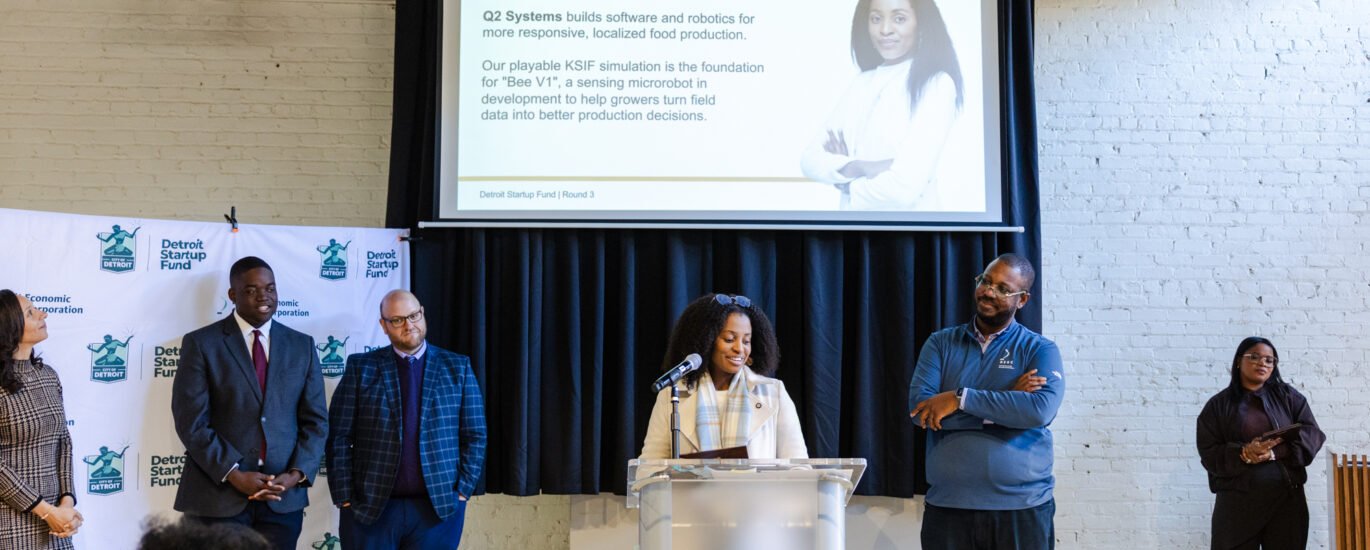
On November 16, 2026, the Detroit Economic Growth Corporation announced the recipients of the third round of the Detroit Startup Fund. Thirteen companies received a combined $300,000, including ten seed grants of $15,000 and three scale grants of $50,000. Q2 Systems was among the seed-grant recipients, with our proposed Bee V1 agricultural sensing microrobot identified as a product in development.
The announcement represented an important milestone in a much longer entrepreneurial journey. We had spent months developing technical concepts and refining what an initial robotic system might reasonably accomplish. The grant provided resources to begin translating part of that work into a physical prototype, allowing us to investigate technical assumptions through experimentation.
I have been thinking about the significance of that investment, particularly in the context of a question that has occupied much of my professional life: how do societies finance the development of capabilities whose economic and social value may take years, sometimes decades, to become fully apparent?
The question has acquired additional meaning as I prepare to travel to New York for conversations about investing in African entrepreneurs. I increasingly approach these discussions from two perspectives. I am an entrepreneur seeking resources to develop ambitious technologies, and I am also someone who hopes to spend a substantial portion of the coming decades financing other entrepreneurs and the systems they want to build.
I have spent approximately thirteen years building organizations and developing initiatives across different sectors. During that time, my understanding of capital has evolved considerably. I have experienced its limitations, benefited from the confidence of people and institutions willing to support early ideas, and become increasingly interested in the ways investment decisions influence the future development of entire economies.
The experience has led me toward a broader set of questions about entrepreneurship, industrial development, and the institutions capable of supporting technological progress. At the center of those questions is a book I have been reading: Mariana Mazzucato’s The Entrepreneurial State.

Delve into Business and International Development with Nthanda Manduwi
Systems Don’t Have to Be Broken to Produce Bad Outcomes
I contemplated not publishing an episode this week [I explain why in the podcast], and then ended up recording my longest episode yet.
And to make up for publishing a little late the past two weeks, I am publishing this a day early. You’re welcome, or I am sorry?
I woke up to a message from a friend sharing a video of President William Ruto demanding Veto power for African nations at the 80th United Nations General Assembly [I happened to be in attendance], and I jumped out of bed and got to writing about my favorite beverage: tea! I also got to pen about slave trade, and colonization, and war [I know, what does any of this have to do with Hibiscus tea??!]
This week’s episode explores one of the central ideas behind the third book in the Lessons Book series – Systemic Nonsense: what if many of the frustrations we experience in institutions are not accidents or failures, but predictable outcomes of how those systems were designed?
It often feels like bureaucracy feels so resistant to change, and that reforms often produce more process than progress. It also seems that good intentions so rarely translate into meaningful outcomes. If you’ve pondered on these thoughts before, then these conversations are for you.
This Week’s Book
📖 Systemic Nonsense [Book 3]
This week only, from 27–31 July, the Kindle edition of Systemic Nonsense is available free as part of its Founders Edition launch.
Systemic Nonsense explores several ideas on international development in much greater depth. It asks a simple question:
What if the system isn’t failing? What if it’s doing exactly what it was designed to do?
Whether you listen, read, or dive into the book, I hope it leaves you asking better questions about the systems we inherit—and the ones we choose to build next.
How to Read
To receive your free Kindle copy:
* Click the Amazon link below.
* Select the Kindle edition while the promotion is active.
* Add it to your Kindle library.
You do not need a Kindle device. The free Kindle app works on iPhone, Android, tablets, Macs, and PCs, allowing you to build your digital library wherever you read.
Helpful Links
📚 Read this week’s book for free [search on Amazon or in Kindle for the book that is free for the week, and feel free to purchase the others]:http://amazon.com/dp/B0FQNJ61SB
📰 Subscribe to The Lessons Conversation:
Africa paperback pre-orders:https://forms.office.com/r/RMRMKTNd1M
Enjoyed listening to the Lessons Conversation? This post is public so feel free to share it.
This is a public episode. If you would like to discuss this with other subscribers or get access to bonus episodes, visit podcast.lessonsconversation.com

I am involved in building businesses with very different economic characteristics, and the contrast between them has become useful in explaining the particular difficulties of financing technological ventures.
Consider Effortless Natural: a consumer brand I am developing within the beauty and personal-care industry. There are substantial challenges associated with building a successful consumer-products business, including product formulation, regulatory compliance, manufacturing, distribution, customer acquisition, brand development, inventory management, and working capital. However, the fundamental commercial proposition operates within an established market. Consumers already purchase skincare and personal-care products. The business must identify an attractive market position, develop products that meet customer needs, establish distribution, and demonstrate that it can acquire and retain customers profitably.
The economic assumptions are relatively familiar. It is possible to estimate market demand using existing consumption data, examine competitors, evaluate retail pricing, calculate manufacturing margins, and establish performance indicators around customer acquisition, repeat purchases, and revenue growth. There remains substantial uncertainty about whether the business will succeed, but the underlying category of economic activity is well established.
Q2 Systems, to me, presents a considerably different challenge.
Our broader technological thesis concerns the development of intelligent infrastructure for increasingly localized and modular production systems. We are interested in how artificial intelligence, sensing technologies, simulations, and robotics might eventually work together to support more efficient decision-making and physical operations.
Some of our proposed applications involve agricultural production, while others concern the development of digital environments through which people can experiment with complex systems before implementing them physically.
These technologies already have established applications in different industries. Industrial robotics, digital twins, predictive analytics, and simulation have been used in manufacturing, logistics, engineering, and other sectors for years. What interests me is the possibility of bringing related capabilities into smaller, more distributed production environments as the underlying technologies become less expensive and more accessible.
I believe that some forms of production may become increasingly localized over the coming decades. Advances in automation, artificial intelligence, additive manufacturing, and connected systems could allow smaller operators to access capabilities previously concentrated within larger industrial facilities. In agriculture, for example, the combination of sensing, automated mobility, and computational intelligence could support different approaches to monitoring and managing production environments.
The magnitude and timing of these changes remain uncertain. The technical capability to perform a task does not automatically establish that performing it will be economically advantageous. Adoption depends on costs, reliability, available infrastructure, labor markets, regulatory conditions, and the willingness of customers to change established practices.
These uncertainties are precisely what make the opportunity interesting from an entrepreneurial perspective, while also making it difficult to finance through conventional early-stage investment frameworks.
An investor evaluating a consumer brand can examine an established market and assess whether a particular company has a credible proposition for acquiring customers within it. An investor evaluating an emerging technological architecture may need to consider how the relevant markets could change as technical capabilities improve. In some cases, the development of the technology itself contributes to creating the conditions under which demand eventually becomes commercially meaningful.
This introduces a more complicated relationship between market discovery and technological development.
There are circumstances in which entrepreneurs can identify an existing problem, establish a customer’s willingness to pay, and build a solution around that demand. There are others in which technological developments create possibilities that customers have not yet had sufficient opportunity to experience or evaluate. The entrepreneur must then investigate technical feasibility and commercial applications simultaneously.
The distinction is particularly important for hardware businesses, where research and development can require substantial expenditure before a product becomes available for widespread testing. A software company may be able to deploy an early product, observe user behavior, and iterate relatively quickly. A robotics company must also consider mechanical design, physical components, fabrication, control systems, power requirements, environmental performance, maintenance, and safety.
Every iteration has implications for engineering time, materials, testing, and capital expenditure.
I have become increasingly aware that some of the technologies I want to develop require a different financing strategy from the businesses I have previously built. The immediate challenge is to identify sufficiently narrow applications through which we can generate technical evidence, understand customer needs, and develop commercially credible capabilities without requiring investors to finance an entire speculative technological future.
That is a difficult discipline to develop when one’s imagination is occupied with a considerably larger world.
It has also forced me to think much more seriously about the history of technological investment, particularly the relationship between private enterprise, public institutions, and the development of industries whose eventual economic importance could not have been fully anticipated when their foundational technologies were being developed.
Building a robotics company in Detroit has given me a particular appreciation for the history of industrial production. The city offers one of the most consequential examples of how technological development, capital investment, organizational innovation, and the expansion of markets can reinforce one another.
Henry Ford’s contribution to the automobile industry is frequently discussed through the development of the moving assembly line, which transformed manufacturing productivity during the early twentieth century. Yet the economic significance of Ford’s work extended beyond improvements in assembly techniques. The company developed a production system capable of manufacturing increasingly affordable vehicles at scale, helping establish new patterns of consumption, transportation, industrial employment, and supporting infrastructure.
This transformation required substantial investment in facilities, equipment, materials, suppliers, labor, and organizational capabilities. The introduction of the moving assembly line at Ford’s Highland Park plant in 1913 contributed to dramatic improvements in production efficiency, allowing the company to reduce manufacturing costs and expand output (Library of Congress, n.d.).
The historical lesson I find most relevant concerns the relationship between technological capability and the economic systems required to deploy it. An invention can demonstrate an important technical principle without immediately becoming a commercially transformative product. Its wider economic significance often depends on complementary investments in production methods, infrastructure, skills, distribution, and institutional arrangements.
The contemporary robotics industry presents similar challenges, although the technologies and market conditions differ considerably. Developing a functioning robot is an engineering achievement, but manufacturing, deploying, maintaining, and supporting robots across different environments requires a larger system of capabilities. A commercially viable robotic platform must eventually demonstrate reliability, affordability, maintainability, and sufficient economic value to justify adoption.
These requirements are especially demanding when a company intends to operate across markets with different infrastructure conditions.
The history of automobile manufacturing also illustrates how technological products can acquire significance far beyond the geographical markets in which they were originally developed. Ford vehicles are used around the world, including in Malawi, where I grew up. The economic value generated through the global diffusion of automotive technology has extended across manufacturing, logistics, maintenance, transport services, and numerous other activities.
I find this particularly relevant to my own entrepreneurial ambitions. There is no inherent reason why a technology company founded by an African entrepreneur must confine its potential market to the country of the founder’s birth. The central commercial questions concern the relevance of the technology, the capabilities required to produce it, and the markets in which it can create sufficient value to support its development.
Nevertheless, the historical development of successful industrial enterprises also illustrates the importance of complementary institutions. The production capabilities available to Ford were connected to a broader American industrial environment that included established manufacturing infrastructure, technical expertise, expanding transport networks, and substantial domestic purchasing power.
Entrepreneurs operating in different economic environments do not necessarily begin with equivalent access to these resources.
This becomes important when considering the development of advanced technology industries across emerging economies. The ambition to produce sophisticated technologies must be accompanied by an understanding of the productive systems required to develop and sustain them.
John D. Rockefeller offers another important perspective on the relationship between entrepreneurship, capital, and institutional development.
Rockefeller established Standard Oil in 1870 and developed it into one of the most powerful enterprises in American industrial history. The company’s expansion involved the integration of refining, transport, distribution, and other activities associated with the petroleum industry. Through its extensive control over production and distribution networks, Standard Oil acquired considerable economic power, eventually controlling approximately 90% of American oil refining during the late nineteenth century.
Its growth also generated serious concerns about monopolistic practices, market competition, and the concentration of economic power. In 1911, the United States Supreme Court upheld the government’s antitrust case against Standard Oil, resulting in the dissolution of the enterprise into 34 companies.
The case remains an important episode in the development of American competition law and the regulation of industrial capitalism. It illustrates how the concentration of productive capabilities and capital can create extraordinary economic power while also raising substantial questions about the conditions required for competitive markets.
What interests me about Rockefeller’s history, however, is the subsequent institutional deployment of accumulated wealth.
In 1901, Rockefeller founded the Rockefeller Institute for Medical Research, now Rockefeller University, creating an institutional foundation for scientific research. In 1902, he established the General Education Board, which would eventually distribute approximately $325 million toward educational development. The Rockefeller Foundation followed in 1913, with a mandate to support human well-being through scientific, educational, and other institutional initiatives.
The Foundation subsequently supported public health, medical education, agricultural research, and the development of scientific institutions in several parts of the world. Its work contributed to the establishment of public-health capabilities and international agricultural research programs, including initiatives associated with the Green Revolution.
These investments were not without controversy. Large philanthropic institutions exercise considerable influence over the selection of problems, research priorities, and institutional approaches through which development initiatives are pursued. The history of philanthropic involvement in agriculture, for example, raises important questions about technological dependence, environmental consequences, and the relationship between external expertise and local knowledge.
Nevertheless, the institutional significance of sustained investment in scientific capabilities is difficult to ignore. Research institutions and educational systems can generate benefits over periods extending far beyond the immediate financial interests of their founders or donors.
There is something personally meaningful about encountering this history during a year in which I was selected for the inaugural Africa Big Bets Fellowship supported by the Rockefeller Foundation. Announced in April 2026, the fellowship brought together ten leaders working across areas including food systems, energy, healthcare, financial inclusion, and economic opportunity. My own work was recognized for its interest in autonomous agricultural technologies, simulation, and the development of more productive and climate-resilient systems (Rockefeller Foundation, 2026).
The fellowship created an opportunity to engage more deeply with questions of systems change and long-term institutional investment. During our residency at the Bellagio Center in Italy, I found myself thinking about the scale of the problems we were discussing and the different forms of capital, expertise, and institutional cooperation required to address them.
The experience also encouraged me to reflect on my own aspirations as an entrepreneur.
I have spent much of my career seeking resources to build organizations and develop programs. Increasingly, I am also interested in how the institutions and businesses I develop might eventually create the resources required to finance other people.
There is an important distinction between operating a company and developing an institution capable of supporting a wider ecosystem. An entrepreneur may create a successful enterprise around a particular product or service. An investor or philanthropic institution can support a portfolio of activities whose collective contribution extends across different organizations and sectors.
I do not expect every technological possibility that interests me to be developed within Q2 Systems. Some may be better pursued by other entrepreneurs, institutions, or research teams. Over time, I would like to participate in financing that work, drawing upon the knowledge and resources generated through my own enterprises.
Rockefeller’s history provides a useful opportunity to examine this relationship, including its complexities. The accumulation of wealth, the power that accompanies it, and the institutional decisions through which it is subsequently deployed are all consequential.
For me, the central question concerns how capital can be organized to support meaningful productive capabilities across generations, while remaining accountable to the people and societies affected by those investments.
That question becomes especially important when considering the financing of technological innovation.
I am reading Mariana Mazzucato’s The Entrepreneurial State: Debunking Public vs. Private Sector Myths, and it has considerably influenced the way I have been thinking about the relationship between entrepreneurship and public investment.
Mazzucato challenges the conventional characterization of government as a relatively passive institution whose principal economic function is to correct market failures, regulate private enterprise, and provide the basic conditions under which businesses can operate. Drawing upon historical examples from information technology, pharmaceuticals, biotechnology, and other sectors, she argues that public institutions have often taken substantial technological risks and actively contributed to the creation of new markets (Mazzucato, 2013).
One of the arguments that initially attracted me to the book concerned the development of technologies incorporated into Apple’s products. The internet, GPS, touchscreen technologies, and components associated with voice-recognition systems all benefited from substantial public research investment at different stages of their development. Apple’s commercial success involved integrating technological capabilities, design, software, manufacturing, and marketing into products that transformed consumer markets, but several of the underlying technological foundations had emerged through publicly supported research.
This historical distinction matters.
The development of the modern digital economy has depended on extensive interaction between public research institutions, universities, private companies, and entrepreneurs. The eventual commercial success of individual firms does not provide a complete account of the investments through which foundational technologies became available.
Mazzucato’s argument is particularly interesting because it changes how we think about the relationship between risk and reward. If public institutions finance research whose eventual applications produce substantial private wealth, questions arise about how the resulting economic benefits should be distributed and how governments might capture sufficient returns to support future innovation.
The United States provides considerable evidence of the scale of these relationships.
According to the National Center for Science and Engineering Statistics (2026), domestic research and development expenditure reached approximately $937 billion in 2023, with preliminary estimates indicating an increase to $993 billion in 2024. Business funding accounted for the largest share, while federal research investment continued supporting scientific and technological work across universities, public laboratories, nonprofit institutions, and private companies.
In inflation-adjusted 2017 dollars, businesses funded approximately $592 billion of domestic research and development in 2024, compared with approximately $148 billion financed by the federal government (National Center for Science and Engineering Statistics, 2026). These figures illustrate the substantial role of private capital in the American innovation economy, alongside the continuing significance of publicly supported research.
The relationship between these sources of investment is particularly important because different types of research generate different economic incentives. Fundamental scientific research may produce knowledge that is difficult for an individual company to appropriate commercially, particularly when applications remain uncertain. Applied research and experimental development may offer more identifiable commercial opportunities, although the time and resources required to reach market readiness can vary substantially.
Economists have long recognized the importance of knowledge spillovers, through which the benefits of research extend beyond the institutions financing it. These spillovers can create a divergence between the private return available to an investor and the broader social return generated by the research.
Public financing can therefore play an important role in supporting research and experimentation whose potential benefits exceed what an individual private investor can reasonably capture.
However, I think the argument becomes more useful when considered alongside the institutional challenges associated with public investment.
Government financing does not eliminate technological uncertainty, and public institutions are not inherently better at identifying commercially successful technologies. Political incentives, administrative limitations, inadequate technical oversight, and poorly designed procurement processes can all undermine the effectiveness of public investment.
The American experience includes both commercially successful programs and substantial failures.
Tesla, for example, received a $465 million loan facility through the U.S. Department of Energy’s Advanced Technology Vehicles Manufacturing program in 2010. The company subsequently repaid the loan in 2013, nine years ahead of schedule (Tesla Motors, 2013). The financing helped support activities associated with electric-vehicle manufacturing and related technological development.
By contrast, the solar manufacturer Solyndra received a $535 million federal loan guarantee before collapsing in 2011. Subsequent investigations raised concerns about financial oversight, the reliability of information provided during the lending process, and the management of risk within the program (U.S. Department of Energy, Office of Inspector General, 2015).
The existence of both outcomes is important. Technological investment involves uncertainty, and a financing system intended to support ambitious innovation must have the institutional capacity to evaluate projects, monitor performance, respond to new information, and learn from failure.
Dani Rodrik’s work on industrial policy offers a useful complement to Mazzucato’s argument. Rodrik (2004) emphasizes the role of collaboration between public institutions and private firms in identifying the obstacles preventing productive diversification. Industrial policy, in this interpretation, involves a process of discovering constraints and developing appropriate institutional responses.
The important implication is that public investment should be accompanied by mechanisms for learning, evaluation, and accountability. Governments need sufficient technical capacity to distinguish between justified technological uncertainty and persistent failures of execution. They also need arrangements that prevent public resources from becoming indefinitely committed to enterprises that cannot demonstrate progress.
I have found these arguments particularly relevant to my changing understanding of public-private partnerships.
Earlier in my entrepreneurial journey, I sometimes encountered a rather dismissive attitude toward businesses whose primary customers were government institutions. Entrepreneurs working through public contracts were occasionally portrayed as less innovative than those building companies directly for private consumers.
I understand some of the concerns underlying that attitude, particularly in environments where public procurement can be affected by political relationships, weak competition, and inadequate accountability. Yet my professional experience has made me increasingly conscious of how significant government demand can be in shaping entire industries.
Public institutions purchase healthcare systems, transport infrastructure, educational technologies, defense equipment, scientific services, and countless other capabilities. Government procurement can create markets for technologies that would struggle to emerge through fragmented consumer demand alone.
The quality of such relationships depends on transparency, competitive processes, institutional competence, and measurable public value.
I have consequently become more interested in understanding how public and private capital can be combined appropriately to support technological development, particularly in sectors where commercial demand and broader social benefit do not necessarily emerge at the same time.
The question has become particularly relevant to my work in Detroit.
One of the most useful things I have learned through developing Q2 Systems is that capital is rarely interchangeable across different stages of technological development.
A grant supporting early research serves a different purpose from a commercial loan, venture-equity investment, customer contract, or growth-financing facility. The appropriate financing instrument depends on what the enterprise has already demonstrated, what uncertainty remains, and how the investor or institution expects to receive a return.
In the early stages of technological development, a company may need resources primarily to investigate whether a proposed capability can function reliably. At a later stage, it may need to demonstrate that the capability addresses a meaningful customer problem. Once those questions have been sufficiently resolved, the financing requirements can shift toward manufacturing, distribution, customer acquisition, and commercial expansion.
The American innovation system has developed several institutions intended to support these transitions.
The Small Business Innovation Research program, established by Congress in 1982, was designed to encourage technological innovation by small businesses and support the commercialization of research financed through federal institutions. The program operates across agencies including the National Science Foundation, the National Institutes of Health, the Department of Energy, and the Department of Defense (Congressional Research Service, 2026).
The National Science Foundation’s 2026 SBIR/STTR framework provides for Phase I research awards of up to $305,000, supporting early technical development over periods generally ranging from six to eighteen months. Larger subsequent awards can support additional research and commercialization-oriented development, subject to program requirements and evaluation (National Science Foundation, 2026).
These programs recognize that the development of high-risk technologies can require financing before conventional commercial investors are prepared to participate.
European institutions have developed related approaches. The European Innovation Council, established under the Horizon Europe program, has a budget of approximately €10.1 billion for the 2021–2027 period. Its instruments support innovation across stages ranging from exploratory research and proof of concept to the development and scaling of technology-intensive companies (European Innovation Council, n.d.).
Germany offers another example through the Fraunhofer-Gesellschaft, which connects applied research with the needs of industry and public institutions. In 2025, Fraunhofer reported a total business volume of approximately €3.6 billion, including €966 million in industrial revenue. The organization operated through 75 institutes and research units, employing approximately 31,000 people (Fraunhofer-Gesellschaft, 2026).
These institutional arrangements are not directly comparable, and their effectiveness varies across programs and technological sectors. Nevertheless, they demonstrate the importance of financing architectures capable of supporting research, experimentation, technical validation, and commercial development through different instruments.
I am particularly interested in the institutional capacity represented by these systems.
An entrepreneur developing a complex technology benefits from access to more than funding. Laboratories, fabrication facilities, engineers, testing environments, universities, regulatory guidance, and potential customers can all influence the cost and feasibility of development. The interaction between these resources can determine whether a technically promising idea becomes economically viable.
This understanding has become central to my experience in Detroit. As I have worked to develop our robotics capabilities, I have increasingly recognized the value of being part of an ecosystem where engineering expertise, physical prototyping, research institutions, and early-stage financing are becoming more accessible.
The availability of such resources influences what can reasonably be accomplished with a given amount of capital.
And this brings me to a question that I think deserves considerably more serious consideration in discussions about African entrepreneurship.
There is a familiar expectation placed upon Africans who study, work, or develop successful careers abroad. We are encouraged to return home and contribute to the development of our countries.
I understand the sentiment, and I share the underlying commitment to supporting the societies that have shaped us. I have spent much of my professional life working on initiatives intended to expand opportunities for African young people, and I expect that work to remain central to my career.
However, I think the conversation about returning home often overlooks the economic conditions under which different types of businesses can be developed.
When someone tells an African entrepreneur to come home and build, I find myself wanting to ask a series of practical questions. What exactly are we expecting them to build? Which customers will purchase it? What technical capabilities are required? What capital is available? Where are the suppliers, laboratories, manufacturing facilities, and skilled workers needed to produce it? What infrastructure will support its operation?
These questions matter because the location of a business is an economic decision with consequences for its ability to develop and compete.
Consider the difference between establishing a professional-services company, a consumer brand, and a robotics enterprise. Each faces different requirements concerning capital, infrastructure, regulation, skills, and market access. The location that is commercially appropriate for one type of business may be considerably less suitable for another.
I have experienced this distinction through my own entrepreneurial work.
Malawi remains an important part of my personal and professional identity, and I am deeply interested in its economic transformation. Yet the practical requirements of developing sophisticated robotic systems led me to make a deliberate decision to concentrate a substantial part of Q2 Systems’ research and development activity in Detroit.
The economic context helps explain why.
According to the World Bank’s World Development Indicators, Malawi’s nominal GDP was approximately $14.9 billion in 2025, with GDP per capita of approximately $672 (World Bank, 2026a). By comparison, the Detroit–Warren–Dearborn metropolitan economy generated an estimated $347.7 billion in gross metropolitan product in 2024 (U.S. Conference of Mayors, 2025).
These figures describe different geographical units and reporting years, and they should not be interpreted as direct measures of the purchasing power available to a particular company. Nevertheless, they illustrate the enormous difference in the scale of economic activity surrounding potential business locations.
Purchasing power, market structure, and the concentration of technical capabilities influence the feasibility of different commercial strategies. A company developing an expensive technological product may need access to customers capable of financing early adoption, particularly while production costs remain high.
For some technologies, institutional customers may be more appropriate initial buyers than individual consumers. Universities, research organizations, agricultural enterprises, public institutions, and larger industrial operators may possess the resources and technical capacity required to participate in early deployment and evaluation.
The availability of these customers can influence where a technology company chooses to undertake its initial research, testing, and commercialization activities.
This does not mean that technologically sophisticated products cannot be developed in African countries. African researchers, engineers, and entrepreneurs are already contributing to advanced technological sectors, often under difficult conditions. Nor does the presence of greater purchasing power in a particular market guarantee that a company operating there will succeed.
The question concerns the specific conditions required for a proposed technology to become commercially viable.
A company can maintain a clear commitment to African markets while developing technical capabilities, intellectual property, or commercial relationships in other parts of the world. International business has long operated through geographically distributed arrangements involving research, manufacturing, distribution, finance, and consumption.
Automobiles produced by companies with roots in Detroit operate on roads across Malawi. Microsoft software is used by institutions and individuals around the world. The economic activities required to develop and distribute these products are spread across multiple countries and markets.
I want to see technologies developed by African-founded enterprises achieve similar international relevance.
My ambition for Q2 Systems is to develop technologies that can eventually serve customers across different regions, including markets in the Global South. I do not believe the company’s African origins require it to operate exclusively within African geographical boundaries, just as I do not believe that developing a company in the United States should prevent it from pursuing meaningful applications elsewhere.
The important questions concern the capabilities we develop, the markets we serve, and the institutional relationships through which value is created and distributed.
I also recognize that locating a business in a technologically developed economy creates responsibilities toward the community supporting its growth. Detroit provides access to institutions, infrastructure, and entrepreneurial networks that influence the opportunities available to Q2. I want the company’s development to contribute meaningfully to that environment through investment, employment, technical collaboration, and the creation of commercially sustainable activity.
These ambitions can coexist with a commitment to developing technologies relevant to African markets.
I am increasingly interested in the possibilities created by building relationships between locations rather than treating economic contribution as something confined to a single geographical identity.
At the same time, I think it is important to resist the assumption that globalization will continue expanding without interruption.
The economic environment in which international businesses operate has become increasingly complicated.
Global supply chains have expanded the geographical organization of production, allowing companies to distribute research, manufacturing, services, and commercial operations across multiple countries. Advances in digital technology have also enabled certain forms of economic activity to operate with significantly reduced dependence on physical location.
Yet geopolitical tensions, trade restrictions, industrial subsidies, export controls, and concerns about technological sovereignty are changing the organization of international markets.
The United Nations Conference on Trade and Development reported that global merchandise trade rebounded in 2025, with preliminary estimates indicating that total trade in goods and services exceeded $35 trillion. At the same time, UNCTAD identified growing geopolitical fragmentation, regulatory complexity, and shifts in the geographical organization of supply chains as significant challenges to the international trading system (UNCTAD, 2026a).
Its October 2026 Trade and Development Report examined the emergence of selective fragmentation, in which economic relationships are increasingly shaped by geopolitical alignment, strategic industries, and differentiated access to technological and financial capabilities (UNCTAD, 2026b).
These developments create risks for entrepreneurs seeking to build international companies, particularly those operating in technology-intensive sectors where components, intellectual property, computing infrastructure, and specialized equipment may be affected by regulatory restrictions.
Nevertheless, international economic integration remains substantial, and the reorganization of global production networks can create new opportunities for countries and enterprises capable of developing competitive capabilities.
My decision to build Q2 Systems in Detroit is partly a bet on the continued importance of international technological exchange, even as the institutional arrangements governing that exchange become more complicated.
I expect the geographic organization of technology companies to remain dynamic. Research may take place in one country, manufacturing in another, and commercial deployment across several different markets. Some technologies will face restrictions that make this arrangement difficult, while others may benefit from the ability to operate across a broader range of economic environments.
What matters is developing capabilities that can remain relevant under different market conditions.
For an African-founded company, this introduces opportunities to participate in international technological value chains while remaining deliberate about the markets and development challenges it intends to address.
However, the ability to participate meaningfully in those value chains depends on the productive capabilities available to different economies. Countries that export sophisticated manufactured goods or advanced services generally possess combinations of technical expertise, infrastructure, institutions, and industrial experience that have developed over many years.
Hidalgo and Hausmann (2009), in their research on economic complexity, demonstrated how the range and sophistication of products exported by an economy can provide information about its underlying productive capabilities. Their work suggests that economic development involves the accumulation and combination of knowledge required to produce increasingly complex goods.
This provides a useful framework for understanding why technological entrepreneurship must be considered alongside broader questions of industrial development.
A country cannot become a competitive producer of advanced technologies simply by encouraging entrepreneurs to pursue ambitious ideas. It must also develop the capabilities required to support those enterprises, including technical education, research institutions, production infrastructure, financing systems, and access to markets.
Morocco offers an interesting African example.
Through sustained investment in industrial infrastructure, logistics, manufacturing capacity, and international partnerships, Morocco has developed a substantial automotive export sector. World Bank trade data indicate that its exports in the broad category of vehicles and related parts reached approximately $16.4 billion in 2024 (World Bank, 2026b).
That figure is significant when compared with the approximately $958 million in total merchandise exports reported by Malawi for the same year.
Morocco’s automotive exports alone were therefore worth more than seventeen times Malawi’s total merchandise exports in 2024.
The comparison should be interpreted carefully. The countries have different histories, geographical advantages, population structures, institutions, and industrial strategies. It would be inappropriate to assume that Malawi should simply reproduce Morocco’s automotive development model.
Nevertheless, the contrast reveals the importance of productive diversification and the economic capabilities required to participate in higher-value manufacturing industries.
It also illustrates why the development of African technology companies must be considered within the broader context of industrial transformation.
Malawi’s economic structure presents substantial challenges for entrepreneurs seeking to develop technologically sophisticated enterprises.
According to World Bank WITS data, Malawi recorded approximately $958 million in merchandise exports in 2024, compared with $3.315 billion in imports, producing a merchandise trade deficit of approximately $2.356 billion (World Bank, 2026b).
These figures exclude services and reflect the trade valuation conventions used in the underlying data. Nevertheless, they demonstrate the extent to which the country’s expenditure on imported goods exceeds the value generated through merchandise exports.
The composition of those exports is equally important.
The World Bank’s February 2026 Malawi Economic Monitor reported that tobacco continued to account for approximately half of merchandise export value, illustrating the country’s persistent dependence on a narrow range of primary commodities (World Bank, 2026c).
This concentration creates vulnerability to changes in international commodity prices, weather conditions, agricultural productivity, and the demand for particular products.
The September 2026 edition of the Malawi Economic Monitor identified persistent foreign-exchange shortages, unreliable electricity, weak domestic supply chains, and difficult business conditions as significant constraints on investment and economic diversification. The report also noted that official foreign-exchange reserves remained below one month of import cover, limiting the economy’s ability to absorb external pressures (World Bank, 2026d).
These challenges have direct implications for technological entrepreneurship.
A robotics company operating in an environment with limited local production of electronic and mechanical components may depend extensively on imports. Foreign-exchange shortages can make it difficult to acquire equipment, while high transport costs and unreliable electricity increase the expense of production and testing.
The availability of specialized engineers, technical facilities, and maintenance services also influences development costs. Where these capabilities are limited, companies may need to invest directly in skills, infrastructure, and supporting services that would ordinarily be available through a more developed industrial ecosystem.
These constraints affect the economics of innovation even when the underlying technological idea is promising.
The country’s labor-market challenges are substantial. The World Bank estimated in February 2026 that approximately 270,000 young people enter Malawi’s labor market each year, while the economy creates only around 40,000 formal jobs annually (World Bank, 2026c).
The resulting gap contributes to underemployment, informal economic activity, and the difficulty many young people face in translating education into sustainable livelihoods.
I have spent much of my career working on initiatives intended to improve educational opportunities, digital skills, and youth economic participation. These experiences have given me an appreciation of the importance of human-capital development, but they have also reinforced my understanding that skills alone cannot resolve the structural constraints facing an economy.
An individual may acquire sophisticated technical knowledge and still struggle to find opportunities to apply it productively if the surrounding economy lacks the industries, institutions, and investment required to absorb those capabilities.
The relationship between skills and productive capacity is therefore essential.
Economies need people capable of developing and using advanced technologies. They also need enterprises and institutions capable of creating sufficient demand for those skills.
This is one of the reasons I have become increasingly interested in how technological entrepreneurship might contribute to the development of new productive activities.
Malawi’s agricultural sector provides an important context for that interest. Agriculture remains a central source of livelihoods and economic activity, yet productivity is constrained by weather variability, limited access to inputs, weak supporting infrastructure, and other structural challenges (World Bank, 2026d).
Technological systems capable of improving information, supporting decisions, or reducing particular operational costs may eventually contribute to addressing some of these constraints. Their value must be established through evidence of practical usefulness and economic viability.
For a farmer operating with limited purchasing power, the relevant question may concern whether a technological intervention can improve productivity or reduce costs sufficiently to justify its adoption.
For a larger agricultural enterprise, the economic calculation may be different. The organization may possess greater capacity to finance equipment and integrate data into existing operations.
Public institutions, cooperatives, research organizations, and service providers may offer additional models through which technological capabilities can be accessed.
The structure of the market therefore influences the appropriate product and business model.
This is one of the reasons I am cautious about assuming that a technology developed for a high-income consumer market can simply be introduced into a lower-income environment without substantial adaptation.
The physical and economic conditions under which technologies operate deserve consideration from the beginning of the design process.
That observation has become increasingly central to my thinking about Q2 Systems.
One of the philosophies I want to develop through our technological work is the idea of building with the most constrained environments in mind from the beginning.
I am interested in what happens when engineers consider the needs of users operating with limited connectivity, unreliable electricity, difficult terrain, restricted access to replacement parts, and relatively low purchasing power as foundational design requirements rather than problems to be addressed after a product has already been developed.
These constraints are common in parts of the Global South, although their prevalence varies considerably across countries, communities, and industries.
The World Bank’s Malawi Electricity Access Project reported that electricity access had reached approximately 25.9% by 2024 when grid connections and off-grid solutions were considered together. Rural access remained substantially more limited, reflecting the difficulties associated with expanding reliable infrastructure across dispersed populations (World Bank, 2026e).
Different international electricity-access datasets use different measurement methods, so the figures require attention to their definitions. Regardless of the particular series, access to reliable energy remains a significant consideration for businesses developing technologies intended for deployment across many Malawian communities.
Connectivity presents similar challenges.
A system that requires uninterrupted internet access may perform effectively in a laboratory or well-connected commercial environment while becoming substantially less useful in areas with unreliable communications infrastructure.
Robotics introduces further complications. A machine operating in agricultural environments must contend with dust, moisture, uneven terrain, temperature variations, maintenance requirements, and the availability of suitable energy sources.
These are not peripheral engineering considerations.
They influence the fundamental architecture of the technology.
An autonomous system intended for use in areas with limited connectivity may require greater onboard computational capability, allowing it to process essential information and complete certain tasks without continuous communication with remote servers.
A system designed for difficult operating environments may need modular components that can be repaired or replaced without extensive specialized infrastructure.
A product intended for markets where technical support is limited may benefit from simplified maintenance requirements, robust diagnostics, and more accessible documentation.
There is a substantial body of research concerning frugal innovation, appropriate technology, and reverse innovation that provides useful perspectives on these questions. Govindarajan and Trimble (2012), for example, examine how innovations developed in emerging markets can eventually influence products and business models in more economically developed environments.
The broader implication is that constraints can sometimes encourage approaches to technological design that have value beyond the environments in which they were originally conceived.
This is particularly interesting for robotics because reliability, energy efficiency, maintainability, and resilience are valuable characteristics in many markets.
A robotic system capable of operating effectively with intermittent connectivity may also be useful in remote industrial settings, disaster-response environments, and other locations where continuous communication cannot be assumed.
Similarly, technologies designed around lower energy consumption and simplified maintenance may offer benefits to users facing different economic and operational constraints.
These possibilities require technical validation, and I do not assume that designing for constrained environments automatically produces superior products. Engineering involves trade-offs, and additional resilience can introduce costs or performance limitations that may not be appropriate for every application.
Nevertheless, I believe there is a compelling research and commercial opportunity in treating difficult operating environments as central design considerations.
For Q2 Systems, this philosophy offers a way of connecting our long-term interest in global markets with the particular conditions facing many communities in emerging economies.
We want to investigate technologies capable of functioning across different infrastructure environments, with the eventual objective of making advanced systems useful to a wider range of operators.
If we succeed in developing technologies with those characteristics, the benefits could extend well beyond the original applications that motivated their development.
I find this a meaningful way of approaching the relationship between African development and international technological entrepreneurship.
The practical challenge, of course, is that a philosophy of technological development does not produce a functioning machine.
Over the past several months, I have become increasingly aware of the work required to translate our ambitions into something that can be physically tested.
My initial robotics concepts involved the possibility of developing mobile systems capable of interacting with agricultural environments. As we began investigating the engineering requirements, it became clear that the scope needed to be refined considerably.
A mobile robot requires a physical structure capable of supporting its components and operating within its intended environment. It needs motors, controllers, a power system, computing hardware, and appropriate sensing capabilities. The design must account for weight, stability, movement, energy consumption, and the practical constraints associated with fabrication and assembly.
Beyond movement, the collection of meaningful agricultural data introduces additional challenges.
A sensor capable of producing an electrical reading is not necessarily a reliable instrument for making agronomic decisions. Soil measurements, for example, depend on factors including calibration, sampling conditions, sensor characteristics, and the interpretation of information within a particular agricultural context.
Developing a useful robotic system therefore requires us to investigate both its mechanical capabilities and the reliability of the information it is intended to collect.
I have spent considerable time working with engineers to understand these requirements, and our ideas have undergone numerous iterations as we have learned more about the relationship between the desired functions and the resources required to implement them.
The immediate product we are developing is Bee V1, a sensing microrobot intended to support field-level agricultural observations and contribute to our longer-term work on intelligent localized production systems.
The first stage concerns developing and testing a physical prototype, validating selected sensing capabilities, and investigating how the resulting information might be incorporated into our simulation and decision-support work.
Our proposed architecture also connects to Kwathu Smart Innovation Farms, an interactive environment through which we are exploring agricultural systems and experiential learning.
The relationship between physical sensing and simulation is particularly interesting because it creates the possibility of using information collected from real environments to inform digital representations of production conditions.
However, the technical feasibility and practical value of those connections must be demonstrated through testing.
I have become much more deliberate about distinguishing between the long-term capabilities we imagine and the specific milestones we can reasonably accomplish with the resources currently available.
When we applied to the Detroit Startup Fund, we developed a budget focused on taking Bee V1 toward a functioning prototype. The $15,000 application allocated $4,000 to sensing components, $3,500 to chassis fabrication and assembly, $2,500 to controls, power, and onboard computing, $2,500 to robotics software and integration with our simulation work, and $2,500 to field testing and prototype iteration in Detroit (Q2 Systems, 2026).
These figures represented our original proposed allocation rather than a record of completed expenditure. The technical requirements and procurement decisions have continued to evolve as the engineering work has progressed.
Nevertheless, the budget illustrates the importance of identifying a specific, testable development objective within a substantially larger technological vision.
The Detroit Startup Fund evaluated applicants on factors including traction, job-creation potential, scalability, and commitment to building in Detroit. Round 3 attracted 200 applications, with thirteen companies ultimately receiving grants (DEGC, 2026).
Our award provided an opportunity to begin financing the physical development of a system we had previously been exploring through research, design, and engineering discussions.
I do not believe that receiving a grant establishes the commercial viability of a technology. It is an endorsement of a proposed direction and an investment in the work required to generate additional evidence.
The responsibility that follows is substantial.
We need to demonstrate that the resources have supported meaningful technical progress. We need to understand what works, what does not, and what additional development is required. We also need to identify credible commercial applications and begin establishing evidence of customer demand.
This is how I now understand the relationship between our long-term technological ambitions and the immediate responsibilities of running a company.
The company may be guided by a vision extending twenty or thirty years into the future, but the work must be organized around decisions that can be made and evaluated today.
As CEO, my responsibilities include determining what must happen tomorrow, next week, and over the coming month. I must ensure that our engineering activities are appropriately prioritized, that the team has clear objectives, and that the resources available to us are being used responsibly.
There is a considerable difference between imagining the technological systems we hope will exist in twenty years and determining which components we should purchase for a prototype today.
Both activities are necessary.
The challenge is maintaining a coherent relationship between them.
I have also learned that building sustainable enterprises requires an ability to communicate the relationship between long-term ambition and immediate commercial evidence. Customers and investors need sufficient information to understand why a particular technology deserves attention, and how the enterprise intends to progress from research toward eventual economic viability.
The more deeply I engage with the engineering process, the more I appreciate the discipline required to make those connections credible.
I have been reflecting on the significance of the Detroit Startup Fund award partly because the amount is relatively modest compared with the capital required to develop sophisticated robotics systems.
Fifteen thousand dollars will not finance the complete technological architecture I imagine for Q2 Systems.
It is also unlikely to cover every expense associated with bringing a complex robotic product to market.
But early technological development frequently progresses through a sequence of experiments that reduce uncertainty and establish the evidence required for subsequent investment.
The economic significance of an early grant therefore depends partly on the information and capabilities it allows an enterprise to develop.
A successful prototype may demonstrate that a particular technical architecture is feasible. A failed experiment may reveal weaknesses in a design before substantially larger resources have been committed. Field testing may identify environmental constraints that were not apparent during laboratory development. Customer engagement may reveal opportunities or limitations that require a change in the proposed business model.
These outcomes can improve the quality of future investment decisions.
There is considerable value in developing an environment in which entrepreneurs can undertake such experiments without requiring every early-stage activity to demonstrate immediate commercial returns.
The Detroit Startup Fund forms part of that environment. Across its first three rounds, the program has invested approximately $900,000 in 38 Detroit startups, supporting businesses across sectors including healthcare, mobility, education, energy, and technology (DEGC, 2026).
The institutional objective extends beyond the development of individual products. The program seeks to support companies capable of creating economic activity, employment, and longer-term investment within Detroit.
From a public-policy perspective, the appropriate evaluation of such initiatives should consider both enterprise-level outcomes and their contribution to the broader entrepreneurial ecosystem.
Some supported companies may fail to achieve their initial commercial objectives. Others may grow, attract additional capital, employ people, or create technologies that contribute to related industries.
The challenge for institutions operating such programs is to establish appropriate expectations, monitor outcomes, and continuously improve the allocation of resources.
I am particularly interested in the relationship between early financing and the development of local technological capabilities.
When an entrepreneur receives support to develop a prototype, the expenditure may also create opportunities for engineers, fabricators, suppliers, and other technical professionals. Knowledge generated through the development process can contribute to subsequent projects, including those undertaken by people outside the original company.
These effects are difficult to measure precisely, and their significance depends on how businesses organize their activities and partnerships. Nevertheless, they illustrate why the developmental impact of early-stage innovation financing may extend beyond the immediate commercial performance of a single enterprise.
For me, the grant is also significant because it represents a point of convergence between my decision to establish Q2 Systems in Detroit and the city’s willingness to support emerging technological companies.
I made a deliberate decision to concentrate the company’s next phase of development here because I believed the environment offered resources and institutional relationships that could support the work.
Receiving this award has strengthened my commitment to building a sustainable business within that ecosystem.
I am particularly interested in developing relationships that allow us to undertake meaningful technical work, create opportunities for engineers and other professionals, and eventually expand our commercial activities.
There is still considerable work ahead, and many of the technical and commercial questions surrounding our proposed products remain unresolved.
I am comfortable acknowledging that.
The next responsibility is to build, test, learn, and demonstrate what the technology can actually do.
I have occasionally joked that the scale of some of the ideas I am interested in would require access to NVIDIA-level capital. I certainly do not have those resources.
But I have increasingly come to appreciate the importance of building a company capable of generating its own economic value, attracting appropriately aligned partners, and progressing through a sequence of credible technical and commercial milestones.
A large technological vision becomes considerably more useful when it is accompanied by a disciplined approach to developing the capabilities required to realize it.
That is the work I am now undertaking in Detroit.
My experience developing Q2 Systems has made me increasingly interested in the financing environment available to African technology entrepreneurs.
Over the past decade, the continent has developed a more visible venture-capital ecosystem, supported by domestic and international investors, technology hubs, entrepreneurship programs, and a growing number of companies operating across regional markets.
Nevertheless, access to capital remains highly uneven across countries, industries, and stages of business development.
Partech Africa’s 2025 report recorded approximately $4.1 billion in technology funding across the continent, comprising roughly $2.4 billion in equity and $1.6 billion in debt financing. Four countries—Kenya, South Africa, Egypt, and Nigeria—accounted for 72% of total capital raised (Partech Africa, 2026).
Kenya led in total financing with approximately $1.04 billion, although that position was influenced substantially by large debt transactions. South Africa led equity funding, attracting approximately $643 million, while Kenya and Nigeria followed with approximately $539 million and $412 million respectively.
These figures demonstrate both the development of the African technology investment ecosystem and its continuing concentration within a relatively small number of markets.
The composition of financing is also important.
Debt financing can be appropriate for companies with established revenue streams, predictable cash flows, or assets capable of supporting repayment obligations. It is generally less suitable for early-stage technological research whose commercial applications remain uncertain.
Equity financing allows investors to participate in the potential upside of a business without requiring scheduled repayment, although investors generally expect a credible pathway toward substantial commercial growth.
Non-dilutive research grants, public procurement, technical assistance, and other forms of institutional support may therefore be particularly important for ventures developing technologies that require significant experimentation before commercial demand can be demonstrated.
The financing needs of a robotics company differ considerably from those of a digital financial-services provider or an established consumer business.
I think this distinction deserves greater attention in discussions about African entrepreneurship.
The continent needs enterprises capable of creating commercial value through existing markets. It also needs institutions and businesses willing to develop the productive capabilities required for future industries.
Those activities can involve different financing horizons, risk profiles, and organizational arrangements.
The concentration of venture funding in a small number of countries reflects differences in market size, regulatory environments, investment networks, infrastructure, and the maturity of entrepreneurial ecosystems.
Founders operating outside those major markets may face additional challenges accessing investors and the technical resources necessary to develop their businesses.
Yet the economic importance of technological innovation cannot be evaluated solely through the volume of venture capital raised.
Some of the capabilities most important to long-term economic development may emerge through universities, public research institutions, industrial partnerships, and enterprises operating outside conventional venture-capital models.
I believe African countries would benefit from more deliberate efforts to strengthen the connections between scientific research, technical education, industrial development, and commercial entrepreneurship.
This does not imply that every government should establish a large technology investment fund or attempt to finance every ambitious idea presented by a founder.
Institutional capacity, public-finance constraints, and the quality of project selection are important considerations.
The more useful question concerns how existing resources can be organized to support a wider range of productive activities, while developing mechanisms through which promising enterprises can progress from research toward commercially sustainable operations.
The African Continental Free Trade Area introduces another important dimension.
According to World Bank modelling published in 2022, deeper implementation of the AfCFTA, including reforms that improve trade facilitation and investment, could increase regional incomes by approximately 9%, or $571 billion, by 2035, while supporting the creation of an estimated 18 million jobs (World Bank, 2022).
These are projections dependent on the assumptions of the underlying model, rather than outcomes already achieved.
Nevertheless, they illustrate the potential economic significance of improving market integration across the continent.
For technology companies, the development of larger and more accessible regional markets could improve the commercial viability of products and services whose economics are difficult to sustain within smaller national markets.
However, market integration must be accompanied by investments in productive capabilities, infrastructure, technical standards, logistics, and the institutions required to support cross-border economic activity.
I am increasingly interested in how African entrepreneurs can participate in building those capabilities, particularly through technologies that contribute to the development of more productive and resilient economic systems.
One of the most persistent assumptions I have encountered in conversations about African development is that meaningful contribution must necessarily involve physical presence within the country or community being served.
I understand why this expectation exists, particularly given the historical consequences of migration, the loss of skilled professionals, and the persistent gap between the resources available in African economies and those available elsewhere.
Yet my own experience has led me toward a more expansive understanding of how institutions and individuals can contribute across geographical boundaries.
I founded the Ntha Foundation to expand opportunities for young people, particularly through education, digital skills, and entrepreneurship. Over the years, our work has developed through partnerships, physical learning initiatives, and digital platforms capable of reaching learners across national borders.
Digital Skills for Africa provides a particularly important example of how this model has evolved.
The initiative emerged from earlier work supported through the Digital Malawi Project, including a public-private partnership involving approximately $250,000 in World Bank-backed funding. That support contributed to the establishment of digital-skills infrastructure and training initiatives that subsequently expanded through online learning.
The platform has continued developing, and our current ambitions extend considerably beyond its initial geographical reach.
In November 2026, the Ntha Foundation announced a commitment of $27 million in educational access through the 2027 AI and Digital Skills Scholarship. The commitment is structured around 5,400 scholarship opportunities valued at $5,000 per learner, with the intention of expanding access across all 54 African countries.
It is important to explain what this figure represents. The $27 million reflects the stated value of committed tuition coverage and learning access. It does not represent $27 million in cash expenditure or funding already disbursed to learners.
Nevertheless, the commitment illustrates the scale of educational access that digital infrastructure can potentially support when learning opportunities are organized through a model capable of operating across geographical boundaries.
The platform has now exceeded 5,000 registered learners. According to our most recent application records, interest in the scholarship has extended across more than fifty African countries, demonstrating substantial demand for opportunities to develop digital and emerging-technology skills.
The response has reinforced my belief that there are important opportunities to contribute to African development through institutions and platforms whose operations are distributed across multiple locations.
My presence in Detroit does not prevent me from continuing to support educational initiatives in Malawi or across the African continent. Similarly, the development of a technology company in the United States does not preclude future commercial and institutional activities in African markets.
The practical challenge is to establish organizations capable of delivering meaningful value through these relationships.
Digital education provides one example, although the model introduces its own challenges. Access to learning materials does not guarantee that learners will complete their studies, develop marketable skills, or translate their education into improved economic outcomes.
We therefore need to pay attention to learner participation, assessment, practical application, and the pathways through which educational experiences contribute to meaningful opportunities.
This is particularly important in economies where the number of young people entering the labor market substantially exceeds the availability of formal employment.
I have become increasingly interested in connecting education with the development of productive capabilities, including the practical skills required to participate in emerging industries.
There is also an institutional dimension to this work.
I am interested in developing relationships between Detroit and cities in Malawi, potentially through forms of sister-city cooperation or other partnerships that support reciprocal knowledge exchange, research, education, entrepreneurship, and economic development.
Such arrangements would require the participation and agreement of relevant institutions, and the possibilities remain exploratory. Nevertheless, I see considerable value in building relationships through which communities can exchange expertise, develop shared projects, and learn from one another’s experiences.
My professional journey has given me access to networks across Africa, North America, and international institutions. I increasingly understand part of my responsibility as identifying opportunities through which those relationships can support meaningful collaboration.
This is how I have begun thinking about the geography of my work.
I am building in Detroit because the environment offers capabilities relevant to the technological systems I want to develop. I remain committed to contributing to African development through education, entrepreneurship, research, and the future deployment of technologies designed with the needs of emerging markets in mind.
These objectives require different institutional arrangements, but I believe they can reinforce one another.
There is another reason why I have become increasingly interested in the history and economics of capital.
I want to eventually operate on both sides of the investment relationship.
For much of the past thirteen years, I have been the entrepreneur seeking resources to develop ideas. I have worked to establish organizations, build teams, create programs, develop products, and convince institutions and individuals to support activities whose eventual outcomes were not always certain.
I have learned a great deal from these experiences, including the difficulty of financing ambitious projects, the importance of communicating a credible operating strategy, and the responsibility that accompanies the use of other people’s resources.
Over time, I want to develop the financial and institutional capacity to invest in other entrepreneurs.
This ambition is connected to a broader realization about the future of the work I want to pursue.
I have substantial interests in artificial intelligence, robotics, immersive simulation, localized production, education, and other technological systems. Some of these interests may eventually develop into commercial activities within Q2 Systems or related enterprises.
Others may be better pursued by independent founders whose expertise, circumstances, and ambitions are more appropriate to the particular problem.
I do not believe that building a meaningful technological ecosystem requires one company to develop every relevant product or service.
There may be greater value in creating an institutional environment through which different enterprises can pursue complementary opportunities, supported by appropriate capital, technical expertise, and access to markets.
I am beginning to think more deliberately about what an investment thesis built around these interests might eventually look like.
One possible area concerns learning systems, particularly technologies and institutions capable of improving access to practical, experiential education. Another concerns intelligence systems, including sensing, analytics, and the infrastructure required to support better decisions. A third concerns autonomous technologies and physical systems capable of operating reliably across different environments. A fourth concerns localized production and the development of more accessible technological capabilities for smaller producers.
These are broad areas of interest rather than a finalized investment mandate.
Developing a credible investment strategy would require much more work, including defining target markets, evaluating technologies, understanding capital requirements, establishing governance structures, and developing appropriate mechanisms for measuring returns and impact.
Nevertheless, the direction is becoming clearer.
I am interested in supporting entrepreneurs whose work contributes to the development of productive capabilities, particularly where technological advancement can create meaningful opportunities for people and communities that have historically had limited access to such systems.
I also recognize that the most appropriate form of support will vary.
Some entrepreneurs need capital to develop products. Others need access to engineering expertise, manufacturing facilities, research institutions, markets, or experienced advisors.
There are circumstances in which philanthropic support may be more appropriate than commercial investment, particularly when the intended benefits are primarily social and difficult to capture through conventional market transactions.
Other activities may offer substantial commercial opportunities and should be financed through structures that allow investors and entrepreneurs to share in the value created.
I want to become more sophisticated in understanding these distinctions.
The history of institutions such as the Rockefeller Foundation, alongside contemporary research on public investment and industrial policy, has made me more attentive to the relationship between the accumulation of resources and the institutions through which those resources are subsequently deployed.
I have spent much of my entrepreneurial journey learning how to build organizations and create value under difficult conditions.
Over the coming decades, I hope to use those experiences to develop enterprises capable of sustaining themselves commercially, while eventually creating opportunities to invest in the ambitions of others.
There is something meaningful about the possibility of using the knowledge and resources accumulated through one entrepreneurial journey to support several others.
I do not expect every investment to succeed, and I recognize that the responsibility of allocating capital extends beyond the enthusiasm one might feel for a particular idea.
Investment requires judgment, discipline, an understanding of risk, and accountability to the people whose resources are being deployed.
My own experience seeking financing has given me an appreciation for the difficulties faced by entrepreneurs working on ambitious ideas. I hope that experience will eventually make me a more thoughtful investor.
The past year has changed the way I understand the relationship between technological ambition and the practical responsibilities of entrepreneurship.
When I began developing Q2 Systems, I was deeply interested in the future possibilities of artificial intelligence, simulation, and robotics. I spent substantial time considering what technological advancement might enable over the next ten, twenty, or fifty years, and how those capabilities could contribute to the development of more intelligent and accessible production systems.
I remain interested in those questions, and I expect them to guide a substantial portion of my professional work.
However, my experience in Detroit has made me increasingly conscious of the importance of developing a commercially sustainable enterprise capable of undertaking that work over time.
A technological vision creates a direction for research and experimentation. Its implementation requires engineering, resources, institutional relationships, and an ability to translate technical capabilities into products or services for which customers are willing to pay.
These activities must be organized within the constraints of available capital.
The Detroit Startup Fund grant is an important early step in that process. It provides resources to begin testing specific aspects of our proposed robotic system, while creating an opportunity to demonstrate progress and develop the evidence required for subsequent decisions.
I am grateful to the City of Detroit, the Detroit Economic Growth Corporation, and the wider entrepreneurial community for creating opportunities through which emerging companies can begin developing ambitious technologies.
The city’s investment is also a responsibility. The work now involves producing credible technical results, learning from experimentation, and establishing the foundations of a business capable of contributing to Detroit’s economy over the long term.
I want Q2 Systems to develop into a company that creates meaningful technological capabilities, offers commercially valuable products, and contributes to the communities and markets in which it operates.
I also want to preserve the larger questions that have motivated the work.
The world is undergoing substantial technological change, and many of the capabilities currently being developed may influence the organization of production, education, infrastructure, and everyday life over the coming decades.
The direction of those changes will be shaped by the decisions of entrepreneurs, investors, governments, researchers, and institutions.
Those decisions will influence which technologies receive attention, which markets are prioritized, whose needs are incorporated into product design, and how the economic benefits of innovation are distributed.
For African entrepreneurs, this presents a particularly important opportunity.
We have the capacity to participate in the development of technologies with international relevance, drawing upon knowledge of emerging markets while engaging with research, production, and financing systems across the world.
The institutional and economic challenges are substantial, and there are no guarantees that ambitious technological ventures will succeed.
Nevertheless, I believe there is considerable value in developing the capabilities required to participate more meaningfully in shaping future industries.
As I prepare to travel to New York for conversations about investing in African entrepreneurs, I find myself returning to the question that appeared in the feedback from my first lost pitch competition.
Why?
I have spent the past year developing a more serious understanding of that question.
I want to build technologies that can eventually make complex capabilities more accessible to a wider range of people and productive environments. I want to develop a sustainable company capable of supporting that work, creating economic value, and contributing to the technological ecosystem in which it operates.
I also want to participate in the development of institutions that expand opportunities for other entrepreneurs, particularly those working on problems whose solutions require substantial technical effort and long-term commitment.
The path toward those ambitions will involve experimentation, commercial discipline, and a willingness to revise assumptions as new evidence emerges.
For now, our immediate work is considerably more tangible.
We have a robotic prototype to build, engineering decisions to make, components to procure, and technical capabilities to test. We need to understand the customers who might eventually benefit from those capabilities and the economic conditions under which our proposed technologies could become commercially viable.
Those responsibilities occupy much of my attention as CEO.
Yet I continue to think about the larger economic and institutional questions surrounding the work, particularly the relationship between the capital available today and the productive capabilities societies hope to develop in the future.
I have become increasingly interested in how we might finance technological progress more deliberately, combining entrepreneurial initiative with appropriate public investment, research institutions, and commercially sustainable models.
I hope to spend the coming decades contributing to that work, initially through the enterprises I am building and eventually through the entrepreneurs and institutions I may have the opportunity to support.
Detroit has become an important part of this journey. I am excited about developing Q2 Systems here, learning from the extraordinary technological and industrial capabilities of the region, and building relationships that connect this work to opportunities elsewhere in the world.
I am particularly interested in what becomes possible when we approach technological development with a sufficiently long horizon, while remaining disciplined about the evidence and practical requirements of each stage.
The future will involve technologies we cannot yet fully anticipate, markets that may develop in unexpected ways, and institutional arrangements that will continue evolving alongside them.
I would like to participate in that process with the curiosity of a researcher, the discipline of an entrepreneur, and eventually the responsibility of an investor.
There is an extraordinary amount of work ahead.
And I am looking forward to building.
If you’d like to go deeper into my journey — from Malawi, through the United Nations and Microsoft to now building my own companies in Detroit, you can find it in my books.
Congressional Research Service. (2026). Small Business Research Programs Reauthorized After Six-Month Lapse. https://www.congress.gov/crs-product/IN12705
Detroit Economic Growth Corporation. (2026, November 16). Mayor, DEGC award $300,000 in grants to 13 startups through Round 3 of Detroit Startup Fund. https://www.degc.org/post/mayor-degc-award-300-000-in-grants-to-13-startups-through-round-3-of-detroit-startup-fund
Digital Skills for Africa. (2026a). AI & digital skills scholarship: Ntha Foundation 2027. https://digitalskillsforafrica.com/nf-ai-2027/
Digital Skills for Africa. (2026b). $27 million for Digital Skills for Africa: Ntha Foundation scholarship. https://digitalskillsforafrica.com/27-million-dollars/
European Innovation Council. (n.d.). About the European Innovation Council. European Commission. https://eic.ec.europa.eu/about-european-innovation-council_en
Fraunhofer-Gesellschaft. (2026). Presentation of the Fraunhofer 2025 annual report. https://www.fraunhofer.de/en/press/research-news/2026/june-2026/presentation-of-the-fraunhofer-2025-annual-report.html
Govindarajan, V., & Trimble, C. (2012). Reverse innovation: Create far from home, win everywhere. Harvard Business Review Press.
Hidalgo, C. A., & Hausmann, R. (2009). The building blocks of economic complexity. Proceedings of the National Academy of Sciences, 106(26), 10570–10575. https://doi.org/10.1073/pnas.0900943106
Library of Congress. (n.d.-a). Ford implements the moving assembly line. https://guides.loc.gov/this-month-in-business-history/October/Ford
Library of Congress. (n.d.-b). Standard Oil established. https://guides.loc.gov/this-month-in-business-history/january/standard-oil-established
Mazzucato, M. (2013). The entrepreneurial state: Debunking public vs. private sector myths. Anthem Press.
National Center for Science and Engineering Statistics. (2026). U.S. R&D totaled $937 billion in 2023; estimate for 2024 indicates further increase to $993 billion (NSF 26-314). National Science Foundation. https://ncses.nsf.gov/pubs/nsf26314
National Science Foundation. (2026). Small Business Innovation Research / Small Business Technology Transfer Phase I, Phase II, Fast-Track Programs: Developing Deep Technologies that Advance U.S. Competitiveness and Security (NSF 26-510). https://www.nsf.gov/funding/opportunities/small-business-innovation-research-small-business-technology/nsf26-510/solicitation
Partech Africa. (2026). 2025 Africa tech venture capital report. https://partechpartners.com/africa-reports/2025-africa-tech-venture-capital-report
Q2 Systems. (2026). Detroit Startup Fund Round 3 seed grant application and proposed use-of-funds budget [Unpublished grant application].
Rockefeller Archive Center. (n.d.). John D. Rockefeller, 1839–1937. https://rockarch.org/resources/about-the-rockefellers/john-d-rockefeller-sr/
Rockefeller Foundation. (2026, April 27). Rockefeller Foundation launches first class of Big Bets Fellows focused on Africa. https://www.rockefellerfoundation.org/news/rockefeller-foundation-launches-first-class-of-big-bets-fellows-focused-on-africa/
Rodrik, D. (2004). Industrial policy for the twenty-first century (Faculty Research Working Paper RWP04-047). Harvard Kennedy School. https://www.hks.harvard.edu/publications/industrial-policy-twenty-first-century
Tesla Motors. (2013, May 22). Tesla repays Department of Energy loan nine years early. https://ir.tesla.com/press-release/tesla-repays-department-energy-loan-nine-years-early
U.S. Conference of Mayors. (2025). U.S. metro economies: Annual report and forecast. https://www.usmayors.org/wp-content/uploads/2025/06/USCM-Metro-Economies-Annual-Report-and-Forecast_June-2025.pdf
U.S. Department of Energy, Office of Inspector General. (2015). Special report on the Department of Energy’s loan guarantee to Solyndra, Inc. https://www.energy.gov/ig/articles/special-report-11-0078-i
United Nations Conference on Trade and Development. (2026a). 10 trends shaping global trade in 2026. https://unctad.org/news/10-trends-shaping-global-trade-2026
United Nations Conference on Trade and Development. (2026b). Trade and development report 2026: The geoeconomics of development. United Nations. https://unctad.org/publication/trade-and-development-report-2026
World Bank. (2022, June 30). Free trade pact could help lift up to 50 million Africans from extreme poverty. https://www.worldbank.org/en/news/press-release/2022/06/30/free-trade-pact-could-help-lift-up-to-50-million-africans-from-extreme-poverty
World Bank. (2026a). World Development Indicators: Malawi [Data set]. https://data.worldbank.org/country/malawi
World Bank. (2026b). World Integrated Trade Solution (WITS): Malawi trade profile [Data set]. https://wits.worldbank.org/countrysnapshot/en/MWI
World Bank. (2026c, February 24). Malawi economic monitor: Stabilizing the economy to unlock private investment and create jobs. https://www.worldbank.org/en/news/press-release/2026/02/24/malawi-economic-monitor-stabilizing-the-economy-to-unlock-private-investment-and-create-jobs
World Bank. (2026d, September 23). Malawi economic monitor: Building stability to unlock growth. https://www.worldbank.org/en/brief/2026/09/23/malawi-economic-monitor-building-stability-to-unlock-growth
World Bank. (2026e, May 13). In Malawi, expanded electricity access is improving livelihood and creating business opportunities. https://www.worldbank.org/en/news/feature/2026/05/13/in-malawi-expanded-electricity-access-is-improving-livelihood-and-creating-business-opportunities



Nthanda Manduwi is a Malawian storyteller, entrepreneur, digital transformation advocate, and community builder driven by the mission to empower Africa’s economic landscape through innovation and technology.