If you have been reading my blog over the past year, it may seem that I am newly obsessed with America’s business magnates.
That observation would be fair. I have spent the past few months studying Henry Ford, and the ways he transformed Detroit, and broader Michigan [my present-day home]. I have spent the duration of my MBA understanding America as a business, and its business men and women.
Delve into Business and International Development with Nthanda Manduwi
Systems Don’t Have to Be Broken to Produce Bad Outcomes
I contemplated not publishing an episode this week [I explain why in the podcast], and then ended up recording my longest episode yet.
And to make up for publishing a little late the past two weeks, I am publishing this a day early. You’re welcome, or I am sorry?
I woke up to a message from a friend sharing a video of President William Ruto demanding Veto power for African nations at the 80th United Nations General Assembly [I happened to be in attendance], and I jumped out of bed and got to writing about my favorite beverage: tea! I also got to pen about slave trade, and colonization, and war [I know, what does any of this have to do with Hibiscus tea??!]
This week’s episode explores one of the central ideas behind the third book in the Lessons Book series – Systemic Nonsense: what if many of the frustrations we experience in institutions are not accidents or failures, but predictable outcomes of how those systems were designed?
It often feels like bureaucracy feels so resistant to change, and that reforms often produce more process than progress. It also seems that good intentions so rarely translate into meaningful outcomes. If you’ve pondered on these thoughts before, then these conversations are for you.
This Week’s Book
📖 Systemic Nonsense [Book 3]
This week only, from 27–31 July, the Kindle edition of Systemic Nonsense is available free as part of its Founders Edition launch.
Systemic Nonsense explores several ideas on international development in much greater depth. It asks a simple question:
What if the system isn’t failing? What if it’s doing exactly what it was designed to do?
Whether you listen, read, or dive into the book, I hope it leaves you asking better questions about the systems we inherit—and the ones we choose to build next.
How to Read
To receive your free Kindle copy:
* Click the Amazon link below.
* Select the Kindle edition while the promotion is active.
* Add it to your Kindle library.
You do not need a Kindle device. The free Kindle app works on iPhone, Android, tablets, Macs, and PCs, allowing you to build your digital library wherever you read.
Helpful Links
📚 Read this week’s book for free [search on Amazon or in Kindle for the book that is free for the week, and feel free to purchase the others]:http://amazon.com/dp/B0FQNJ61SB
📰 Subscribe to The Lessons Conversation:
Africa paperback pre-orders:https://forms.office.com/r/RMRMKTNd1M
Enjoyed listening to the Lessons Conversation? This post is public so feel free to share it.
This is a public episode. If you would like to discuss this with other subscribers or get access to bonus episodes, visit podcast.lessonsconversation.com
![Book 3: Systemic Nonsense [lessonsbooks.com]](https://byntha.com/wp-content/uploads/2026/07/podcast-episode-image-5a3bbb435029c89d668c5fa2682893ef-768x768.jpg)
I am writing this from the 2026 AfricaXchange in Nairobi, at a convening where conversations about capital, infrastructure, and innovation across the continent feel both urgent and unfinished. In that context, returning to these historical figures is, for me, more about inquiry.
What did they actually build?
At what stage did they enter?
How did their decisions shape systems that have endured for over a century?
A few months ago, I was selected the Rockefeller Big Bets Fellowship, an initiative focused on advancing system-level solutions to global challenges.
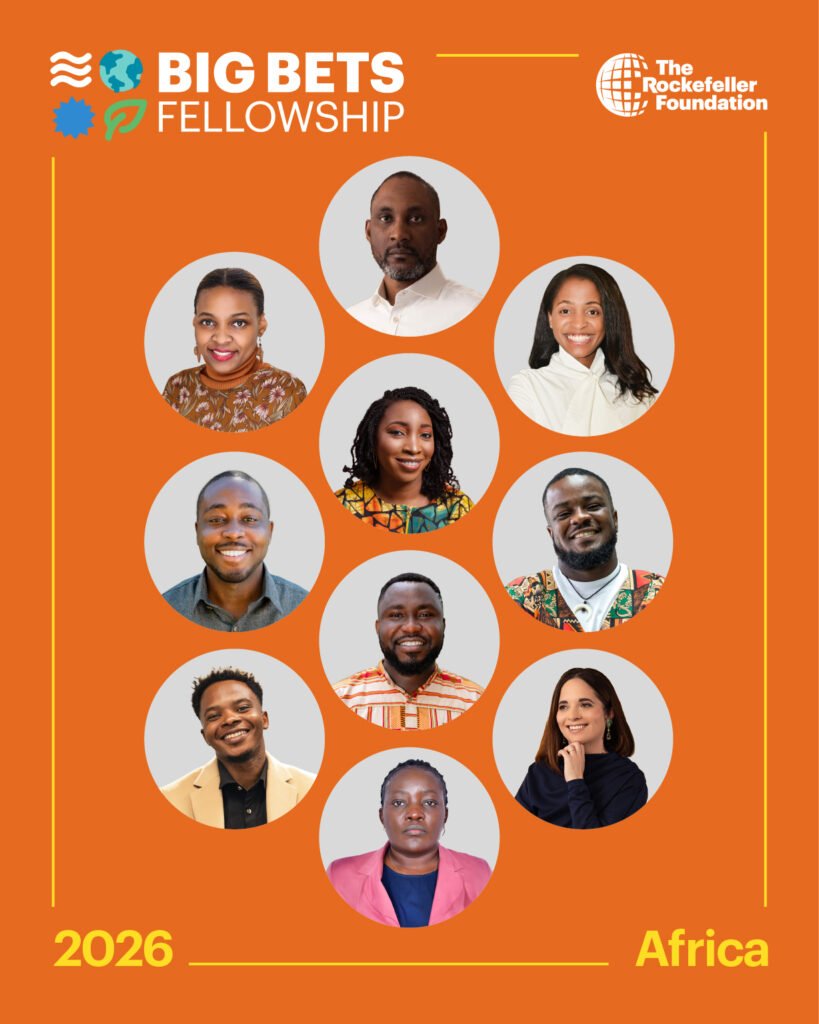
The fellowship drew me in, and got me asking questions about its foundation. I started looking into him as a builder of systems, and also the sequence through which his systems were constructed.
John Rockefeller is often introduced as the first modern billionaire. I consider that framing incomplete. His significance lies in the fact that he built two systems, sequentially, each with lasting global implications.
The first was industrial: the reorganization of oil through Standard Oil. The second was institutional: the reorganization of philanthropy through the Rockefeller Foundation.
The order in which these systems were built is instructive.
Rockefeller’s early years were defined by discipline. At sixteen, he worked as a bookkeeper, where he developed a detailed understanding of costs, margins, and financial flows. This grounding shaped his approach to business. He entered commerce through commodity trading, moving goods such as grain and meat, and learning how fragmented markets operated in practice.
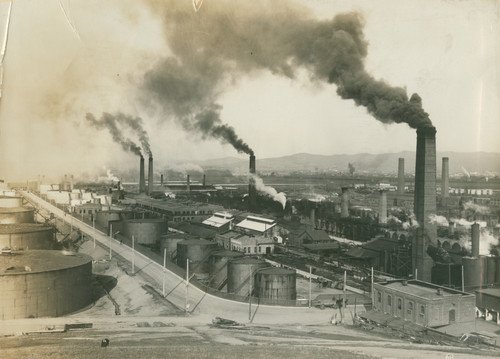
His entry into oil in 1863 was strategic. Rather than pursuing drilling, which was volatile and uncertain, he chose refining. Refining sat at the midpoint of the value chain, where crude oil could be standardized into usable products such as kerosene. This position allowed for consistency, efficiency, and cost control. It was a point in the system where variability could be reduced and value could be stabilized.
In 1870, at just 31 years old, Rockefeller co-founded Standard Oil. The company’s growth was driven by a consistent approach to integration. He acquired competing refineries, closed inefficient operations, and reinvested profits to expand capacity. He negotiated favorable transportation rates with railroads and later invested in pipelines, reducing dependency on external actors. Storage, distribution, and logistics were incorporated into the same system.
By the early 1880s, Standard Oil controlled approximately 90 percent of U.S. oil refining capacity. This scale was not achieved through product innovation alone. It was the result of coordinating multiple layers of an industry that had previously been fragmented. Prices for kerosene declined significantly over this period, making it accessible to a broader market, while supply became more reliable. These outcomes contributed to the expansion of industrial and urban life in the United States.
In 1882, Rockefeller introduced the Standard Oil Trust, a legal structure that allowed centralized control over a network of companies. This model enabled coordinated decision-making at scale and became a precursor to the modern multinational corporation. The trust structure extended the reach of Standard Oil beyond a single firm into a system of interlinked entities operating with shared strategy.
The scale of Standard Oil’s influence led to regulatory intervention. In 1911, following the application of antitrust law, the U.S. Supreme Court ordered its breakup. The company was divided into multiple independent firms. Among the successors were entities that would later become ExxonMobil and Chevron. These companies retained the operational capabilities, infrastructure, and market presence that had been developed under Standard Oil.
The persistence of these entities is notable. The system that had been constructed did not disappear with the breakup. It continued to operate, distributed across multiple organizations. This reflects the depth of the underlying structure that had been put in place.
In 1913, two years after the breakup of Standard Oil, Rockefeller established the Rockefeller Foundation. By this point, he had accumulated substantial capital, and had participated in the construction of a dominant industrial system. The question that followed was how to deploy resources at a comparable scale in domains beyond industry.
Philanthropy at the time was largely localized and reactive. Contributions were often directed toward immediate needs, without a coordinated framework for long-term impact. Rockefeller approached this differently. He treated philanthropy as a system to be designed and managed.
The Rockefeller Foundation focused on public health, education, and scientific research. Its methods emphasized data, long-term planning, and partnerships with institutions. It supported initiatives in medical research, funded universities such as the University of Chicago, and contributed to efforts in disease control and public health infrastructure. Its work extended beyond the United States into global contexts.
This approach marked a shift in how philanthropic capital was deployed. It moved from individual acts of giving toward the creation of structures that could produce sustained outcomes over time. In this sense, the foundation mirrored the logic of Standard Oil. Where Standard Oil organized industrial inefficiency, the Rockefeller Foundation sought to organize social and scientific challenges through coordinated effort.
Rockefeller lived 97 years [passing away in 1937]. His trajectory can be understood through a sequence of decisions:
The latter stages often receive the most attention. The foundation, in particular, is frequently cited as evidence of legacy. The earlier stages, however, contain the operational logic that made the later stages possible.
Rockefeller’s work took place within a specific context. The United States in the late nineteenth century had expanding demand for energy, developing infrastructure such as railroads, and access to capital markets. These conditions created an environment in which an integrated system could be built and scaled.
In other contexts, particularly in emerging markets, these preconditions are not always present. Demand may be fragmented, infrastructure incomplete, and access to capital constrained. The process of building systems therefore begins earlier. It involves establishing the conditions under which integration can occur.
My own work has unfolded within this latter context. I began with storytelling, through this blog [byntha] that sought to interpret and communicate emerging realities. I was first a [life]style blogger when I was in undergrad, which then evolved to travel blogging, and fast forward 13 years later as my career has evolved and I have grown in ways unimaginable, you have been deep with me in Systems Synthesis.
That work extended into building capabilities through the Ntha Foundation, focusing on education and skills. It expanded into ecosystem development through the Kwathu Kollective, including the creation of an innovation hub and, more recently, a focus on agriculture through the Kwathu Smart Innovation Farms.
These layers have converged into a focus on infrastructure systems through Q2 Systems and QTrax [yes, I know!]. The emphasis is on cyber-physical infrastructure: coordination, simulation, and deployment within physical environments. The sequence may appear unconventional when compared to industrial histories that begin with a firm and move toward scale. To me, it reflects the necessity of building foundational elements alongside the system itself.
When I was selected for the Africa Big Bets Fellowship, I purchased a copy of the ‘Big Bets‘ book by Dr. Rajiv Shah – President of the Rockefeller Foundation.
The Rockefeller Big Bets Fellowship sits within this trajectory as a point of alignment for me. Its focus on large-scale, system-oriented work corresponds with a shift from enabling conditions to structuring and scaling systems. The fellowship does not define the work. It signals that the direction of the work corresponds with a broader recognition of the importance of systems thinking in addressing complex challenges.
Rockefeller’s legacy is often summarized through his wealth or his philanthropy. I am taking a closer look, and noticing different patterns. He began with discipline, identified a strategic point of entry, organized an industry, and later established institutions to extend his impact.
The relevance of this pattern today lies in understanding where one enters a system, and whether that system already exists. In environments where it does not, the work includes building the conditions that allow systems to form. In environments where it does, the work involves organizing and scaling them. This is the work ahead for me over the next half, or perhaps full year.
The Rockefeller Big Bets Fellowship is designed to support work that operates at the level of systems. Its focus is on advancing ideas that require coordination across sectors, sustained execution, and a long-term view of impact. Fellows are brought into a network that combines funding support, institutional partnerships, and access to global expertise, with the expectation that the work itself is both ambitious and grounded in real-world deployment.
Over the next year, my focus is on translating the layers that have been built into functioning systems.
Through Q2 Systems, this means advancing infrastructure that integrates simulation, coordination, and deployment. The work centers on developing tools such as Q2 Sim and QTrax that allow environments to be modeled, monitored, and operated with greater precision. The objective is not simply to build products, but to establish a control layer that connects data, movement, and decision-making across physical systems.
In parallel, through Kwathu Kollective, the focus is on grounding these systems within real contexts. This includes the continued development of the Kwathu Smart Innovation Farms as applied environments where agricultural production, training, and technology intersect. These sites serve as both testing grounds and operational systems, where ideas are translated into practice and refined through use.
The relationship between these efforts is deliberate. One builds the system. The other operates within it.
The next twelve months will be defined by execution. This includes deploying systems in live environments, strengthening partnerships with institutions, and demonstrating that these models can function at scale. Success will not be measured by announcements, but by whether these systems operate reliably, deliver value, and create a foundation that can be extended across contexts.
There is an expectation of progress within this timeframe. The work has been layered over several years, and this moment represents a shift toward consolidation and performance. The ambition is clear, but so is the discipline required to realize it.
If the systems hold, they will not remain isolated. They will extend, adapt, and connect into broader networks.
That is the work ahead.
If you’d like to go deeper into my journey — from Malawi, through the United Nations to Microsoft, you can find it in my books.
P.S. for 2026, you can get any of my books via Kindle for only $2.99.
This offer is valid till the end of the year.
Links to purchase are as below:



Nthanda Manduwi is a Malawian storyteller, entrepreneur, digital transformation advocate, and community builder driven by the mission to empower Africa’s economic landscape through innovation and technology.