It was shortly after our bi-weekly United Nations JPO [Junior Professional Officer] meeting in New York. A few of us went out for an early dinner and drinks at a restaurant on 34th Street in Manhattan.
As it often does in that setting, the conversation turned to where we were from.
It began simply enough. Countries were named. Cities were mentioned. Stories followed.
Then the question shifted, almost casually:
What does your country produce?
It is not a difficult question to respond to. At least, it should not be.
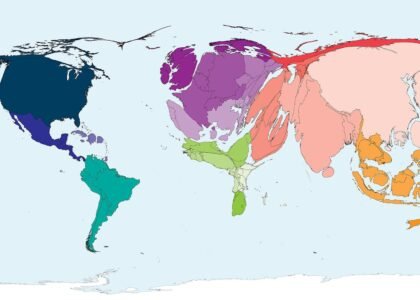
That question to me carried more weight than all others. It reframed countries not as geographies or political units, but as production systems. Germany signaled manufacturing and engineering; Saudi Arabia, hydrocarbons; India, a diversified mix of services, pharmaceuticals, and increasingly manufacturing; China, industrial scale across multiple sectors.
These responses were clear positions. They located each country within the global economy: what it contributes, how it earns, where it sits in systems of production and exchange.
For Malawi, the answer is more concentrated. If I am being honest I was too ashamed to respond. The question has become one of my permanent dreads, now living in the diaspora, as a ‘proud‘ Malawian.
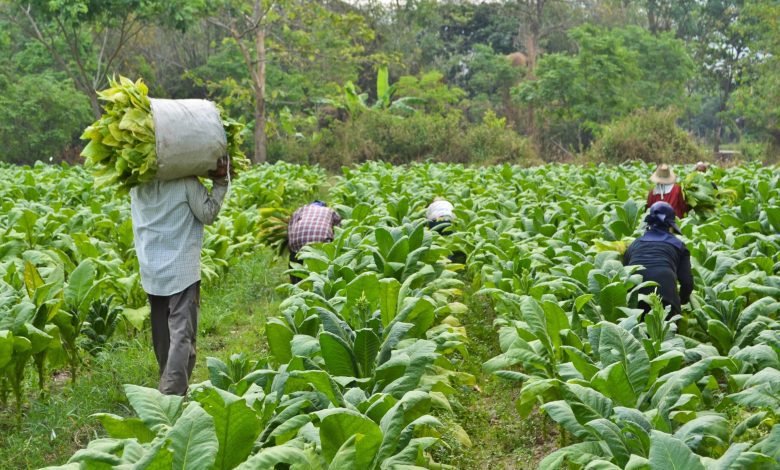
Tobacco remains Malawi’s dominant export earner. Tea, sugar, and a handful of other commodities contribute smaller shares. In some years, tobacco accounts for over 60 percent of foreign exchange earnings. That concentration shapes exposure to global demand, constrains foreign exchange availability, and narrows the space within which macroeconomic policy can operate.
That moment—sitting at a dinner table in New York—shifted the frame for me, and particularly as an Economist.
Development stopped being an abstract discussion about infrastructure gaps or policy reform. It became something more precise. It became a question of production. It has since been to me.
What does an economy produce at scale?
And how does that production connect to the world beyond it?

Delve into Business and International Development with Nthanda Manduwi
Systems Don’t Have to Be Broken to Produce Bad Outcomes
I contemplated not publishing an episode this week [I explain why in the podcast], and then ended up recording my longest episode yet.
And to make up for publishing a little late the past two weeks, I am publishing this a day early. You’re welcome, or I am sorry?
I woke up to a message from a friend sharing a video of President William Ruto demanding Veto power for African nations at the 80th United Nations General Assembly [I happened to be in attendance], and I jumped out of bed and got to writing about my favorite beverage: tea! I also got to pen about slave trade, and colonization, and war [I know, what does any of this have to do with Hibiscus tea??!]
This week’s episode explores one of the central ideas behind the third book in the Lessons Book series – Systemic Nonsense: what if many of the frustrations we experience in institutions are not accidents or failures, but predictable outcomes of how those systems were designed?
It often feels like bureaucracy feels so resistant to change, and that reforms often produce more process than progress. It also seems that good intentions so rarely translate into meaningful outcomes. If you’ve pondered on these thoughts before, then these conversations are for you.
This Week’s Book
📖 Systemic Nonsense [Book 3]
This week only, from 27–31 July, the Kindle edition of Systemic Nonsense is available free as part of its Founders Edition launch.
Systemic Nonsense explores several ideas on international development in much greater depth. It asks a simple question:
What if the system isn’t failing? What if it’s doing exactly what it was designed to do?
Whether you listen, read, or dive into the book, I hope it leaves you asking better questions about the systems we inherit—and the ones we choose to build next.
How to Read
To receive your free Kindle copy:
* Click the Amazon link below.
* Select the Kindle edition while the promotion is active.
* Add it to your Kindle library.
You do not need a Kindle device. The free Kindle app works on iPhone, Android, tablets, Macs, and PCs, allowing you to build your digital library wherever you read.
Helpful Links
📚 Read this week’s book for free [search on Amazon or in Kindle for the book that is free for the week, and feel free to purchase the others]:http://amazon.com/dp/B0FQNJ61SB
📰 Subscribe to The Lessons Conversation:
Africa paperback pre-orders:https://forms.office.com/r/RMRMKTNd1M
Enjoyed listening to the Lessons Conversation? This post is public so feel free to share it.
This is a public episode. If you would like to discuss this with other subscribers or get access to bonus episodes, visit podcast.lessonsconversation.com
![Book 3: Systemic Nonsense [lessonsbooks.com]](https://byntha.com/wp-content/uploads/2026/07/podcast-episode-image-5a3bbb435029c89d668c5fa2682893ef-768x768.jpg)
The mechanics are straightforward but often underemphasized in public debate. An economy generates income through production—goods and services exchanged domestically and internationally. Exports earn foreign currency, which finances imports of fuel, capital goods, intermediate inputs, and essential services. From income, taxes are collected, funding public goods: roads, power systems, water infrastructure, health, and education.
Where the export base is narrow, three constraints emerge simultaneously:
Malawi’s recent macroeconomic profile reflects these dynamics. Growth has been volatile; inflation has remained elevated; and foreign exchange shortages have constrained firms’ ability to import inputs, reducing capacity utilization.
I have spent the past week visiting Malawi, and have experienced this fragility at scale: terrible roads, inconsistent power supply, fuel shortages, and just far too much more.
International financial institutions have repeatedly highlighted a narrow tax base and the difficulty of capturing revenue from a largely informal economy, linking fiscal limits to underlying production structure rather than administrative effort alone.
To understand why export bases are narrow in many African economies, one must quite critically examine colonial production design.
Across British and French territories, colonial administrations and settler economies organized production around a small number of export commodities aligned with European demand and agro-ecological suitability.
In Nyasaland [present-day Malawi], colonial authorities and estates expanded tobacco, tea, cotton, and coffee production from the late nineteenth century. Tobacco exports began as early as 1893, and by the interwar period, tobacco accounted for roughly 65–80 percent of exports. Land use was reorganized toward estate agriculture; African smallholders were incorporated under regulated conditions; and infrastructure—most notably the Shire Highlands Railway [1908]—was designed to move export crops efficiently to ports.
This pattern was not unique to Malawi:
Across cases, three features recur:
This structure is best understood as designed specialization within a global system.
Political independence did not automatically reconfigure production systems. In many countries, the inherited export model persisted due to a combination of incentives and constraints:
In Malawi, the ADMARC system and estate expansion reinforced tobacco’s centrality. Similar dynamics operated elsewhere: cocoa boards in West Africa, mining enclaves in Southern Africa, and oil sectors in Nigeria. The result is path dependency—where historical choices shape current options, and shifting trajectories requires coordinated change across multiple domains.
Path dependency does not imply inevitability. It indicates the scale of coordination required to pivot.
The vulnerability of concentrated export structures becomes most visible when global demand shifts. The recent UK Tobacco and Vapes Bill, which establishes a “smoke-free generation” by permanently restricting tobacco sales to those born after 2008, is a case in point. While implementation phases in over time, the policy signals a long-run decline in tobacco consumption in a major market.
For producer economies heavily reliant on tobacco, the implication is structural:
This asymmetry is not unique to tobacco. Cocoa producers face price swings and changing consumption patterns; copper exporters are exposed to global cycles; oil producers to energy transitions. The common feature is that consuming countries can pivot policy and behavior, while producing countries absorb the adjustment unless they diversify.
The intuition often expressed informally—“they move on and leave us”—captures a real economic mechanism: global value chains reconfigure; specialized producers bear transition costs.
A credible analysis requires two acknowledgments held simultaneously.
First, colonial systems structured production in ways that favored export agriculture or resource extraction, often at the expense of diversified industrialization.
Second, post-independence choices have reinforced these structures. Governments prioritized established export sectors for foreign exchange; industrial policies were uneven or inconsistent; private sectors remained constrained in scale; and in some cases, macroeconomic instability undermined long-term investment.
This is a systems argument about responsibility and agency. History explains the starting point. It does not remove the need to define and execute a different trajectory.
The claim that structural transformation requires centuries is not supported by comparative evidence.
China’s post-1978 reforms began from a low-income base—GDP per capita around $155 in current USD, comparable to or below many developing countries at the time. Over subsequent decades, a combination of infrastructure investment, export-oriented manufacturing, special economic zones, and gradual liberalization transformed the economy into a global manufacturing hub.
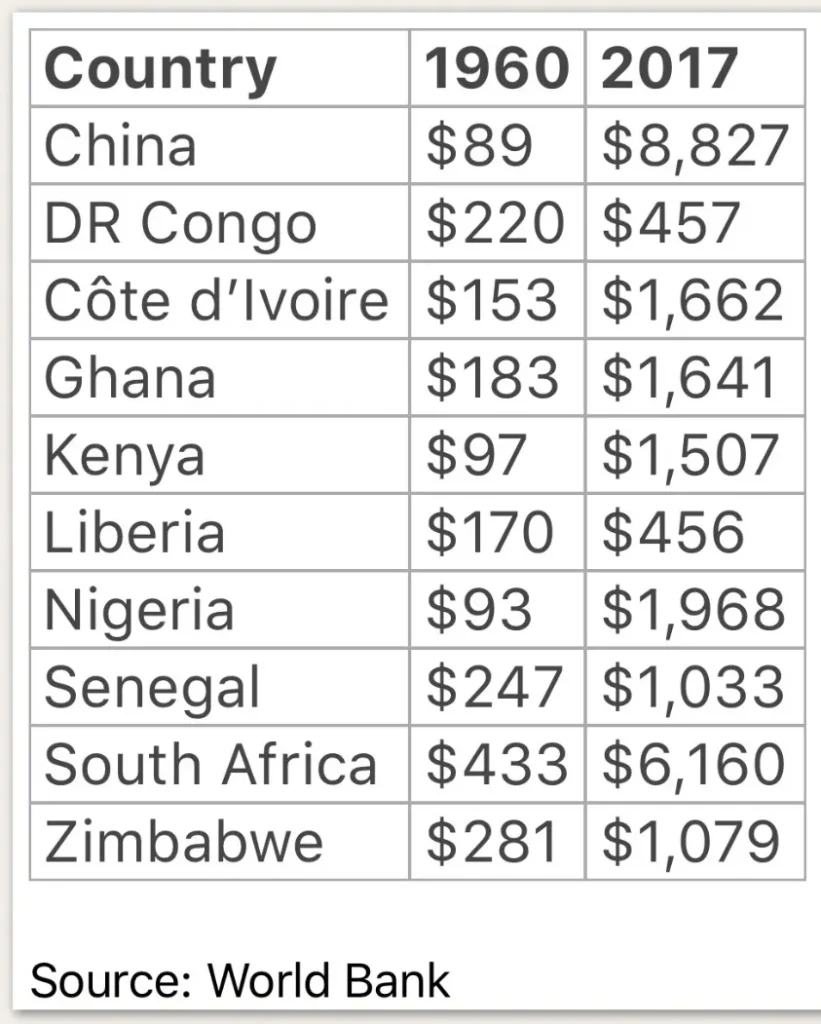
The lesson is not that China’s model is universally replicable. It is that decades of coordinated policy, investment, and capability-building can materially shift an economy’s position. Time horizons matter, but so does direction and execution.
Malawi’s long-term development framework, MW2063, articulates three pillars:
These are appropriate high-level objectives. The analytical challenge is translating them into production outcomes:
Policy statements are necessary. Production at scale is decisive.
Diversification is often framed abstractly. In practice, it is about extending value chains:
These transitions require standards, energy reliability, logistics, finance, and market access. They also require firm capabilities—management, engineering, quality control—often developed over time with targeted support.
Industrialization is constrained by energy reliability and logistics coordination. Continuous production—whether in food processing, textiles, or light manufacturing—cannot operate on intermittent power or unpredictable input delivery.
Empirically, firms in environments with foreign exchange shortages and energy constraints report reduced capacity utilization, as inputs cannot be imported on time and outages interrupt production cycles. This links macro constraints (forex, fiscal space) directly to micro-level production outcomes.
Investment priorities therefore have to be sequenced:
Without these, industrial policy remains aspirational.
Production shifts when workers and firms can execute new tasks reliably.
This includes:
Education systems, vocational training, and firm-level learning-by-doing all matter. Evidence from industrializers shows that capability accumulation is iterative: early firms learn, suppliers emerge, standards improve, and ecosystems deepen.
Policy can accelerate this through:
International financial institutions and development partners provide financing and technical support. Historically, conditionality has shaped policy choices, sometimes emphasizing stabilization over structural transformation.
A more effective approach is alignment:
This requires clarity from the recipient side: what sectors to prioritize, what constraints to remove, and how success will be measured.
Diversification entails transition costs:
Risk management tools include:
The objective is not to abandon existing exports immediately, but to reduce dependence over time.
I proposed here a feasible sequence for a small, open economy might include:
Each step is measurable and can be monitored.
The question—what does your country produce?—is a prompt for strategy.
In its current form, the answer for Malawi remains concentrated. That concentration reflects history, but also present choices and constraints. The global environment is shifting—through policy changes like tobacco control, through market dynamics, and through technological change.
The relevant question now is not only descriptive. It is decisional:
What will the country produce next, at scale, and with what supporting system?
Many African economies were structured around narrow export systems aligned to colonial demand. Decades later, those structures still shape outcomes—foreign exchange availability, fiscal capacity, and vulnerability to global shifts.
Recognizing this is necessary. It is not sufficient.
Redefining production—through value chain development, energy and logistics investment, workforce capability, and aligned policy—is the work that changes trajectories. It is complex, resource-intensive, and iterative. It is also the mechanism through which economies expand their room to maneuver.
If you’d like to go deeper into my journey — from Malawi, through the United Nations to Microsoft, you can find it in my books.
P.S. for 2026, you can get any of my books via Kindle for only $2.99.
This offer is valid till the end of the year.
Links to purchase are as below:



Nthanda Manduwi is a Malawian storyteller, entrepreneur, digital transformation advocate, and community builder driven by the mission to empower Africa’s economic landscape through innovation and technology.