20th June, 2026
Today, a friend rests.
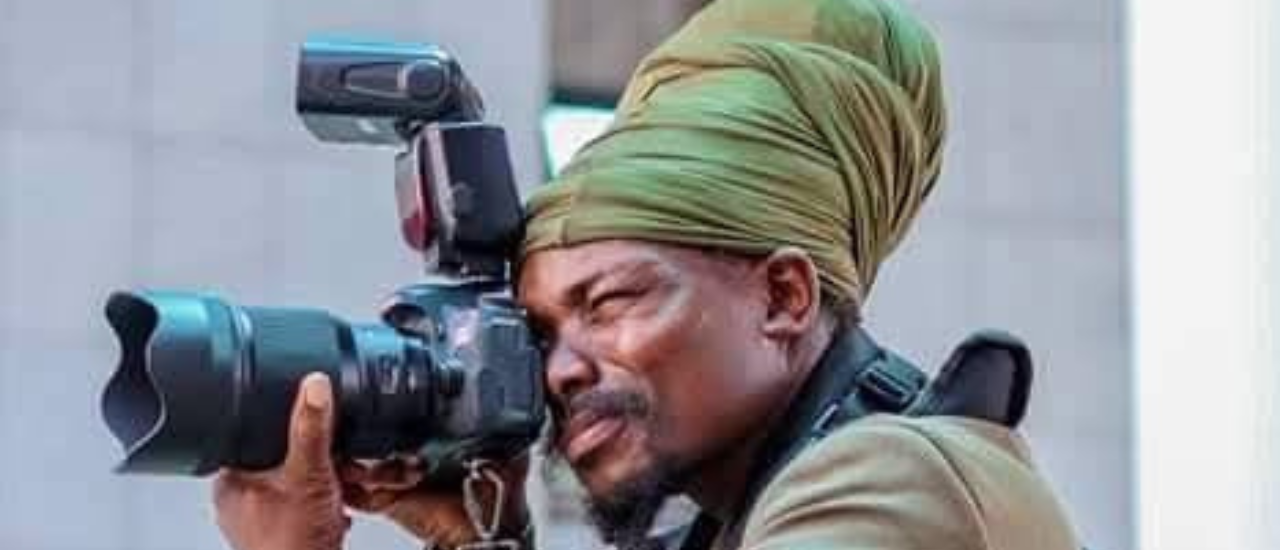
I first met Ras Peter Kansengwa when I was twenty-three years old.
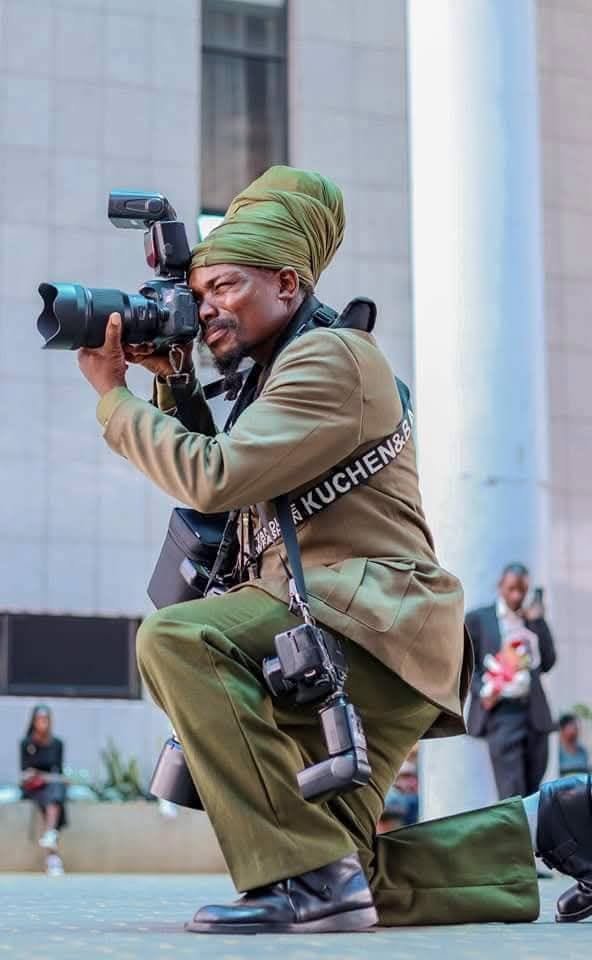
It was around 2018, and I had just participated in Miss Malawi. I was still finding my footing in Lilongwe city, and beginning to attend more public events across Malawi. Ras Kansengwa was always there. Camera in hand.
Ras Peter Kansengwa was one of Malawi’s most recognisable photojournalists, a man whose work helped preserve the public life, cultural memory, and social texture of a country that is too often under-documented by its own people. Through his camera, he captured Malawi as a living place: its events, its artists, its public figures, its ordinary gatherings, its celebrations, its griefs, and its moments of becoming.
He was widely known not only for the photographs he took, but for the way he showed up. Ras Kansengwa carried his work with discipline, warmth, humility, and unmistakable presence. He belonged to that rare class of creatives who become part of the archive of a nation. His images held memory. They gave form to moments that would otherwise have passed too quickly. They helped Malawi see itself.
Over the course of his career, Ras became a trusted freelance photographer and photojournalist, working across social, cultural, media, and national spaces. His contributions were recognised by peers, audiences, and photography communities, including his recognition by the Photographers Association of Malawi [PHOTAMA], his award as Photographer of the Year at the Urban Music People [UMP] Awards, and later recognition as Best Freelance Photographer of the Year by photography enthusiasts and social media audiences. Yet awards alone cannot explain what he meant to the people who worked with him. Ras Kansengwa was generous with his skill. He mentored younger photographers. He shared knowledge. He understood that photography was not only a profession, but a responsibility.
He also became part of my own story.
For years, whenever I attended events, Ras Kansengwa would take pictures of me. He loved taking pictures of me. I have so many photographs from him across the years, images of different seasons of my life, different versions of myself, different rooms I walked into before I understood what all those rooms would later mean. He took beautiful pictures of me. Truly beautiful pictures. He had a way of catching not only the person standing in front of him, but the moment around them.
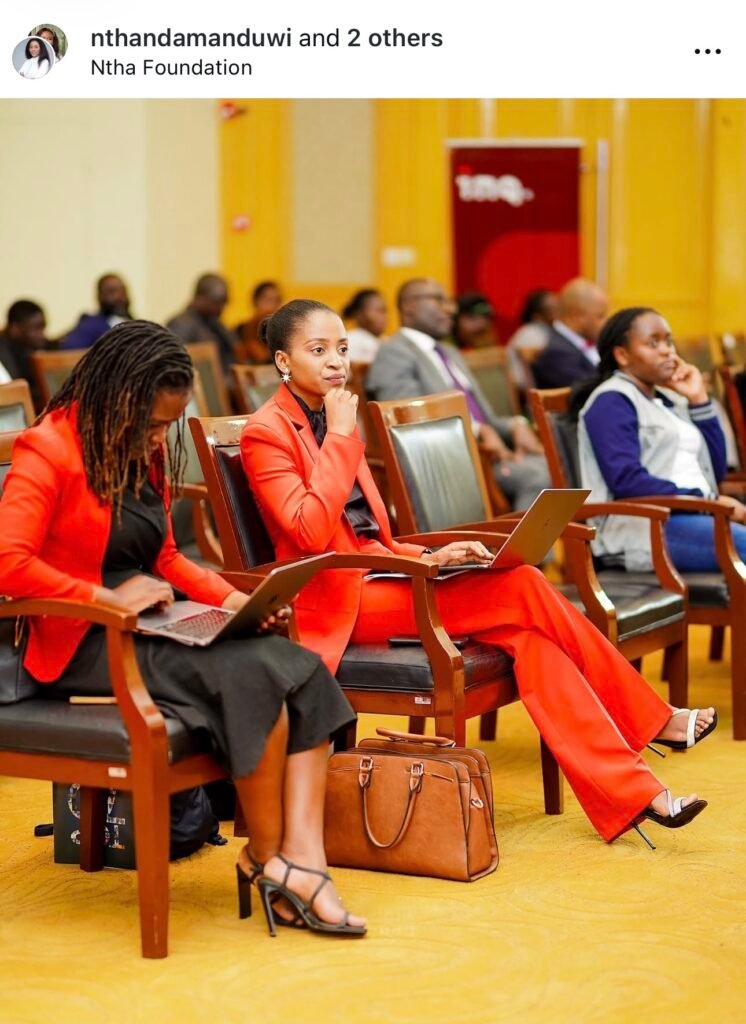
Whenever he took photographs of me, I often reminded him, I did not want images sent to me on WhatsApp as compressed pictures. I wanted the real files. I wanted the documents. I wanted the high-definition images. I would bug him about it, again and again, because I knew the value of his work, even in the ordinary moments when we were laughing about file formats and image quality.
One of the last times I saw him in person [2024], he told me two things. First, he told me he was sick, and that he was receiving treatment. Second, he thanked me. He told me I had changed the way he shared his images with people. He said that because of the way I had insisted on receiving proper image files, he had begun sending people high-definition images, and that people were enjoying his work even more. He said this with gratitude, and with the humility that made him who he was.
He also told me he was going to be fine.
When I began working on We Are [Still] at War, I knew I needed a cover image that could hold the weight of the book. I did not want an abstract image of conflict from a place we do not know. I wanted something rooted in Malawi. Because although Malawi does not carry the kind of war history the world usually recognises, we have still had moments when we pushed back, spoke up, and fought to be heard. That is part of the heart of this book: the recognition that war in this age does not always arrive with armies. Sometimes it arrives through systems, silence, debt, law, scarcity, and the slow disciplining of a people.
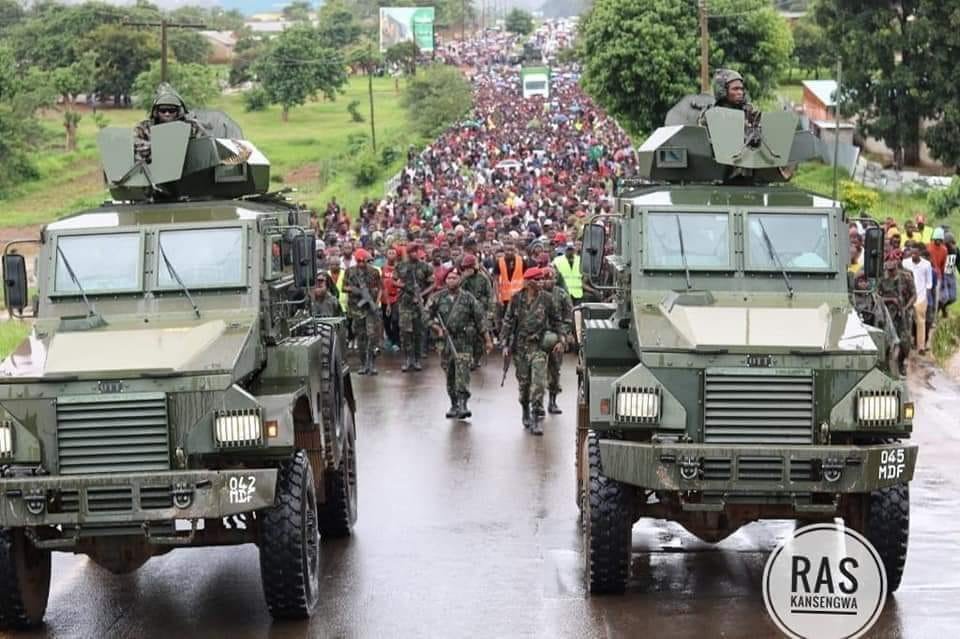
The image Ras Kansengwa took became the cover of this book.
He gave me permission to use it. I paid him for the work. In one of our final exchanges about it, he thanked me warmly and told me I had made his day colourful and great. I did not know then that he would not live to see the finished book.
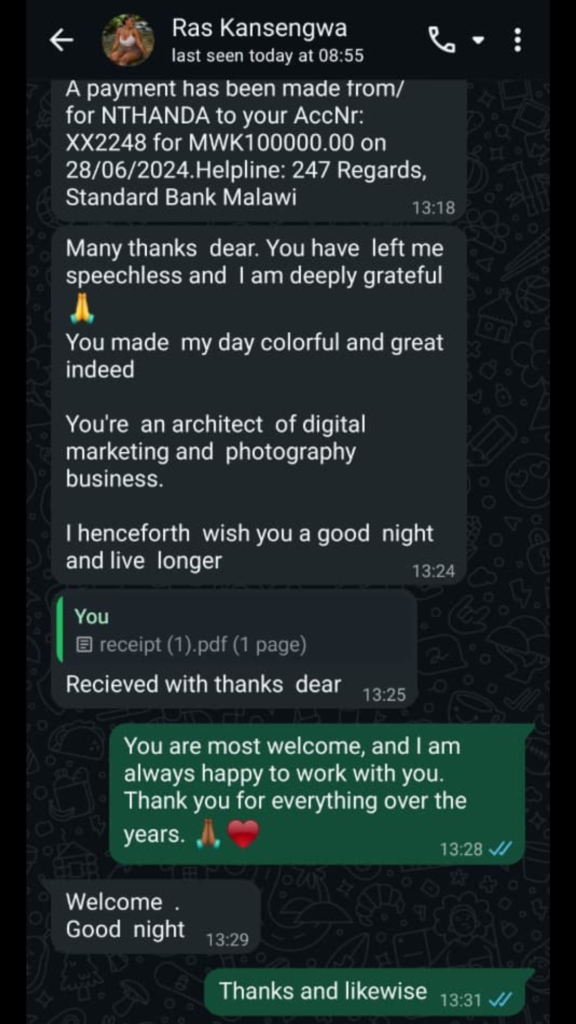
Ras Kansengwa once told me that I was one of the people he believed in. He told me he was waiting for the day I would come back and help change the nation. I carry those words now with a kind of weight. This book, in its own way, is part of that return. It is part of the work of naming what has harmed us, what has shaped us, and what we must still fight to transform.
The country has lost a wonderful man. A truly incredible man. An angel in human form.
Ras Peter Kansengwa was not only a photographer. He was a witness. He was a keeper of memory. He preserved faces, events, gestures, public life, beauty, urgency, culture, and history. His camera helped document a Malawi that might otherwise have passed too quickly through the world’s attention. For many of us, he also preserved pieces of our own lives.
I wish he had seen this book.
I wish he had held it in his hands.
I wish I could have told him, properly, that one of his photographs had become the face of one of the most important works I have ever written.
For Ras Peter Kansengwa.
For My Friend.
For the Photographer.
For the Witness.
For the Man whose lens helped Malawi remember itself.
May his memory live on in the light he captured.
If you’d like to go deeper into my journey — from Malawi, through the United Nations to Microsoft, you can find it in my books.
P.S. for 2026, you can read any of my first 3 books via Kindle for only $2.99.
This offer is valid till the end of the year.
Links are as below:



Nthanda Manduwi is a Malawian storyteller, entrepreneur, digital transformation advocate, and community builder driven by the mission to empower Africa’s economic landscape through innovation and technology.