March, 2026
It is Wednesday.
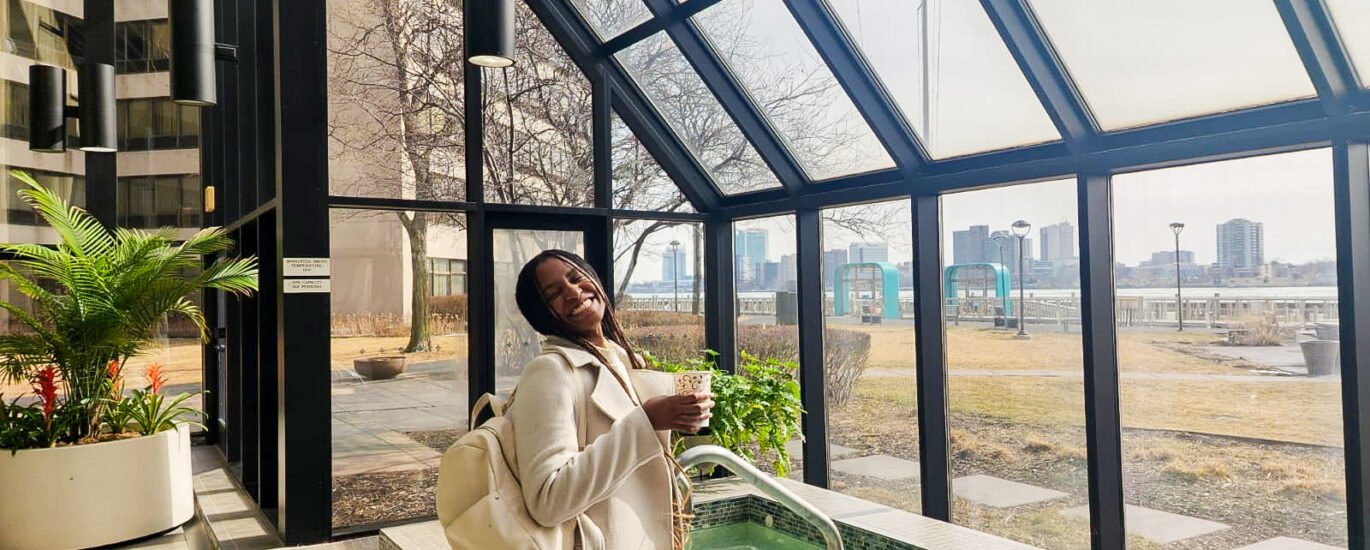
I am in Detroit.
I have just completed my move from the capital of Michigan: Lansing, to the City of Detroit to build my new venture: Q2 Systems—a company of Bien Corporation.
I write these words sitting on the seventh floor of a twenty-five floor high rise on the waterfront.
I have been listening to Driemo and Gwamba’s ‘Yonseyi‘ on repeat since yesterday.
When I look out the window, I see Canada staring right back at me across the river.
Life has a way of arranging moments like this. I am taking this very brief moment to look around for a second.
Twelve years.
That is roughly how long it has taken to get here.
I find myself pulling at the threads.
Small bricks. Small decisions. Tiny turns that, at the time, did not seem important.
Tiny turns that led us to precisely where we are.
Delve into Business and International Development with Nthanda Manduwi
Systems Don’t Have to Be Broken to Produce Bad Outcomes
I contemplated not publishing an episode this week [I explain why in the podcast], and then ended up recording my longest episode yet.
And to make up for publishing a little late the past two weeks, I am publishing this a day early. You’re welcome, or I am sorry?
I woke up to a message from a friend sharing a video of President William Ruto demanding Veto power for African nations at the 80th United Nations General Assembly [I happened to be in attendance], and I jumped out of bed and got to writing about my favorite beverage: tea! I also got to pen about slave trade, and colonization, and war [I know, what does any of this have to do with Hibiscus tea??!]
This week’s episode explores one of the central ideas behind the third book in the Lessons Book series – Systemic Nonsense: what if many of the frustrations we experience in institutions are not accidents or failures, but predictable outcomes of how those systems were designed?
It often feels like bureaucracy feels so resistant to change, and that reforms often produce more process than progress. It also seems that good intentions so rarely translate into meaningful outcomes. If you’ve pondered on these thoughts before, then these conversations are for you.
This Week’s Book
📖 Systemic Nonsense [Book 3]
This week only, from 27–31 July, the Kindle edition of Systemic Nonsense is available free as part of its Founders Edition launch.
Systemic Nonsense explores several ideas on international development in much greater depth. It asks a simple question:
What if the system isn’t failing? What if it’s doing exactly what it was designed to do?
Whether you listen, read, or dive into the book, I hope it leaves you asking better questions about the systems we inherit—and the ones we choose to build next.
How to Read
To receive your free Kindle copy:
* Click the Amazon link below.
* Select the Kindle edition while the promotion is active.
* Add it to your Kindle library.
You do not need a Kindle device. The free Kindle app works on iPhone, Android, tablets, Macs, and PCs, allowing you to build your digital library wherever you read.
Helpful Links
📚 Read this week’s book for free [search on Amazon or in Kindle for the book that is free for the week, and feel free to purchase the others]:http://amazon.com/dp/B0FQNJ61SB
📰 Subscribe to The Lessons Conversation:
Africa paperback pre-orders:https://forms.office.com/r/RMRMKTNd1M
Enjoyed listening to the Lessons Conversation? This post is public so feel free to share it.
This is a public episode. If you would like to discuss this with other subscribers or get access to bonus episodes, visit podcast.lessonsconversation.com
![Book 3: Systemic Nonsense [lessonsbooks.com]](https://byntha.com/wp-content/uploads/2026/07/podcast-episode-image-5a3bbb435029c89d668c5fa2682893ef-768x768.jpg)
I have been thinking about March lately.
March seems to be when my life quietly reorganizes itself.
March, 2026
I have just moved to Detroit to build Q2.
March, 2025
I had just landed in Madrid, Spain, for my study abroad with the Broad College of Business at Michigan State University.
March, 2024
I was in Manhattan completing the incorporation of my non-profit, Ntha Foundation, as a 501(c)(3), while preparing to complete my mission with the United Nations.
March, 2023
I was living what was, honestly, a fairly magical life in Manhattan.
March, 2022
I was wrapping up my life in Lilongwe, Malawi, preparing to move to the United States to join the UN in New York.
March, 2021
My organization had just received a $250,000 grant from the World Bank to build innovation hubs in Malawi.
At that exact moment, I had enrolled in my first Master’s degree.
I could go further back.
I probably should.
But for now, 2021 feels like a good place to begin pulling the threads.
There was a time—not too long ago—when all I wanted was to be a travel and lifestyle blogger in Malawi.
To write.
To photograph food.
To tell stories.
Life, as it tends to do, had other plans. Or perhaps it simply had larger versions of the same plan.
The blogging turned into storytelling.
The storytelling turned into organizations.
The organizations turned into companies.
And somehow, one brick at a time, the road lands us here today.
Detroit.
Detroit to me feels like a reset.
The past few years of my life have been motion. Constant forward motion.
New York.
Torino.
Pattaya.
Lansing.
Redmond.
Madrid.
Always always moving.
Detroit, however, feels different.
Detroit feels like a moment to pause as my companies scale.
It is a city that understands reinvention better than most places on Earth. It built the modern industrial world. It lost it. And now it is rebuilding something new.
That energy resonates deeply with me.
It is an economy that is not so advanced that everything feels abstract, but also not so fragile that ambition feels unrealistic.
Things here still make sense.
You can see the bones of industry.
You can see the possibility of what comes next.
And somewhere within that possibility, I see a place for Q2.
Q2 is my new venture—what I went to Michigan State University to build: a company of Bien Corporation.
Bien began as a creative company—an attempt to bring high-quality storytelling and branding to businesses in Malawi and across Africa.
But over time, a lot interesting things happened.
The work started pointing toward larger systems.
Technology.
Infrastructure.
Platforms.
Q2 is the next chapter of that journey.
I am excited to spend the next year [and perhaps more] exploring what this company can become.
More than anything, this next chapter feels personal to me.
For a long time, my life has been about building things for others. Communities. Platforms. Organizations.
Detroit feels like a moment to also build something within myself.
Over the next year, I hope to spend time doing the following:
Writing.
Telling the stories I have been carrying for years.
Reflecting.
Pulling at the threads of the last decade and understanding how the pieces fit together.
Resting.
Allowing my mind the space to breathe after years of constant motion.
Building Q2.
Carefully and thoughtfully shaping what this company can become.
Making new friends.
Every city teaches you something through the people you meet.
Finding myself again.
Perhaps the most important work of all.
I arrived in Detroit at the very beginning of spring.
The trees have not yet bloomed.
The air still carries the last breath of winter.
But something is shifting.
Soon the city will turn green again.
And, if I am lucky, so will parts of my own life.
So for now, I write.
I reflect.
And I look forward to seeing what blooms next.
—
Ntha
Detroit, Michigan
March 2026
If you’d like to go deeper into my journey — from Malawi, through the United Nations to Microsoft, you can find it in my books.
P.S. for 2026, you can get any of my books via Kindle for only $2.99.
This offer is valid till the end of the year.
Links to purchase are as below:


Nthanda Manduwi is a Malawian storyteller, entrepreneur, digital transformation advocate, and community builder driven by the mission to empower Africa’s economic landscape through innovation and technology.