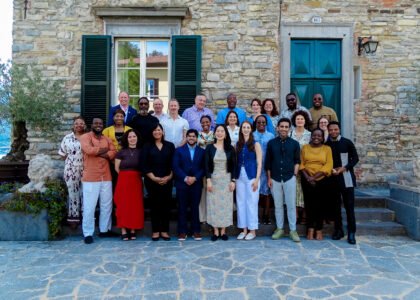

On arrival in Malawi, I did what any sensible manager would do: I made time to go spend a few hours with my most junior staff: our interns from the Malawi University of Science and Technology.
As per my intention, this was not meant to be a diagnostic exercise. I went in expecting to review their work, understand what had been built, and assess whether their output could transition to a new cohort I am onboarding in the United States. What I walked into instead was a much clearer view of a gap I had only understood in theory.
I am currently working across two very different environments. On one side, first-year computer science students at Michigan State University. On the other, graduating interns from the Malawi University of Science and Technology. The contrast between the two is not subtle. It is structural.
The difference is not intelligence. It is not effort. It is not even ambition.
It is something deeper in how capability is being formed.
Delve into Business and International Development with Nthanda Manduwi
Systems Don’t Have to Be Broken to Produce Bad Outcomes
I contemplated not publishing an episode this week [I explain why in the podcast], and then ended up recording my longest episode yet.
And to make up for publishing a little late the past two weeks, I am publishing this a day early. You’re welcome, or I am sorry?
I woke up to a message from a friend sharing a video of President William Ruto demanding Veto power for African nations at the 80th United Nations General Assembly [I happened to be in attendance], and I jumped out of bed and got to writing about my favorite beverage: tea! I also got to pen about slave trade, and colonization, and war [I know, what does any of this have to do with Hibiscus tea??!]
This week’s episode explores one of the central ideas behind the third book in the Lessons Book series – Systemic Nonsense: what if many of the frustrations we experience in institutions are not accidents or failures, but predictable outcomes of how those systems were designed?
It often feels like bureaucracy feels so resistant to change, and that reforms often produce more process than progress. It also seems that good intentions so rarely translate into meaningful outcomes. If you’ve pondered on these thoughts before, then these conversations are for you.
This Week’s Book
📖 Systemic Nonsense [Book 3]
This week only, from 27–31 July, the Kindle edition of Systemic Nonsense is available free as part of its Founders Edition launch.
Systemic Nonsense explores several ideas on international development in much greater depth. It asks a simple question:
What if the system isn’t failing? What if it’s doing exactly what it was designed to do?
Whether you listen, read, or dive into the book, I hope it leaves you asking better questions about the systems we inherit—and the ones we choose to build next.
How to Read
To receive your free Kindle copy:
* Click the Amazon link below.
* Select the Kindle edition while the promotion is active.
* Add it to your Kindle library.
You do not need a Kindle device. The free Kindle app works on iPhone, Android, tablets, Macs, and PCs, allowing you to build your digital library wherever you read.
Helpful Links
📚 Read this week’s book for free [search on Amazon or in Kindle for the book that is free for the week, and feel free to purchase the others]:http://amazon.com/dp/B0FQNJ61SB
📰 Subscribe to The Lessons Conversation:
Africa paperback pre-orders:https://forms.office.com/r/RMRMKTNd1M
Enjoyed listening to the Lessons Conversation? This post is public so feel free to share it.
This is a public episode. If you would like to discuss this with other subscribers or get access to bonus episodes, visit podcast.lessonsconversation.com
![Book 3: Systemic Nonsense [lessonsbooks.com]](https://byntha.com/wp-content/uploads/2026/07/podcast-episode-image-5a3bbb435029c89d668c5fa2682893ef-768x768.jpg)
The first signal was small.
I asked why a virtual meeting setup had not been implemented. They explained that they could not find the remote and decided to leave it. That answer carries more weight than it appears to on the surface. It reveals something about how problems are approached, whether they are pursued to resolution, and how ownership is distributed.
We moved on to the work itself.
I asked what had been built, and whether the work could be handed over to a new cohort. The responses were hesitant. There was no clear articulation of outputs, no structured understanding of what had been completed, and no confidence that the work could stand independently.
So I shifted the conversation.
I asked for their North Star—not for the internship, but for their lives. Who they wanted to become. What they were working toward.
The most common answer was financial independence.
It is an honest answer. It reflects the reality they are navigating. But it does not translate into a pathway. There was no clear connection between where they are today, the skills they are building, and the outcomes they are aiming for.
I then asked a simpler question.
What industry do you work in?
Eventually, the answer came: IT. I asked them to get specific about what science, and eventually Siphat was able to respond:
computer science.
I pushed further.
What is happening in computer science today? What is the state of your industry? What is being built? Where is it going?
No response.
In any technical field, industry awareness is foundational. It determines how individuals position themselves, what skills they prioritize, and how they understand their own relevance. Without it, skill development becomes detached from reality.
In contrast, I am working with first-year students in the United States who are already engaging with machine learning, artificial intelligence, and emerging systems. They track tools, companies, and developments in real time. They are not yet experts, but they are aware of the direction of their field, and that awareness shapes how they learn.
At this point, the conversation shifted toward skills.
Over the past 2 and a half month, the interns have been exposed to a range of tools and systems through their work with us—game design environments, simulation platforms, early exposure to robotics and IoT concepts, elements of AI and systems modeling. These are not arbitrary inclusions on my part, as I designed this programme. They are aligned with where I see the world moving, particularly within cyber-physical systems.
Yet exposure is not the same as capability.
When I asked what they could do, concretely, the answers were limited. Some referenced website design. Others mentioned general familiarity with tools. There was little evidence of depth in any one area, and little clarity about how those skills connected to a broader trajectory.
This is where the term “skill issue” is often used.
But the phrase is too blunt. It suggests that individuals have failed to acquire something they could have acquired. It assumes that the surrounding system is functioning as expected.
What I saw does not support that interpretation.
To understand the gap, it helps to situate it within a broader technological context.
Globally, the frontier is shifting toward what is increasingly described as physical AI—systems where intelligence is embedded directly into the physical world through robotics, simulation, and autonomous infrastructure. This shift is already reshaping industries ranging from manufacturing to agriculture.
At the same time, countries like Malawi are still working to stabilize foundational layers of the digital economy. Expanding internet access, improving affordability, and building basic digital literacy remain central priorities. Large-scale efforts have made measurable progress. The World Bank’s Digital Foundations Project reports that more than 8.5 million Malawians gained access to high-speed, affordable internet between 2017 and 2024.
That progress matters.
It also makes clear where the system currently sits: consolidating foundational access at a time when the global frontier is already moving into more advanced, integrated systems. When one part of the world is building basic connectivity and another is advancing toward autonomous infrastructure, the gap that emerges is not incremental. It compounds.
This is not an isolated observation.
Across Malawi’s labor market, employers are already flagging the consequences. Skills gaps are increasing onboarding and retraining costs while reducing productivity and competitiveness. At the same time, a significant proportion of young people remain outside employment, education, or training, reflecting a system where education is not translating cleanly into economic participation.
Youth themselves identify a mismatch between what they are taught and what the market requires. Training exists, but it does not consistently convert into deployable capability or clear economic pathways.
These patterns align directly with what I saw in that room.
Students progressing through technical programs without a clear understanding of the industries they are entering – or perhaps I should say industries we have yet to create. Skills that remain shallow or misaligned. Ambition that is present, but not structurally supported.
It would be easy to stop here.
To say that the problem is a lack of skills. To recommend more training, more workshops, more exposure.
That explanation is incomplete.
Skills do not develop in isolation. They are produced within systems that define what is taught, how it is taught, and why it is taught. They are shaped by exposure to industries, access to tools, and expectations about what is possible.
When those systems are misaligned, the output reflects that misalignment.
What I saw was not a failure of individuals to acquire skills. It was a reflection of a broader structure that is not fully connecting education, industry, and future direction.
What is often labeled a skill gap is better understood as a combination of several interacting layers.
There is an exposure layer, which determines what individuals are able to see and engage with. There is an environmental layer, shaped by infrastructure and access. There is an expectation layer, which influences what people believe is possible or required. And there is an alignment layer, which determines whether education maps onto real economic activity.
In this case, all four are at play.
Students are operating in environments where connectivity is inconsistent, where exposure to advanced systems is limited, and where industries are not deeply integrated into academic pathways. Expectations are shaped by scarcity, and alignment between education and economic opportunity remains weak.
Under those conditions, the development of high-level, globally competitive skills becomes significantly more difficult.
By the end of the session, I gave them a simple assignment.
Define your North Star. Identify who you want to be in the next five to ten years. Understand the industry you are entering. Map the skills required to get there. Present it clearly. We have the presentation schedule for before I fly out next week.
I think that this introduces structure where there was none.
But it does not resolve the underlying issue.
Because the question that stayed with me after that day was not about the students.
It was about the system that produced them.
Why does it exist in its current form? What was it originally designed to do? And where did the alignment between vision, education, and economic reality begin to break?
Those are the questions that matter.
And they require a different kind of answer.
If you’d like to go deeper into my journey — from Malawi, through the United Nations to Microsoft, you can find it in my books.
P.S. for 2026, you can get any of my books via Kindle for only $2.99.
This offer is valid till the end of the year.
Links to purchase are as below:



Nthanda Manduwi is a Malawian storyteller, entrepreneur, digital transformation advocate, and community builder driven by the mission to empower Africa’s economic landscape through innovation and technology.