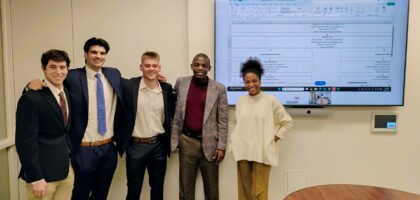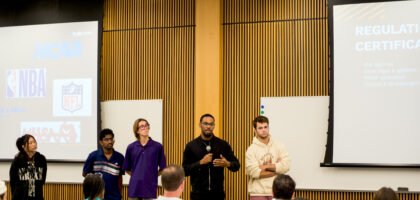

If you have been following this blog for a little longer than 5 years, then you know that I was once a travel and food blogger. When I started exploring agriculture at Michigan State University, I thought of it as a natural extension of my work with Kwathu Farms—an opportunity to learn about modern farming techniques and contribute to food security in Africa. But it wasn’t until a conversation with my classmate Ramy that I fully realized the deeper connection between my past and present.

For me, Broad wasn’t just a casual decision; it was a deliberate step toward understanding how we can innovate in farming, particularly in Africa. Among the many reasons I chose MSU, one of the most visually striking and intellectually compelling was its greenhouses—a symbol of advanced agricultural research and innovation.
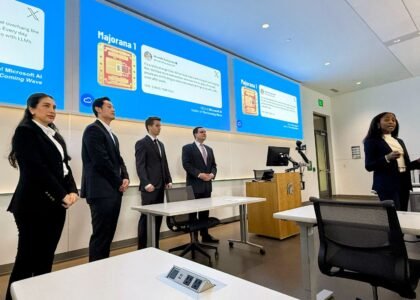
As I sit here reflecting on the past two months, I can’t help but marvel at how quickly time is flying. It feels like just yesterday that we started, yet we’ve already wrapped up key courses—including today’s final presentations for our ‘Designing and Delivering Impactful Business Presentations’ course.

Looking back at my life: I realise I have spent a huge chunk of my days defined by labels. I was a Malawian. A Christian. An entrepreneur. A leader. A woman. As time passed, I started to feel the weight of these identities.

My friend today insisted that I check out IHOP… ‘an American classic’, he says. We went to the branch in East Lansing, and had a very delicious brunch. As we spoke and laughed over our meal, I felt something so simple yet so profound—happiness.
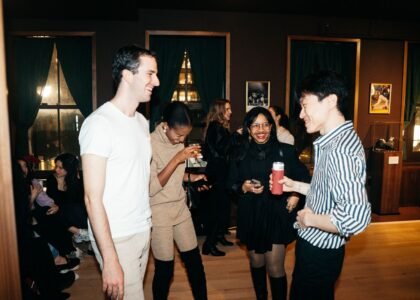
“Do you miss New York?” A question that often sends me on a spiral of thoughts and emotions; because I have yet to process New York. New York wasn’t just a city to me; it was a pivot. A place I never thought I would call home, yet it became the setting for some of my most profound transformations.

During my mentorship yesterday at 2Day Venture, I was reminded of where I was a decade ago when I first started building my companies. I saw students presenting ideas that had tremendous potential, but some were hesitant to take advice.

Recently, I found myself explaining the importance of financial planning to the current cohort of the Nyenyezi Fellowship, who were excited about newfound funds in the the Kwathu Kollective. Their excitement was infectious, but it also reminded me of a critical lesson for any entrepreneur: managing cash flow and understanding financial statements isn’t just important—it’s essential for survival and growth.

As I sat at my desk, flipping through Wagner and Hollenbeck’s Organizational Behavior, I saw more than just theories and models on motivation, teamwork, and leadership. I saw reflections of the lessons I’ve lived, especially during my time at Michigan State University, and the work I’m doing now with Kwathu Kollective, Bien Corp, Q2 Corp, and Africa’s future at large. One lesson stands out: organizations, like movements, thrive when their culture is rooted in shared purpose, collective pride, and ownership.

CeraVe was initially a casual purchase. I didn’t plan to commit to the entire product line, but hey—it was turquoise, and my love for color coordination may have subconsciously played a role. What started with a single cleanser quickly turned into a full-on relationship. Now, CeraVe is my holy grail, and I couldn’t be more thankful.


Nthanda Manduwi is a Malawian storyteller, entrepreneur, digital transformation advocate, and community builder driven by the mission to empower Africa’s economic landscape through innovation and technology.