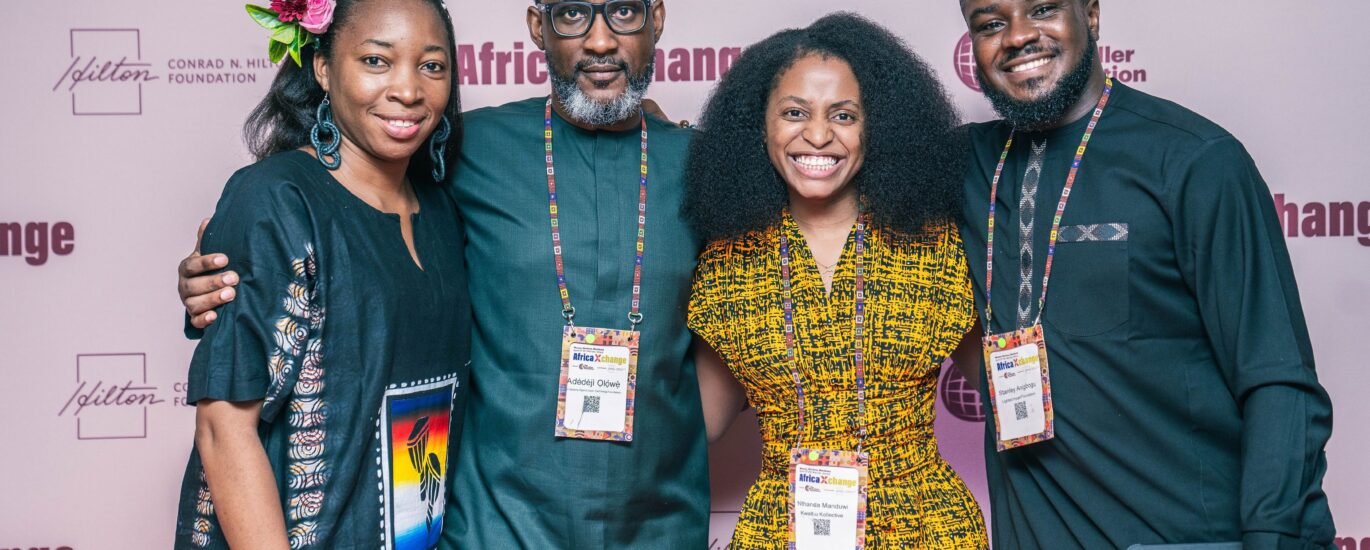
I am most thrilled to begin my MBA graduation week on the continent, in Nairobi, kenya — at the AfricaXchange 2026, where conversations about capital, markets, and systems are taking place with a level of urgency that reflects the moment we are in.
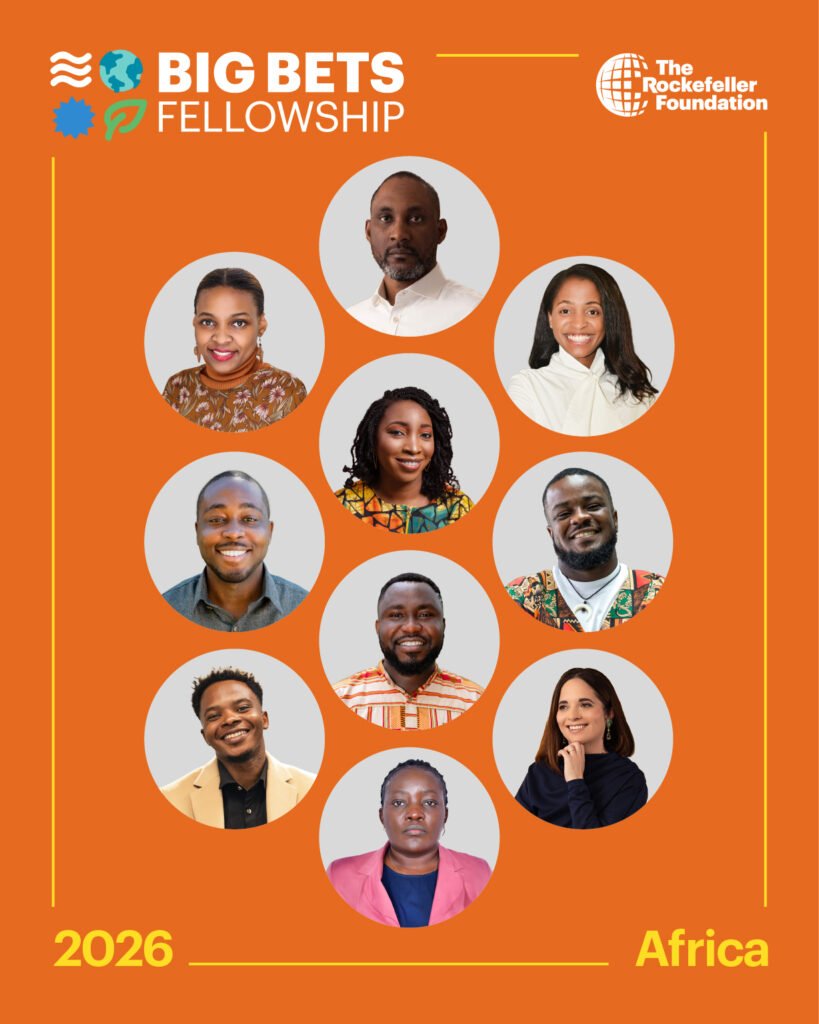
I am here in two capacities. I am here as one of the 10 young Africans selected for the inaugural Africa Rockefeller Big Bets Fellowship, as the announcement is being made. I am also here as a builder, presenting the Kwathu Smart Innovation Farms [KSIF] in the category of “AI” for the first time on the African continent, in conversation with potential partners, funders, and institutions.
AfricaXchange is framed around money, markets, and mindsets. That framing reflects a broader shift. There is a growing recognition that fragmented interventions are insufficient. What is required are systems that connect capital, policy, and execution in ways that can scale.
In her opening remarks, H.E. Nardos Bekele-Thomas made this explicit:
“The way we plan, the way we fund, the way we monitor, the way we report.”
Her point was that development does not happen in isolated verticals. It functions as an integrated system, requiring both horizontal and vertical connections across institutions, sectors, and geographies.
She followed this with a sharper call:
We have to move from speeches to execution.
That line has carried through the room.
Across the convening, that same direction has been reinforced from different vantage points.
Mamadou Biteye spoke to the need for translating ambition into measurable outcomes, particularly in sectors like food systems and energy, where the distance between intention and impact is narrow and visible.
William Asiko has over a few days continued to emphasize partnerships that extend beyond alignment into deployment—where capital, institutions, and operators converge in real environments.
Yemi Osinbajo brought a governance perspective, underscoring the importance of institutional frameworks that can sustain scale.
Moky Makura highlighted the role of narrative in shaping both perception and possibility—how Africa defines itself, and how that definition influences what is built.
Taken together, these are not separate conversations. They describe different components of the same system.
There is alignment in this room. That is clear.
There is also a recognition, sometimes implicit, that alignment alone is not sufficient.
In conversations with funders and partners, the focus turns quickly to execution:
This reflects a shift from funding ideas to funding systems.
It also surfaces a constraint. Systems require more than coordination. They require infrastructure, operators, and discipline over time.
Within this context, I am presenting the Kwathu Smart Innovation Farms.
KSIF is designed as an applied system at the intersection of:
Agriculture brings immediacy. It is tied to land, inputs, labor, logistics, and markets. Any system introduced into this space must function across these layers.
KSIF integrates production with data and decision-making, creating an environment where systems are not only conceptualized, but operated.
Presenting it here matters because it grounds the conversation. It places a working system into a room that is actively seeking models that can move beyond discussion into application.
A significant portion of the conversation at AfricaXchange centers on capital and partnerships.
An equally important layer is talent.
The systems I am building through Q2 Systems and Kwathu Kollective require a specific type of builder:
This is a targetted talent search on my part. A core part of my work here is identifying Africans [and others] who can build at this level. The ambition for systems is clear across the continent. The question is whether we can assemble the teams required to realize them.
AfricaXchange functions as a coordination layer. It brings together capital, policy, and operators with the intention of aligning them into systems that can scale.
The transition from conversation to construction is where the work begins.
Historically, figures such as John D. Rockefeller operated within systems that were already forming, organizing them into structures that could scale. In many contexts today, the work begins earlier. It involves assembling the conditions under which systems can operate at all.
This week also marks my MBA graduation.
There is something grounding about being here, in Nairobi, at this moment. After years of studying markets, systems, and organizations in the classroom, I am in a room where those concepts are being negotiated in real time.
It is a fitting place to begin this next phase.
A recurring theme in conversations here is scale. Scale is often discussed in terms of reach, replication, and speed. In practice, scale in complex systems is preceded by long periods of development that are less visible and less easily measured.
This is particularly true in deep technology.
Systems that operate at the intersection of hardware, software, and real-world environments require sustained research and development. They require iteration in conditions that are not controlled, and they demand time before they produce results that can be evaluated commercially.
A useful reference point is Waymo. Its development has spanned more than a decade in a pre-revenue and research-intensive phase, supported by consistent capital and institutional backing. Even now, its work continues to evolve. The system was not rushed into maturity. It was built over time, with the expectation that complexity requires patience.
If African entrepreneurs are to build at this level, the conditions must reflect that reality.
This includes:
It also requires a shift in how bets are made.
Rather than distributing resources thinly across many initiatives, there is a case for selecting a smaller number of ventures and supporting them with depth and continuity. Systems of this nature are not built through short cycles of funding. They are built through sustained commitment.
In this context, efforts such as the Rockefeller Big Bets Fellowship signal a move in this direction. They suggest a willingness to support work that operates on longer timelines and at a level of complexity that aligns with system-building.
The question is whether this approach can be extended more broadly.
If you’d like to go deeper into my journey — from Malawi, through the United Nations to Microsoft, you can find it in my books.
P.S. for 2026, you can get any of my books via Kindle for only $2.99.
This offer is valid till the end of the year.
Links to purchase are as below:


Nthanda Manduwi is a Malawian storyteller, entrepreneur, digital transformation advocate, and community builder driven by the mission to empower Africa’s economic landscape through innovation and technology.