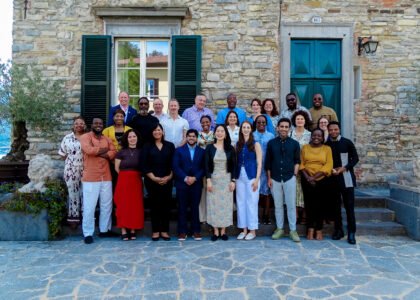
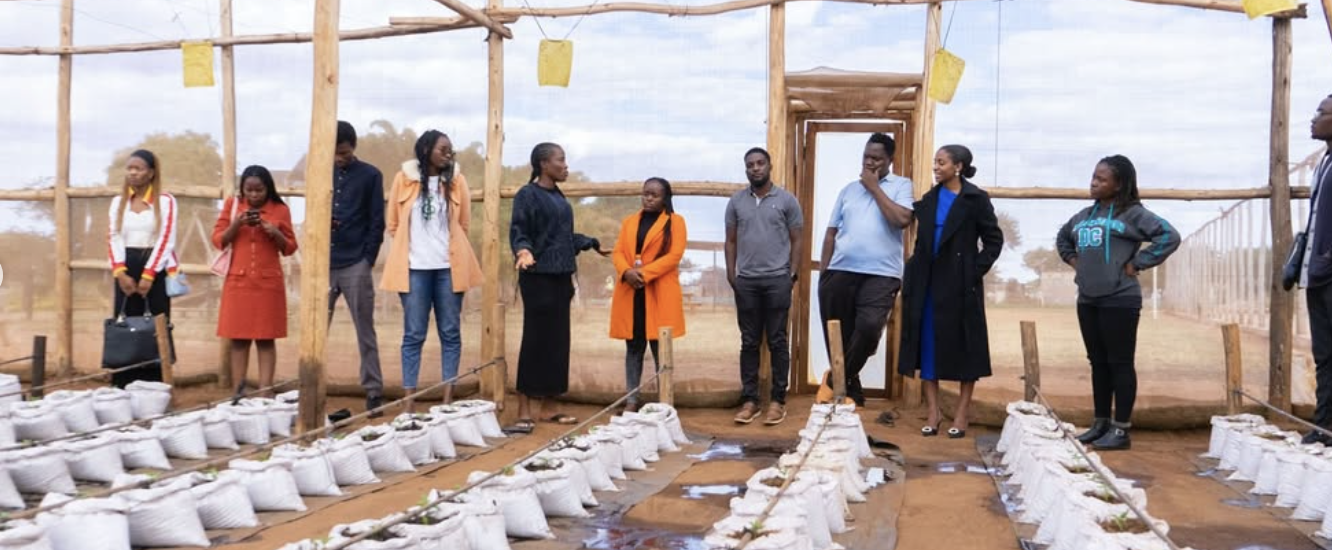
On my most recent trip to Malawi, I had the privilege of meeting with my students from the Malawi University of Science and Technology [MUST].
Every January, the Kwathu Kollective receives a cohort of students from MUST, particularly from Computer Science, Cybersecurity, and Business Information Technology, who join us for a roughly five-month internship programme under the Kwathu umbrella. We have run this programme since 2021, but over the past two years, I have personally taken a much more active role in engaging with the students directly in the field.
Part of this was intentional. I wanted to better understand where the students currently are technically, where they are challenged, how they think, and how we could better support and engage with them as they transition from theory into systems creation and real-world problem solving.
This year especially, I spent a lot of time structuring study systems and exposing the students to technology from my own perspective as both a researcher and systems builder. As I am building Q2 Systems, I wanted to bring this team on-board, to learn more about cyber-physical infrastructure. We broke the programme into multiple learning tracks including IoT, AI, game development, systems creation, and web development and management.
Over the past few months, the students have worked on several projects, proposed solutions, built server systems, and explored how technology could support agricultural operations under the Kwathu ecosystem.
Their internship projects have now culminated into two emerging solutions under the Kwathu umbrella:
Watching the students move from concepts into actual systems has honestly been one of the most rewarding parts of this work.
But throughout the process, there was something that continued bothering me as a researcher. We were making too many assumptions. We were building agricultural systems and farming technologies while speaking about farmers more than with farmers.
As the projects evolved, I realized that we needed to establish a baseline. Before we continue building systems, simulations, and operational tools, we first need to understand where farmers and farming communities actually are today.
<iframe width="640px" height="480px" src="https://forms.office.com/r/2eeikBKF4R?embed=true" frameborder="0" marginwidth="0" marginheight="0" style="border: none; max-width:100%; max-height:100vh" allowfullscreen webkitallowfullscreen mozallowfullscreen msallowfullscreen> </iframe><iframe width="640px" height="480px" src="https://forms.office.com/Pages/ResponsePage.aspx?id=ReUzHabbxkCSNF6Ki5qHTH3qv41-Iw9JqqPBzQKBZfxUMEVLVlNSUjlaQUJZRjJRV1pBVkZZVUJBQi4u&embed=true" frameborder="0" marginwidth="0" marginheight="0" style="border: none; max-width:100%; max-height:100vh" allowfullscreen webkitallowfullscreen mozallowfullscreen msallowfullscreen> </iframe>I did not want us to create solutions that simply sound intelligent in rooms full of technologists. I wanted us to create systems grounded in actual operational realities.
So over the past few weeks, we began designing and rolling out a baseline study focused on farming operations, decision-making, and agricultural technology adoption.
The goal is simple:
to ensure that the systems we build are informed not just by technical imagination, but by the realities of the communities they are intended to serve.
At the same time, we are also exploring a question that is equally important:
Can these systems eventually become truly useful, adoptable, and commercially viable within the market they are being built for?
That question matters deeply to me, because sustainable systems cannot depend entirely on grants, donor cycles, or external assumptions forever. They have to eventually create real operational value for the people using them.
This is one of the reasons why I have increasingly become interested in cyber-physical systems, simulation environments, and operational intelligence systems more broadly. Agriculture simply happens to be one of the first environments where we are exploring these ideas.
If you are a farmer, part of a farming household, involved in agricultural operations, or simply interested in contributing to this research, I would love to invite you to participate in our baseline study.
The survey is available in both English and Chichewa.
If you’d like to go deeper into my journey — from Malawi, through the United Nations to Microsoft, you can find it in my books.
P.S. for 2026, you can get any of my books via Kindle for only $2.99.
This offer is valid till the end of the year.
Links to purchase are as below:


Nthanda Manduwi is a Malawian storyteller, entrepreneur, digital transformation advocate, and community builder driven by the mission to empower Africa’s economic landscape through innovation and technology.