On the 7th of May, 2026, Hastings Msosa made a post about my career on Facebook and LinkedIn, in commemoration of my MBA graduation.
There were a lot of wonderful and encouraging comments. I read and liked every single one of them. I then also noted an influx of one recurring question, one that I have been getting from various stakeholders over the past few weeks:
if you care about Malawi [/Africa], why are you not building your company, Q2 Systems, there?
It is a fair question, to a point. After that, it reveals something deeper about how we talk about technology, development, and ambition in countries like mine. We often speak as though companies are built out of patriotism, intelligence, work ethic, or sheer desire. As though if something matters enough, and if one is committed enough, it should simply be built at home. I have come to learn, through my now three Degrees, that that is simply not how this works.

Delve into Business and International Development with Nthanda Manduwi
Systems Don’t Have to Be Broken to Produce Bad Outcomes
I contemplated not publishing an episode this week [I explain why in the podcast], and then ended up recording my longest episode yet.
And to make up for publishing a little late the past two weeks, I am publishing this a day early. You’re welcome, or I am sorry?
I woke up to a message from a friend sharing a video of President William Ruto demanding Veto power for African nations at the 80th United Nations General Assembly [I happened to be in attendance], and I jumped out of bed and got to writing about my favorite beverage: tea! I also got to pen about slave trade, and colonization, and war [I know, what does any of this have to do with Hibiscus tea??!]
This week’s episode explores one of the central ideas behind the third book in the Lessons Book series – Systemic Nonsense: what if many of the frustrations we experience in institutions are not accidents or failures, but predictable outcomes of how those systems were designed?
It often feels like bureaucracy feels so resistant to change, and that reforms often produce more process than progress. It also seems that good intentions so rarely translate into meaningful outcomes. If you’ve pondered on these thoughts before, then these conversations are for you.
This Week’s Book
📖 Systemic Nonsense [Book 3]
This week only, from 27–31 July, the Kindle edition of Systemic Nonsense is available free as part of its Founders Edition launch.
Systemic Nonsense explores several ideas on international development in much greater depth. It asks a simple question:
What if the system isn’t failing? What if it’s doing exactly what it was designed to do?
Whether you listen, read, or dive into the book, I hope it leaves you asking better questions about the systems we inherit—and the ones we choose to build next.
How to Read
To receive your free Kindle copy:
* Click the Amazon link below.
* Select the Kindle edition while the promotion is active.
* Add it to your Kindle library.
You do not need a Kindle device. The free Kindle app works on iPhone, Android, tablets, Macs, and PCs, allowing you to build your digital library wherever you read.
Helpful Links
📚 Read this week’s book for free [search on Amazon or in Kindle for the book that is free for the week, and feel free to purchase the others]:http://amazon.com/dp/B0FQNJ61SB
📰 Subscribe to The Lessons Conversation:
Africa paperback pre-orders:https://forms.office.com/r/RMRMKTNd1M
Enjoyed listening to the Lessons Conversation? This post is public so feel free to share it.
This is a public episode. If you would like to discuss this with other subscribers or get access to bonus episodes, visit podcast.lessonsconversation.com
![Book 3: Systemic Nonsense [lessonsbooks.com]](https://byntha.com/wp-content/uploads/2026/07/podcast-episode-image-5a3bbb435029c89d668c5fa2682893ef-768x768.jpg)
A cyber-physical infrastructure company is not a website shop. It is not a digital agency. It is not even a standard software startup. A CPI company is a systems company. It sits at the intersection of software, hardware, data, sensing, operations, logistics, control, and physical assets in the real world.
NIST defines cyber-physical systems as interacting digital, analog, physical, and human components engineered for function through integrated physics and logic. The U.S. National Science Foundation similarly describes them as engineered systems built from, and dependent on, the seamless integration of computation and physical processes. These are the kinds of systems behind smart manufacturing, traffic systems, autonomous systems, energy systems, and other forms of modern infrastructure.
That distinction matters because when people hear the word “technology,” they often flatten everything into one category. To many people, a tech company is a tech company. A mobile app, a website, an e-commerce platform, a digital dashboard, a fintech service, a robotics company, an industrial simulation business, and an infrastructure intelligence company all get thrown into the same mental bucket.
These categories do not ask the same things of a founder, a market, or a country. A cyber-physical infrastructure company is heavier. It is more expensive to build, more complex to test, more dependent on reliable infrastructure, and far more sensitive to the quality of surrounding institutions.
So the question is not merely why I am not building this in Malawi. The better question is: what kind of country conditions make a cyber-physical infrastructure company imaginable, legible, and commercially viable in the first place?
To me, cyber-physical systems are the most advanced technologies we can create in present day [I went into my MBA with a quest to find that answer: what are the most advanced tech systems we can create (for farmers)]. What I had not anticipated is that I would find the market, too.
My initial goal was to discover what is most possible, then scale it down, and come meet Africa where it needs. By the end of my MBA, the City of Detroit was quite keen to host, and pay for my solutions.
These are the real issues: the world is a free market. Entrepreneurs move on demand, not passion, or even ‘loyalty’.
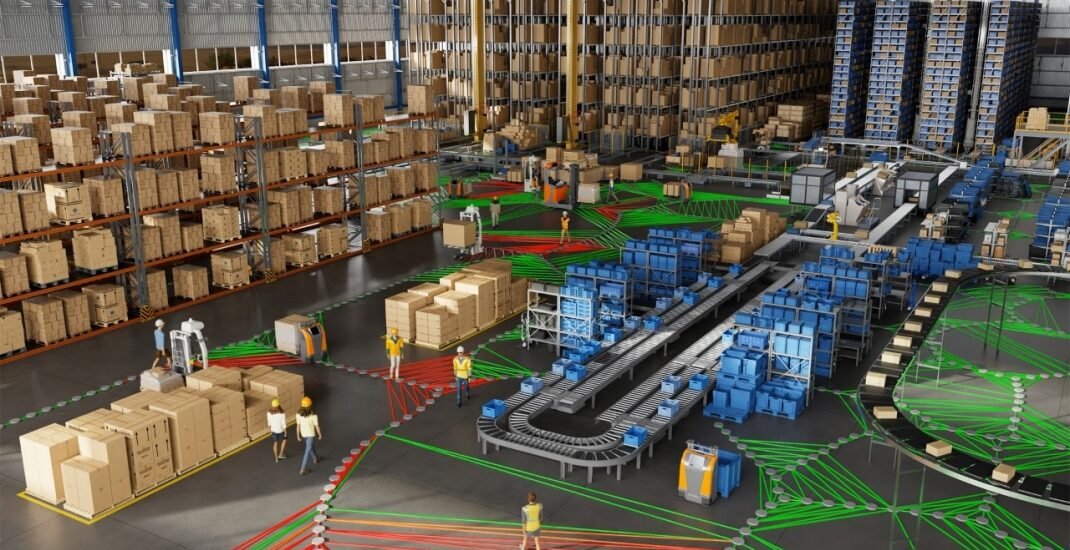
When I say we at Q2 are building a cyber-physical infrastructure company, I am not simply saying that we are building software. I am talking about systems that connect digital intelligence to the physical world: roads, farms, factories, ports, vehicles, machines, and public infrastructure.
These systems combine sensors, software, simulations, control loops, field data, equipment, logistics, and operational decision-making so that physical environments can be monitored, modeled, and improved in real time. In simple terms, cyber-physical infrastructure helps real-world systems “see,” “think,” and “respond” better. That is why this category belongs closer to infrastructure, mobility, energy, agriculture, logistics, and industry than to the looser category of “tech” as it is often used in everyday conversation.
The Fourth Industrial Revolution is what makes this possible. Sensors and connected devices, often called the Internet of Things, collect information from the physical world. Cloud and edge computing help process that information. Simulation computing allows us to test decisions in virtual environments before making them in real life. Digital twins create living digital models of physical systems so operators can monitor performance, predict problems, and improve outcomes over time. Together, these technologies make it possible not just to digitize records, but to make physical systems more intelligent, efficient, coordinated, and resilient.
This matters because the most advanced industries are no longer competing only on labor or raw production, but on how well they can sense, model, automate, and optimize complex systems in real time. A factory now needs more than machines; it needs visibility into uptime, maintenance, energy use, and bottlenecks. A logistics system needs more than trucks and warehouses; it needs forecasting, coordination, and operational intelligence. Agriculture needs more than land and labor; it increasingly needs monitoring, modeling, and precision. What the Fourth Industrial Revolution changes is that the physical world itself becomes more measurable, more programmable, and more responsive.
This kind of company depends on more than coding talent. It depends on systems engineering. It depends on environments where hardware can be sourced, where power is sufficiently reliable, where data can be captured, where customers understand operational value, where pilots can turn into deployments, and where institutions can procure and maintain systems beyond the launch event. It asks whether there are real buyers for resilience, efficiency, coordination, forecasting, automation, monitoring, and infrastructure intelligence. It asks whether the market values ongoing operational performance, not simply the appearance of modernization.
That is why being in the United States matters. It is not simply that I came here and became ambitious. I mean I am, but to focus on that would be to err.
I entered an environment in which this category of company has language, precedent, institutions, infrastructure, procurement pathways, research communities, and adjacent firms. There are universities doing cyber-physical systems research. There are manufacturing and logistics ecosystems. There are industrial software conversations. There are people who understand digital twins, automation, autonomy, and systems engineering as legitimate commercial domains. Even when the road is still hard, the category itself is visible.
That visibility matters more than people think.
One of the deepest things I have observed is that the digital divide is not just about who gets to use advanced systems. It is also about who gets to imagine building them.
Imagination, to me, is not produced in a vacuum. It is produced by exposure. It is shaped by what you can see, what your institutions validate, what your universities teach, what your markets reward, and what your environment treats as normal.
In a country where internet use remains low, electricity access remains limited, and infrastructure is fragile, the baseline technological horizon is naturally different. According to the World Bank’s latest available indicator, access to electricity in Malawi was 25.9 percent of the population in 2023. Rural access was lower still. ITU data indicates that only about 19 percent of people in Malawi were using the internet in 2024.
These facts shape how people live, what businesses can operate, what products can be sustained, and what futures can be conceived.
If electricity is not broadly reliable, internet use is still limited, and device ecosystems are uneven, then a great deal of entrepreneurial energy will naturally cluster around more immediate, lighter, lower-capital opportunities, or around institutionally sponsored projects rather than market-based industrial bets.
So yes, I can dream this company partly because I live in the United States. I say this not with any intentions to insult to Malawi. It is a statement about systems exposure. The educational, technological, and industrial environment around me has expanded the set of things I can seriously imagine building. That is not because Malawians lack intelligence. It is because countries do not distribute imagination evenly. Systems do.
I want to be more precise than the usual conversation allows.
The problem in Malawi is not simply that people do not need technology. Nor is it merely that people have low purchasing power, though that is true and economically important. The deeper issue is that much of the country’s formal demand for technology is not organized like a functional market. It is often organized through government, projects, tenders, donor programs, pilots, implementation partners, and development reporting structures. In other words, a significant share of demand is institutional before it is commercial.
I learned this running an innovation hub in Malawi.
Technology products are often not commissioned because there is a large paying customer base with repeat purchasing behavior. They are commissioned because a ministry must digitize a workflow, a department must show progress, a donor-funded program must demonstrate reform, or a development partner must support a visible intervention.
Malawi’s own recent digital transition materials reflect this public-institution focus. The UNDP-supported Inclusive Digital Transformation for Malawi catalogue explicitly frames many digital systems around strengthening governance, accountability, and service delivery across national and sub-national institutions. Malawi’s Digital Health Governance Framework also explicitly calls for a transition from donor-funded to government-led digital health systems, which indirectly reveals the current structure of financing and system development.
Malawi, in my words, has technologies for performance.
By that I mean technologies commissioned less because they emerge from strong market demand, and more because institutions need to demonstrate modernization, functionality, reform, or developmental progress. A government website, an immigration system, a digital registry, a service platform, a dashboard, or a voter-related system may all be useful. I am not dismissing them. But the logic that brings them into existence is often not the same logic that builds a healthy commercial technology market.
The question is often not, “Will a large enough number of users keep paying for this because it solves a problem worth paying for?” The question is often closer to, “Can this show that we are modernizing, digitizing, improving service delivery, or implementing reform?” And often the primary audience for that performance is donors, development partners, multilaterals, and funding institutions that need to see evidence that systems are improving.
When the biggest buyer in a country is the state, and when the state itself is operating under aid dependence, fiscal stress, donor engagement, and administrative performance pressures, the innovation ecosystem often bends around that demand structure. World Bank data still tracks Malawi as highly aid-exposed, and broader Malawi policy materials continue to show substantial development-partner involvement in national digital systems. Meanwhile, World Bank reporting in 2025 and 2026 continues to describe acute foreign exchange shortages, high inflation, debt distress, and weak private-sector growth as major constraints on the economy.
All of this matters because it affects what kind of “innovation” gets rewarded.
For a long time, I thought the question was simple: why not just build the things people need? It sounds obvious, and in many ways it was the right instinct.
I spent the better part of the last decade building technology solutions that were far more basic and far more immediately relevant than cyber-physical infrastructure: digital education, digital skills, websites, and practical tools tied to everyday needs. But over time, I came to a harder conclusion. The problem was not only what we were building. The problem was the market itself. Need was everywhere. Stable demand was not.
In many developing markets, people can urgently need a solution and still not have the spending power to sustain the company providing it. Institutions can want innovation and still not buy in ways that create continuity. Governments can commission systems, but through procurement structures too slow, political, donor-shaped, or irregular to keep a business healthy. That means even socially useful products can struggle to survive commercially. A business does not stay alive because its work is important. It stays alive because enough customers can pay, repeatedly, in a market stable enough to support operations over time.
One of the reasons I came to do an MBA was to answer that question for myself. I wanted to understand what kind of technology business can actually work. What creates a viable market? What creates durable demand? What creates margins strong enough to support a real company, rather than a permanent scramble around grants, tenders, and institutional interest? Over time, I realized I had been asking only half the question. I had focused on what can we create. I had not yet fully asked whether the market itself was viable enough to hold the company up.
My thinking has since shifted. At first, my instinct was to build something that could scale back to Africa and other developing markets, even if the margins were smaller. But I have increasingly come to believe in a different sequencing model: build first in markets that already function. Build where customers exist, where infrastructure exists, where the economics can sustain the company at scale. Build where the business can become strong enough to generate real wealth. Then, from that position of strength, invest more meaningfully in the continent and in other developing regions. I consider this not abandonment, but sequencing. I hope never to lose my heart for home. But I also no longer believe that the best way to serve home is to force a company into an unviable market simply to prove that my loyalties are intact.
I have run an innovation hub. I have worked around technology-building environments. So I am not saying this from the outside.
In an ecosystem shaped more by institutional demand than by strong market demand, founders can end up learning the wrong lessons. They learn how to write proposals, how to navigate procurement, how to position themselves for donor programs, how to comply with tender requirements, how to speak development language, and how to win visibility. Those are real skills, and in some contexts they are necessary. But they are not the same as learning how to build for repeatable market demand.
A startup ecosystem can therefore appear alive while still being commercially weak. There may be hackathons, incubators, summits, pilots, showcases, prototype launches, dashboards, training programs, and public sector digitization projects. There may even be many clever founders. But if the ecosystem is not rooted in customers with real spending power, repeat behavior, and enforceable value exchange, then much of what is being built will struggle to become durable companies.
This is why I resist the lazy instruction to “just build it in Malawi.”
Build what, exactly? For whom? Under what financing structure? Against what procurement environment? With what energy reliability? With what component supply chain? With what customer base? With what deployment and maintenance capacity? Under what foreign exchange conditions? At what price point? To what scale? Paid by whom, repeatedly?
These are the questions that genuinely keep me up at night as an entrepreneur.
And they become even more severe in cyber-physical systems because you are not only selling software. You are dealing with physical environments, sensors, system integration, field operations, testing, and often custom deployment. These systems are not especially forgiving of weak infrastructure or thin institutional capacity.
Let me be very clear: I am not saying Malawi does not need cyber-physical systems. I am saying it is a hard place to start the company that builds them.
The constraints are practical and cumulative.
First, power. The World Bank’s 2025 Enterprise Survey for Malawi collects detailed firm-level evidence on outages, outage duration, generator use, and losses. The very fact that these remain core business environment variables tells you something important. Malawi’s enterprise environment continues to be shaped by unreliable power. The same World Bank survey structure includes firm experiences of outages, typical outage frequency, average duration, and generator ownership or sharing, while World Bank infrastructure indicators show that the overwhelming majority of firms have experienced electrical outages.
Second, macroeconomics. The World Bank’s 2026 Malawi Economic Monitor projects 2025 growth below population growth, describes persistent foreign exchange shortages, high inflation, fiscal pressures, external debt distress, and weak per-capita growth, and frames job creation and private-sector-led growth as central unresolved challenges. If an economy is struggling to access foreign exchange and production inputs, that has direct implications for any company dependent on imported hardware, components, equipment, sensors, machines, specialized tools, or advanced computing inputs.
Third, the customer base. A cyber-physical infrastructure company typically needs customers who can absorb relatively expensive systems and care about productivity, uptime, resilience, optimization, coordination, and long-term operational improvements. Those customers are usually industrial firms, utilities, logistics operators, ports, municipalities, research institutions, large-scale agricultural enterprises, or public infrastructure systems with serious budgets. Malawi has real needs in these sectors, but the pool of customers able and willing to procure advanced systems at meaningful scale is still narrow.
Fourth, continuity. Deep systems businesses do not succeed on one-off enthusiasm. They require maintenance, iteration, data continuity, and often long procurement and deployment cycles. In ecosystems where projects can be donor-triggered or politically driven, continuity can be fragile.
Fifth, talent and adjacencies. It is one thing to have smart young people. It is another to have a dense ecosystem of systems engineers, controls engineers, embedded systems people, robotics talent, industrial software practitioners, manufacturing partners, testing facilities, supply chain intermediaries, and technically literate buyers. A cyber-physical infrastructure company often needs all of them, directly or indirectly.
This is why such a company may be easier to start in Detroit, even if part of its long-term relevance may extend to places around the global south. Detroit is not perfect. We all know that. However, Detroit does sit within a wider industrial and technical ecosystem where this kind of company has adjacent infrastructure and more legible demand.
Yes. Absolutely.
But that answer must be handled carefully.
Developing nations need better systems in agriculture, energy, logistics, water, climate resilience, public service coordination, and infrastructure management. They need ways to monitor, model, coordinate, and improve physical operations. They need better data tied to real-world processes. They need better logistics intelligence. They need more resilient systems. In that sense, they do need the outcomes that cyber-physical systems can support.
But needing the outcomes is not the same thing as being able, right now, to sustain the domestic company category that produces them.
This is where development conversations often become unserious. They assume that because a country has urgent needs, it should also immediately host the companies that solve them at the highest level of technical sophistication. That is not always how industrial development happens. Sometimes countries first consume, adapt, pilot, or localize systems before they become places where those systems can be designed, financed, deployed, and scaled by local firms with durable economics.
So yes, Malawi needs cyber-physical systems. But perhaps the more accurate near-term question is: in which sectors, through what partnerships, in what modular forms, and under what economic conditions can cyber-physical capability enter the country usefully? That is a better question than simply demanding that every ambitious founder of such a company start there from day one.
This is the part that matters most to me, because I do not want this conversation to end at critique. I want it to become constructive.
If Malawi wants to produce companies in this category, not just procure isolated systems from outside, then a number of things have to exist at once.
First, reliable and affordable infrastructure. Electricity access must improve materially, and reliability matters just as much as headline access. Internet availability and affordability must deepen. Cyber-physical systems do not operate well in contexts where the energy and connectivity layers are persistently unstable. Malawi’s current electricity and internet indicators show improvement is still needed at a foundational level.
Second, functional industrial customers. There must be enough firms and institutions with both the need and the budget to pay for systems that improve operations. Not symbolic pilots. Not one-off donor-backed experiments. Actual customers.
Third, patient capital. Deep-tech and infrastructure companies often take longer to validate and require more capital before scale. They need financing that understands long development cycles, systems risk, and hardware-adjacent realities. Thin startup grants and short-term project funding are not the same thing.
Fourth, procurement reform and maturity. If the route to revenue is overwhelmingly through state or donor-linked procurement, then the procurement environment itself matters enormously. It must be transparent enough, technically literate enough, and performance-oriented enough to reward real capability rather than optics, relationships, or box-ticking. Malawi’s public procurement assessment literature points to the importance of institutional strengthening and system quality in this area.
Fifth, technical ecosystems. Universities, labs, applied engineering programs, prototyping spaces, and industry partnerships must create pathways for systems talent, not only software talent. Cyber-physical systems are interdisciplinary by nature. A country that wants these companies needs people comfortable across physical and computational domains.
Sixth, a shift from technologies for performance toward technologies for operations. This may be the most important cultural and institutional transition of all. The market must begin to reward technologies that improve uptime, productivity, coordination, cost control, forecasting, maintenance, and service quality in measurable ways. Not simply technologies that signal digitization.
Seventh, strategic sector focus. Malawi does not need to become everything at once. It would make more sense to build capability around sectors where the country has real structural need and potential leverage, such as agriculture systems, irrigation and water management, climate monitoring, public logistics, border and trade facilitation, distributed energy, and selected public infrastructure systems.
That is a real agenda. This is what would convince me to ‘move back’ to Malawi.
There is a temptation, especially online, to interpret geographic choices morally. If you are not building in Malawi, then perhaps you are abandoning Malawi. If you are building elsewhere, perhaps you do not believe in home enough. I reject that framing.
Sometimes building elsewhere is what makes building for home at all possible later.
Sometimes the responsible thing is not to force a company into a context where the economics are not yet ready. Sometimes the responsible thing is to build capability where the market, infrastructure, capital, and institutions can carry the weight of the company category, and then think carefully about how that capability travels back, translates, or adapts.
I am not saying nobody should build in Malawi. People should. Many kinds of companies should be built there. But not every company category asks for the same underlying conditions. We do ourselves no favors when we pretend otherwise.
A cyber-physical infrastructure company is a heavy lift even in mature systems. In a context like Malawi, the challenge is not only talent scarcity or capital scarcity. It is that the full stack of enabling conditions is still uneven, and the demand structure itself is often distorted by state and donor incentives.
That is the point.
So perhaps the question to entrepreneurs from developing nations should not be: why are you not building this company here?
Perhaps the better questions are:
What kinds of companies can our countries currently support well?
What kinds of companies do our countries urgently need, even if it cannot yet support them domestically at full scale?
What enabling layers must be built for more advanced company categories to emerge?
How do we move from an innovation economy organized around projects, pilots, and institutional performance to one organized around operational value and durable markets?
How do we build countries where a founder can imagine a cyber-physical infrastructure company without first needing to leave?
That last question matters to me the most.
Because in the end, this is not only about me. It is about what kinds of ambition countries make possible. It is about what young builders can see. It is about whether advanced company-building is socially and economically legible in their environment. It is about whether our ecosystems are producing founders for programs, or founders for markets. It is about whether our technologies are built to report progress, or to create it.
Developing nations may need cyber-physical systems.
But needing them is not the same as being ready, yet, to produce the company that builds them.
And until we are honest about that distance, we will keep mistaking aspiration for ecosystem, performance for progress, and technology theatre for technological development.
If you’d like to go deeper into my journey — from Malawi, through the United Nations to Microsoft, you can find it in my books.
P.S. for 2026, you can get any of my books via Kindle for only $2.99.
This offer is valid till the end of the year.
Links to purchase are as below:



Nthanda Manduwi is a Malawian storyteller, entrepreneur, digital transformation advocate, and community builder driven by the mission to empower Africa’s economic landscape through innovation and technology.