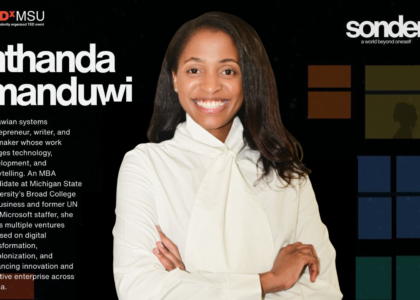
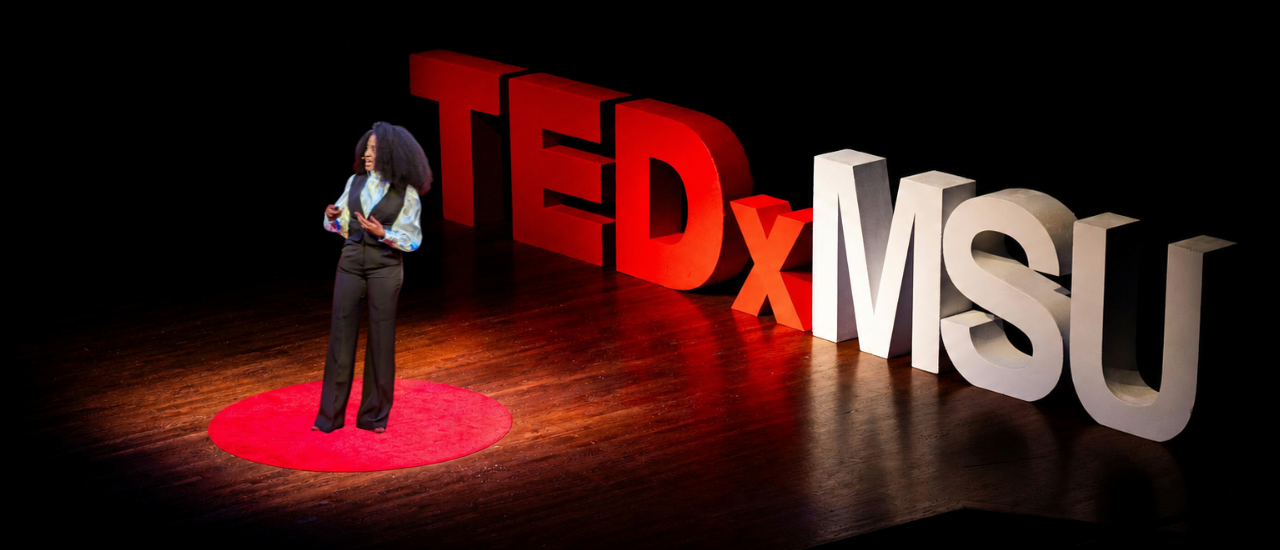
As I close out my MBA at Michigan State University, I had the opportunity to take the TEDxMSU stage and share a body of work that I have been writing over the past few years: the Lessons Book Series.
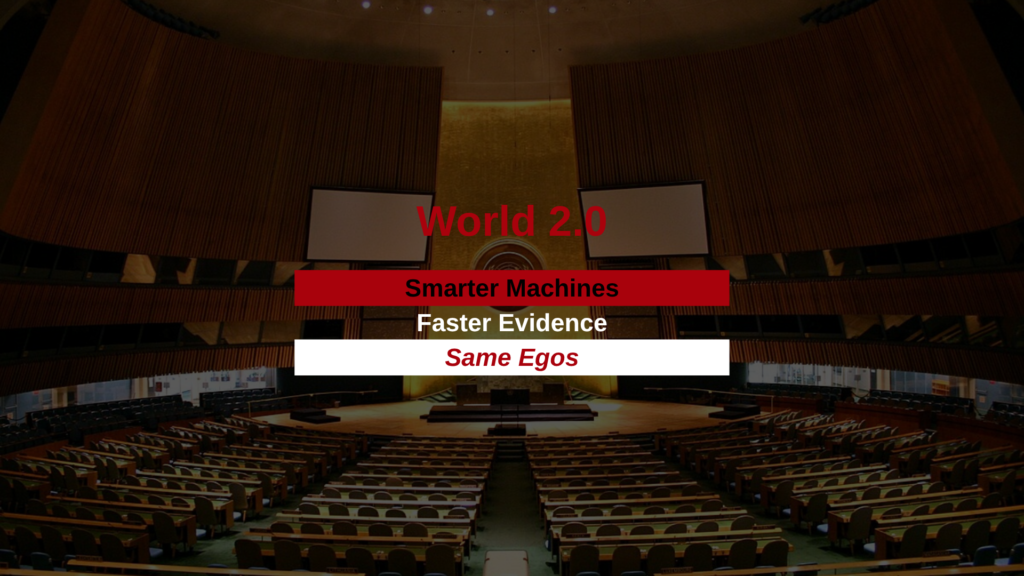
In WORLD 2.0: Smart Machines, Faster Evidence, Same Egos, I reflect on my upbringing in post-colonial Malawi, my experiences in international development, and what it means to live in a world where artificial intelligence is making knowledge and evidence more accessible than ever before.
The talk explores questions of history, power, development, agency, and technology, while asking a simple question:
If we can now synthesize evidence faster than at any point in human history, what will hold us back?
The ideas introduced in the talk form part of a broader body of work that will be explored more deeply throughout the Lessons book series.
For those interested in going beyond the stage, I am also sharing the full written version of the talk below. While the TEDx Talk presents a condensed version of these ideas, the written text offers additional context and the original language from which the presentation was developed.
I hope you enjoy both.
Watch the TEDx Talk above, and continue with the written version below:
“Where are you from?”
“Malawi.”
“Hmmm. I seem to sense a bit of a British accent on you.”
“Yeah. Malawi was a British Colony.”
I spent the first quarter century of my life living in Malawi
— the Warm Heart of Africa,
Watching way too much British Television with my mother
eating at a dinner table set with a full spread of cutlery —
knife, fork, dessert spoon — the whole British trim,
learning to hold them in the proper way.
My parents taught me that precision
because their parents were taught by missionaries
that this — this was civilization and refinement
That this was how to be human
in a world that had already decided we were not.
And so, two decades later, when I moved to New York City,
you could say I was well prepared — all thanks to colonization.
Prepared for the West, prepared to pass
In Manhattan, I was treated better than [a Black person]
Because I presented Blackness in a way that whiteness approved.
I wore the right coats, I spoke the Queen’s English
I carried myself in ways that centuries of empire had trained my lineage to move:
carefully, gracefully, acceptably.
Today, I want to share with you a little bit about my ego.
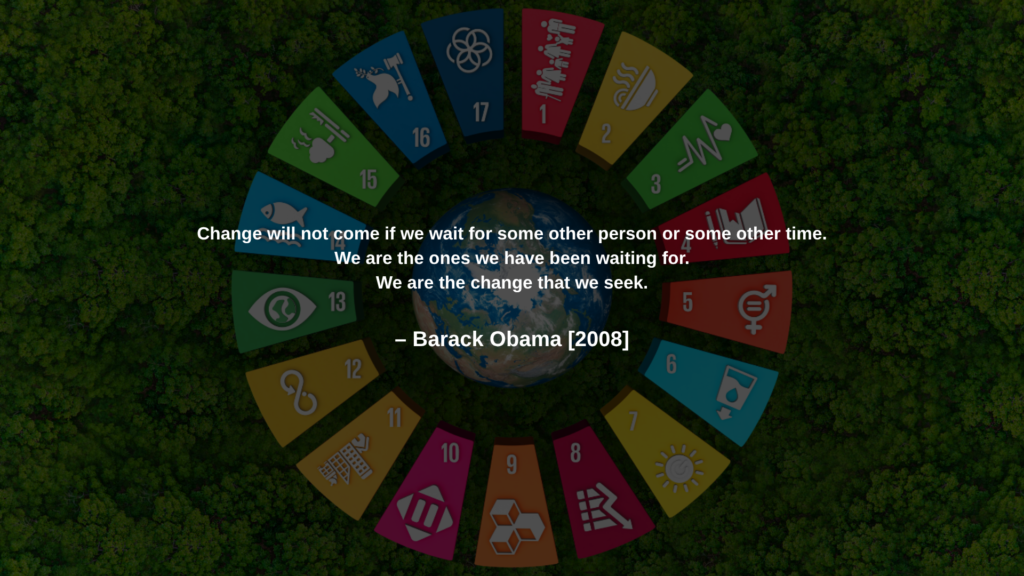
*** Four years ago, I was hired to join the United Nations.
I was one of 20 young professionals selected from 38,709 applicants
I’d lie to you, but that number did something for my ego.
It made me feel chosen… exceptional… inside.
Ego is defined as our mental model of who [we think] we are
Ego is how our brains protect that identity.
Our brains are not neutral. They filter reality to protect consistency.
Ego becomes a filtering system for reality.
So when our beliefs are challenged, the brain reacts like it’s under threat. Studies show:
So when someone challenges our ideas, our brains often treat it like danger.
When I joined the UNDP Independent Evaluation Office in New York,
I worked with the then newly-launched Synthesis and Lessons team
We gathered, compared, and translated knowledge into evidence
that could inform decisions which are meant to shape our shared futures.
In October of the same year, OpenAI released ChatGPT to the world.
Inside the UN office, I saw senior evaluators
worry about what would become of their work as AI develops and gets better… faster.
But… I saw a greater chance.
For the first time since the beginning of global development efforts,
Evidence can now move faster than institutions.
Histories can now be processed at scale.
And that is when it hit me:
We are standing at the edge of World 2.0.
The big question of our time:
whether we are willing to put our egos aside, and rewrite the rules that still govern World 1.0.
I suppose now that knowledge can move faster,
My synthesis is permitted to start from the very beginning, and I get to ask:
What if the global south had never been colonized?
What if I could trace my lineage beyond missionary Christian records or British censuses?
One of the first histories I learned about Malawi was that of Dr. David Livingstone
and the ways he discovered Malawi —
As if you can discover a people who already had kings, gods, names and language.
Because the man who holds the pen gets to write the story
And we can try to butter it up,
but he really did not write that story for us.
You see they wrote home about Malawi… about Africa… about Asia…
about the Americas… about the islands…
And somehow we were written out of our own (hi)stories.
And perhaps that is where all of this begins again —
when we now hold our own pens.
I guess that is where my Lessons begin.
Because if we are holding the pen now,
then we have to do more than write and tell beautiful stories.
We are burdened with the responsibility of documenting accurately.
We have to synthesize big amounts of data.
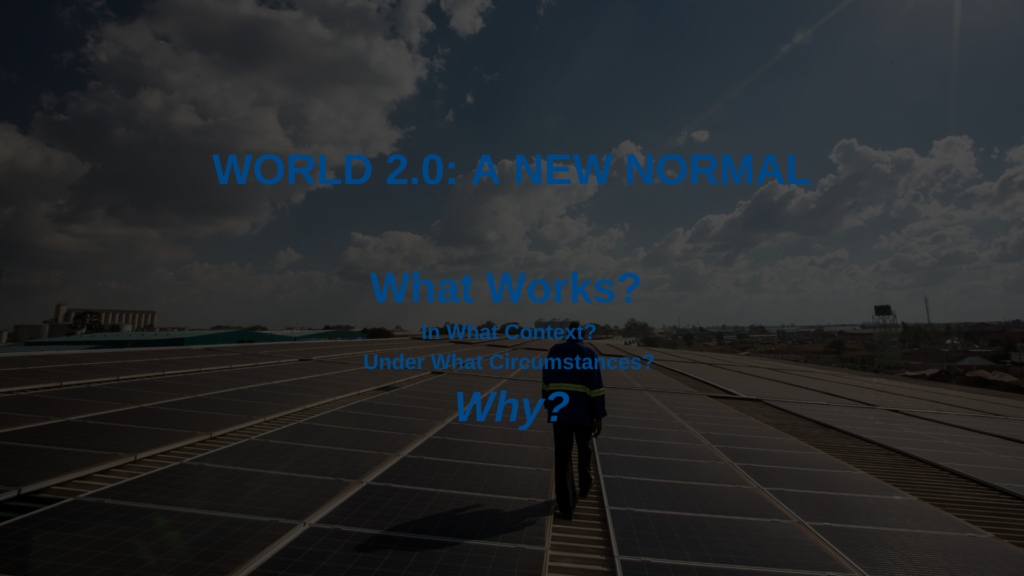
We have to know what works, in what context, under what circumstances,
and most importantly: why.
We have to learn,
And then… we MUST act.
If I am telling the story,
I think the first lesson I get to teach
is that colonization was never charity.
It was an economy —
a global business plan with free land, free labor, and guaranteed markets.
Sugar, gold, ivory, coffee, tea, people —
really, a GDP of empire.
When the colonizer flags came down,
the story of progress was rewritten in the language of international policy.
See, the colonizers built new headquarters
in Washington D.C., in Geneva, in New York City —
and oftentimes in our own capital cities.
Bretton Woods —
the empire’s accountants re-emerging as now our advisers.
And then came our United Nations.
And I know in this moment you wish to remind me
that I should be grateful for international relations —
because I started my career as an intern with the UN in Malawi.
I established my nonprofit with a grant of a quarter-million dollars from the World Bank.
And I have even been able to pursue my degrees —
because of loans I got from the UN.
I suppose I’m the biggest ingrate to stand before you
And I get to say
that the UN was never a table for equals.
That some seats have continued to be carved higher than others.
So… five nations kept the power of the veto,
and the rest of us learned to clap in six official languages.
We kept the anthem but changed the flag
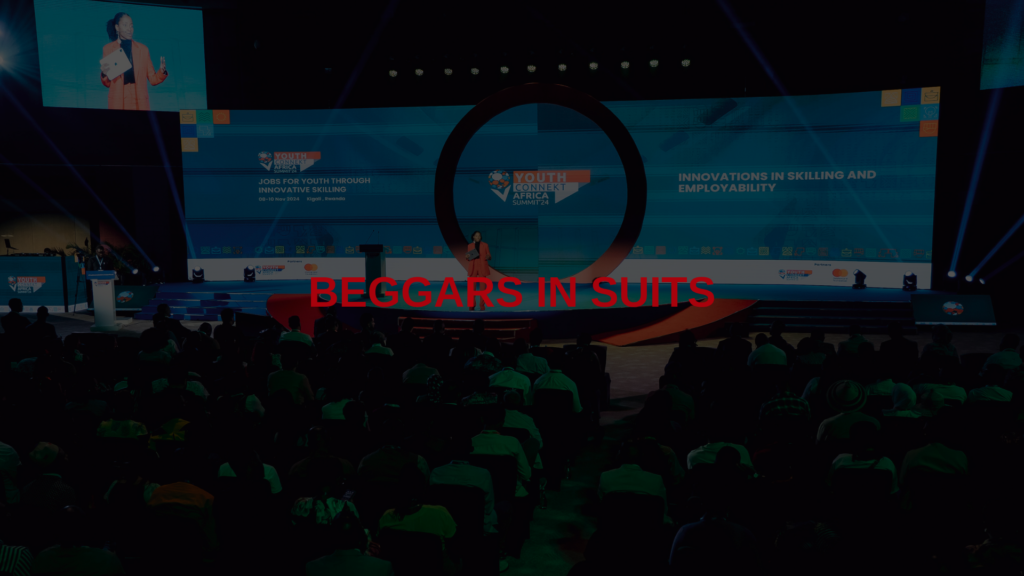
I guess I learned that we became beggars in suits.
In 2025, the world witnessed a rupture yet again
in international cooperation and development.
And I say both cooperation and development
Because in international relations, partnerships are almost never neutral
— they are either peer relationships, or donor relationships
And that then defines whether it is cooperation or development work
And that distinction matters if we are truly honest about beginning again.
A change in the American presidency
Saw long-standing funding mechanisms withdrawn.
A single government decision was enough to destabilize entire economies.
That fragility, to me, and I hope you too, exposed how deeply the global south has been framed as a recipient, and for too long, not agentic enough.
For the sake of Africa’s agency, I was most delighted.
1.6 billion people, and yet
63% percent of some of our healthcare programs are still externally financed.
Africa holds nearly 30% of the world’s critical minerals —
yet we continue to export what we produce and import what we use.
Somehow post colonization, we changed… but we did not change.
Aid replaced taxes.
Loans replaced plunder.
The same ships that once carried Black men and women as slaves
now carry containers of charity — donations —
And as soon as that ‘help’ arrives, we loot it for our very personal gain.
I wish I could say we, and our present day institutions are evil.
I have spent a decade inside and adjacent to them, so I should know better.
But I have come to know the hearts of the people inside —
some of the best hearts, and the most brilliant of minds,
with the best of intentions.
Yet I also know that systems built on debt
cannot, on any day, call themselves freedom.
Because even now, when the global south borrows,
it borrows in the same currencies that once bought and sold it.
And when we report on progress,
we still use the same metrics
that once did, and continues to measure us at the bottom of the pile.
So perhaps, now that we hold the pen,
the question is not what did colonization do to us?
Perhaps the question we now get to ask is,
what are we still doing to ourselves?
Perhaps real freedom begins when we stop thinking like them,
Emulating their systems driven by greed,
seeing ourselves through their eyes,
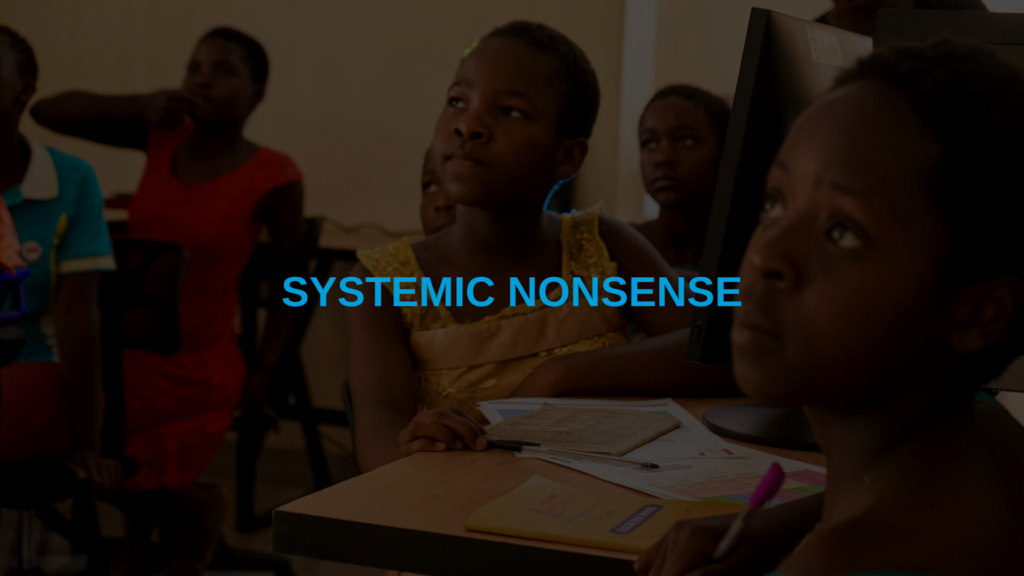
through systemic nonsense.
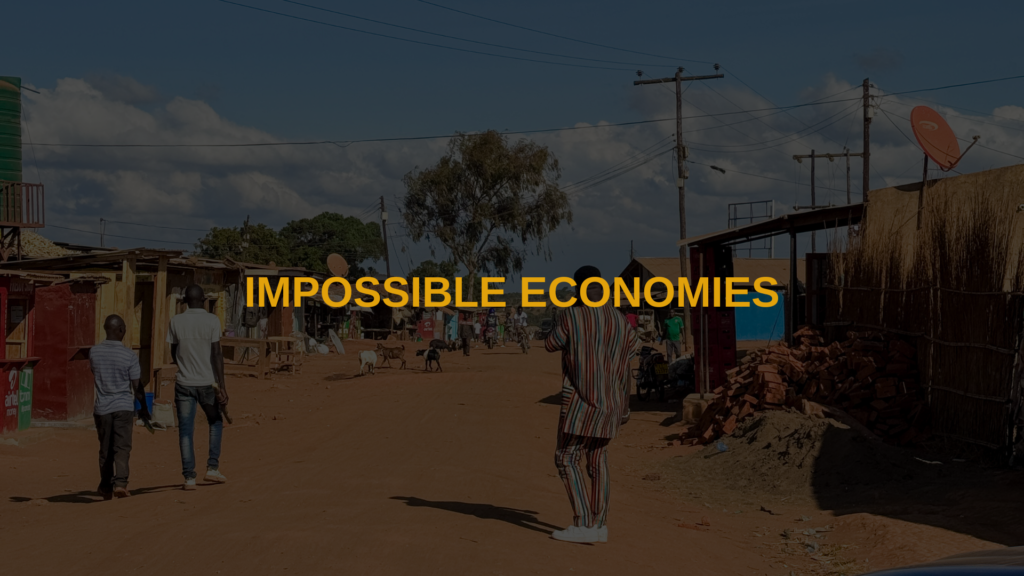
We have been running impossible economies —
We keep pretending that if we speak enough English, enough French,
if we quote enough statistics and smile enough for the foreign cameras,
that somehow the world will start to see us as equals.
Oh, but friends —
equality cannot be borrowed.
It must be earned. It must be built.
And if our money is going to repay debt before it can build roads, grids, schools, farms — then we are not “mismanaging” We are being constrained.
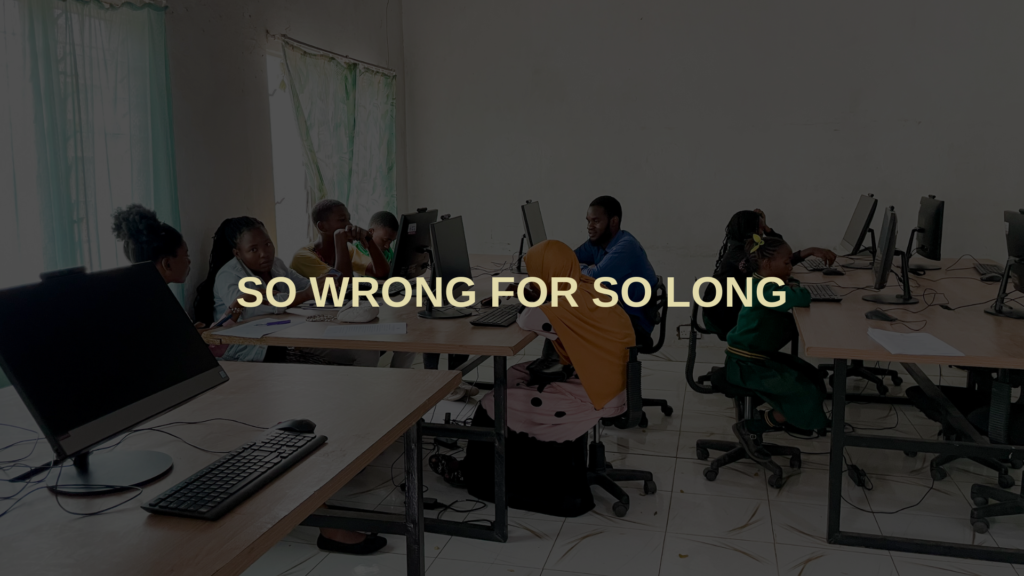
We have been so wrong for so long,
calling dependency partnership,
calling extraction investment.
We inherited systems, and we inherited the reflex to perform inside them.
and when a system rewards performance, it doesn’t require progress.
It requires compliance.
It requires that we look like we are moving.
Now, in the age of AI, our delays become a choice.
Defining choices of our generation.
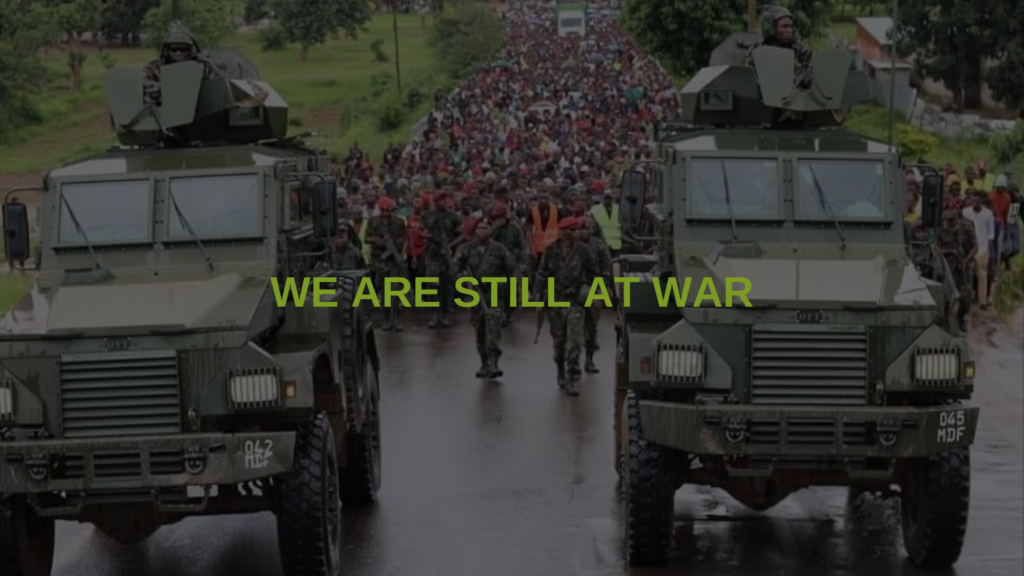
And even now,
we are still at war.
You see the conqueror does not need to govern directly
He only needs to shape the rules under which others govern themselves.
And now there is a new frontier.
The new missionaries now do not need to arrive with Bibles
— they arrive with broadband.
Our clicks, our fingerprints, , our health data,
are shipped off to feed someone else’s machine.
shaped on servers we do not own,
by algorithms we do not control.
When we log in on social media,
We are somehow still logging into the same hierarchies.
And the most dangerous thing — we call it connection.
And psychologically, that hierarchy still stands.
For as long as we believe we are the least of the pack,
we will keep waiting for permission to lead.
We will keep mistaking visibility for victory
mistaking proximity to whiteness for progress.
But I consider that this precise point in time
Is perhaps the best time yet to be alive.
Because even as the world trembles beneath the weight of its contradictions,
Something extraordinary is happening.
We are entering a new age —
the age of artificial general intelligence.
And AI will make our failures louder.
Because now we can see the evidence faster.
We can synthesize much better.
We can compare what works across countries in minutes.
And there’s an even more important thing…
one thing that grapples most people in the tech industry:
AI cannot power itself.
Every prompt you send,
every image you generate,
every simulation that promises to change the world —
it all runs on one thing:
Energy.
On electricity, on minerals, on cobalt, on Lithium, on copper.
And here, I see a real chance.
Because for the first time in modern history,
the Global South holds what the world needs most: Sunlight, wind, water,
And, perhaps most important: youth.
You see world 1.0 was built on extraction and ego.
World 2.0 will only work if we learn humility at scale.
Perhaps now we get to design systems rooted in Ubuntu, powered by justice.
Perhaps we get to program technologies that reflect all of us — the best of us.
The technology is ready. The evidence is clear.
The remaining bottleneck is you and I.
I share with you a framework which I borrowed from a dear friend and mentor that helps me be better. At the end of each day, Sarah Bond, former President of Xbox checks in with herself:
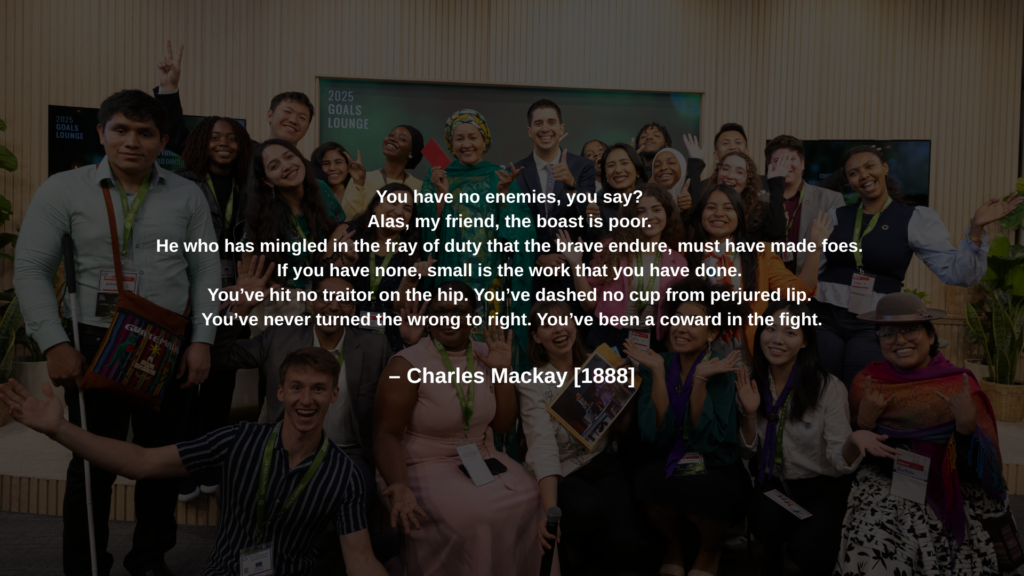
I leave you with one of my favorite poems from Charles Mackay
that drives me to do more and risk it all within my finite lifetime.
In our New Normal,
I hope we can all commit to facing ourselves
Because World 2.0 does not require smarter machines
It will require smaller egos.
The Lessons book series, releases on July 6, 2026.
Each book expands on the themes introduced here—examining systems, history, and the human behaviors that continue to shape our world.
Pre-orders are now open at bienbooks.com, and your early support means more than you know as I bring this body of work to life.
If you’d like to go deeper into my journey — from Malawi, through the United Nations to Microsoft, you can find it in my books.
P.S. for 2026, you can read any of my books via Kindle for only $2.99.
This offer is valid till the end of the year.
Links to the books are as below:



Nthanda Manduwi is a Malawian storyteller, entrepreneur, digital transformation advocate, and community builder driven by the mission to empower Africa’s economic landscape through innovation and technology.