I was having a conversation with my dad today about sustainability. I am just two months away from wrapping up my MBA, and we were talking about the school he manages.
My parents established two schools, a primary day school and a secondary boarding school.
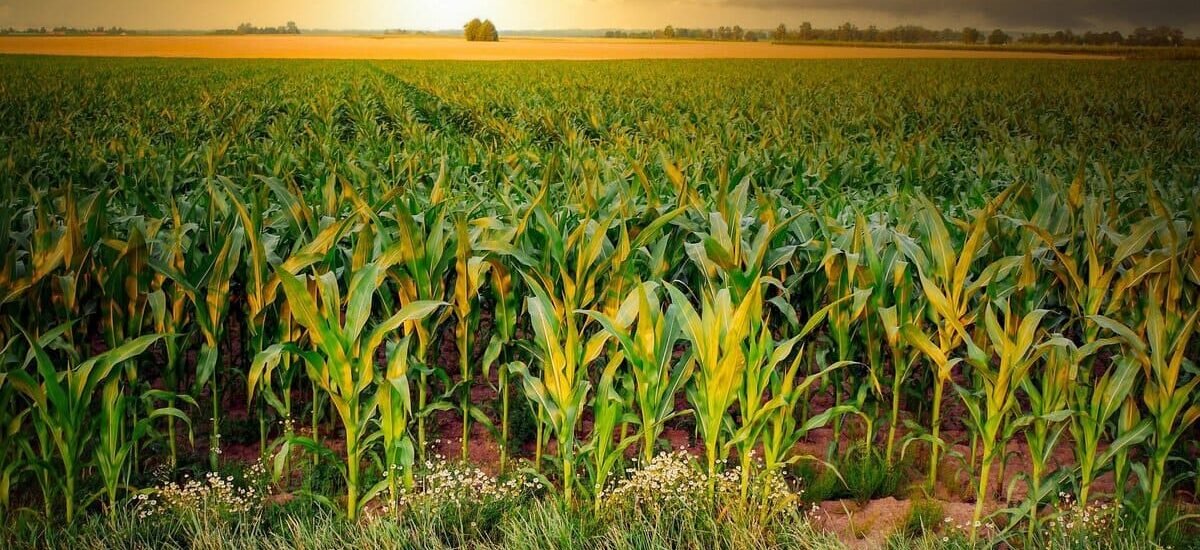
It is the end of December, which means that he is preparing for the next term, and his questions are fairly practical. He is thinking about how many students are coming in, how much food they will need, how many classrooms they can realistically build, whether he can afford to sustainably add another hostel, and how to make sure that there is enough maize, vegetables, and consistency in supply for the term.
The cost of living in Malawi has gone up. Every input costs so much more. At the same time, my dad is constantly calculating how much he can raise school fees by without pricing families out.
It is fascinating. For the first time, I am discussing microeconomics with my dad in its rawest form. Push too hard and enrollment drops almost to zero. For the first time, I am seeing price elasticity in real life. Hold back too much and the school cannot sustain itself, and we begin to lean toward donor dependence, waiting for institutions that can fund students on scholarships.
Somewhere in the middle of that conversation, my mind went back to maize mills.
My grandfather owned a maize mill in Chikwawa. It was the family mill, and my father worked in that maize mill as a child. When my parents later moved to Mangochi, my dad started two more maize mills. He did that because he had learned it from his father. It was a business he understood. It was a business that he knew worked. It was something he knew he could scale.
I look at those maize mills as what made everything else possible. From there, my parents were able to establish schools. Dad later got into fish trawling. Mom later set up the primary school. We expanded into other ventures. That base was maize processing.
Two generations later, I was speaking with my sister, who is also pursuing her MBA. She now manages one of the maize mills alongside my brother, and she also manages the primary school. In the middle of that conversation, she said something very simple: the most viable business in Malawi right now is still the maize mill.
After fifty years, across different contexts and ambitions, the most reliable business in our ecosystem is still the milling of maize.
That realization forced a set of deeper questions. Not just about innovation, but about how we think about production, sustainability, and where value actually moves in this country.
I started running an innovation hub in 2021, when I lived in Lilongwe city. I entered that space perhaps by chance, through teaching basic digital skills. Things like website creation, social media management, email, document creation, and internet literacy. Skills that quietly determine whether someone can participate in modern systems at all.
Over time, that work pulled me deeper into conversations about digital transformation, entrepreneurship, and technology led development, and I pursed a Master of Science in Entrepreneurship. I conducted a thesis on the Entrepreneurial Opportunity Posited by Malawi’s Digital Transformation.
It was a fun study to do, looking back. I I looked at where systems were being built, where they were being adopted, and where they were quietly stalling.
What became clear to me is that technology in itself is not the issue. The issue is where we place it.
Digital systems tend to perform best when they sit on top of something already necessary. Where benefits are obvious. Where costs can be absorbed. Where risk is already being managed. Where money already moves. When those conditions are missing, technology survives through external support, pilots, and goodwill, but it struggles to clear as a market.
This mirrors what we see on the ground every day. Innovation hubs exist. Platforms are built. Solutions are designed. Adoption remains thin.
At the same time, the maize mill continues to operate without explanation. People do not need to be convinced to eat. They do not need to imagine a future benefit. The transaction is immediate. The value is clear. Cash cycles are short. Trust is inherited.
I believe that this is where agriculture must be reframed.
Recently, I pivoted the work of my innovation hubs into AgTech.
When I say I am moving toward agriculture, I am not talking about subsistence farming. I am, at least for now, thinking about industrial production. Mechanized systems. Agro processing. Storage. Energy. Logistics. Data.
Food insecurity in Africa is both a production problem and a systems problem. We do not produce adequate food. When we do, the food is lost after harvest. It rots because it cannot be stored. It spoils because it cannot be transported in time. It floods markets briefly and then disappears.
Food waste is not a moral failure. It is an infrastructural one.
A crop that never reaches market represents lost income, lost nutrition, and lost stability. Sustainability, in that sense, begins with making sure what we produce can actually be sold.
This is why agro processing, to me, matters. Processing stabilizes value. It extends shelf life. It allows food to travel. It makes pricing more predictable. It turns urgency into inventory.
Logistics matter just as much. Getting food from farm to market requires coordination, energy reliability, timing, and infrastructure. Technology belongs here. Not as software floating above reality, but as intelligence embedded into physical systems that already carry weight.
This is the thinking behind the Kwathu Smart Innovation Farms.
The goal is to design an ecosystem that thinks from production all the way to market. Farming that anticipates processing. Processing that anticipates storage. Storage that anticipates transport. Transport that anticipates demand.
For me, sustainability is not a label. It is the ability of a system to survive its own output. It is ensuring that what we grow does not become waste. That what we process can be moved. That what we move arrives in time.
Fifty years later, the maize mill is still king because it solved the right problem first. It embedded itself into daily life and built discipline around necessity.
What we failed to do was build the rest of the system with the same seriousness. I do believe that now, we can.
If you’d like to go deeper into my journey — from Malawi, through the United Nations to Microsoft, you can find it in my books.
P.S. till the end of 2025, you can get any of my books via Kindle for only $2.99.
This offer is only valid till the end of the year.
Links to purchase are as below:


Nthanda Manduwi is a Malawian storyteller, entrepreneur, digital transformation advocate, and community builder driven by the mission to empower Africa’s economic landscape through innovation and technology.